

batuiruçu-de-axila-preta vs tarambola-dourada-siberiana
Pluvialis squatarola versus Pluvialis fulva
Jogue um quiz com batuiruçu-de-axila-preta e tarambola-dourada-siberiana
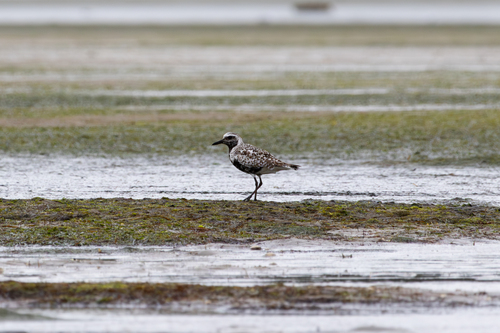 batuiruçu-de-axila-preta
 tarambola-dourada-siberiana
Em resumo
A marca de campo mais confiável para separar o batuiruçu-de-axila-preta do tarambola-dourada-siberiana é vista em voo: o batuiruçu-de-axila-preta de todas as idades apresenta axilas pretas (as penas 'de axila' na base da asa inferior), enquanto o tarambola-dourada-siberiana nunca apresenta. Os batuirucus-de-axila-preta juvenis e de primeiro inverno também têm um padrão distinto na asa superior com costas mais escuras e bordas das penas cremosas, mas a marca axilar é diagnóstica para todas as idades. Estruturalmente, o batuiruçu-de-axila-preta é mais robusto, com um bico mais pesado e longo e uma aparência mais robusta, enquanto o tarambola-dourada-siberiana é mais esguio e delicado. A plumagem de reprodução pode ser confusa, pois ambos mostram rostos e barrigas pretas com bordas brancas, mas o batuiruçu-de-axila-preta é preto e branco por cima, enquanto o tarambola-dourada-siberiana é salpicado de ouro. Na plumagem não reprodutiva, o batuiruçu-de-axila-preta é cinza mais simples, e o tarambola-dourada-siberiana é mais quente e mais marrom-dourado. Tamanho e estrutura, junto com o padrão da asa inferior em voo, são as pistas mais confiáveis.
Dicas de identificação
- Axilas pretas em voo (todas as idades): O batuiruçu-de-axila-preta sempre mostra axilas e flancos internos pretos sólidos na base da asa inferior, visíveis quando o pássaro decola ou voa acima. O tarambola-dourada-siberiana nunca mostra isso; sua asa inferior é pálida.
- Tamanho e robustez: O batuiruçu-de-axila-preta é maior, mais robusto e mais pesado, com um pescoço grosso e uma postura mais ereta. O tarambola-dourada-siberiana é visivelmente mais esguio e delicado, especialmente em bandos mistos.
- Estrutura do bico: O batuiruçu-de-axila-preta tem um bico mais pesado e longo (24–34 mm), que parece grosso e com ponta arredondada. O bico do tarambola-dourada-siberiana é mais fino e curto, mais proporcional à sua cabeça menor.
- Plumagem de reprodução acima: O batuiruçu-de-axila-preta é preto e branco salpicado acima, com um rabo branco e cauda com barras pretas. O tarambola-dourada-siberiana é dourado e preto acima, com um rabo mais escuro e menos contraste na cauda.
- Plumagem de reprodução abaixo: Ambas as espécies têm rostos e barrigas pretas com uma borda branca, mas o preto do batuiruçu-de-axila-preta é mais extenso e sólido. A fêmea do tarambola-dourada-siberiana tem um peito preto manchado, menos sólido.
- Plumagem não reprodutiva (inverno): O batuiruçu-de-axila-preta é cinza simples acima com uma barriga branca e peito cinza salpicado. O tarambola-dourada-siberiana é mais quente, com tons marrons, cinzas e amarelados e uma aparência mais dourada ou amarelada acima.
- Partes superiores juvenis/primeiro inverno: Os juvenis do batuiruçu-de-axila-preta são mais escuros acima com bordas de penas cremosas, dando uma aparência escamosa. Os juvenis do tarambola-dourada-siberiana são salpicados de ouro e não têm o padrão escamoso.
- Cauda e rabo: O batuiruçu-de-axila-preta tem um rabo branco e uma cauda com barras pretas, visíveis em voo. O tarambola-dourada-siberiana tem um rabo mais escuro e barras de cauda menos óbvias.
- Cor das pernas: Ambas as espécies têm pernas escuras, mas as do tarambola-dourada-siberiana podem ser cinzas a pretas, enquanto as do batuiruçu-de-axila-preta são consistentemente pretas.
- Preferência de habitat: O batuiruçu-de-axila-preta é quase sempre costeiro; o tarambola-dourada-siberiana é frequentemente encontrado no interior em gramados, jardins ou até telhados, especialmente na região do Pacífico.
- Composição do bando: Se você ver um único batuiruçu grande e robusto entre tarambolas menores e mais esguias, é provável que seja um batuiruçu-de-axila-preta.
- Estilo de voo: O batuiruçu-de-axila-preta parece mais pesado e com asas mais largas em voo; o tarambola-dourada-siberiana é mais ágil e leve.
- Temporização sazonal: Ambas as espécies migram em tempos semelhantes, mas verifique a abundância local—o tarambola-dourada-siberiana é raro na Europa Ocidental, enquanto o batuiruçu-de-axila-preta é amplamente distribuído.
- Diferenças sexuais: Apenas o tarambola-dourada-siberiana mostra um dimorfismo sexual óbvio na plumagem de reprodução, com fêmeas tendo um peito preto manchado.
- Quando em dúvida: Espere por uma visão em voo para verificar a asa inferior—axilas pretas confirmam o batuiruçu-de-axila-preta, asa inferior pálida confirma o tarambola-dourada-siberiana.
Tamanho
batuiruçu-de-axila-preta is noticeably larger and heavier than tarambola-dourada-siberiana. batuiruçu-de-axila-preta measures 27–30 cm in length with a wingspan of 71–83 cm and can weigh up to 280–345 g before migration [wikipedia], while tarambola-dourada-siberiana is about 25 cm long with a wingspan of 61 cm and weighs around 135 g when lean, up to 200 g pre-migration [wikidata, wikipedia]. In the field, batuiruçu-de-axila-preta looks bulkier, with a stouter body and a much heavier, longer bill. tarambola-dourada-siberiana appears slimmer, more delicate, and longer-legged relative to its body size.
Plumagem
-
Juvenile and First-winter (all ages in flight): batuiruçu-de-axila-preta always shows black axillaries and inner flanks in flight, a unique mark among Pluvialis plovers. Juveniles and first-winters have blacker backs with creamy feather edges, making them look scaly above. tarambola-dourada-siberiana juveniles are gold-spangled above and lack black axillaries, showing pale underwings instead.
-
Breeding plumage (spring/summer): Both species show black faces and bellies bordered with white, but batuiruçu-de-axila-preta is black-and-white spotted above with a white rump and tail with black barring. tarambola-dourada-siberiana is gold and black above, with a darker rump and less contrasty tail. Female tarambola-dourada-siberiana has a mottled, less solid black breast.
-
Nonbreeding plumage (fall/winter): batuiruçu-de-axila-preta is plain grey above with a grey-speckled breast and white belly. tarambola-dourada-siberiana is warmer-toned, with brown, grey, and yellowish patterning above and lighter underparts. Both sexes of tarambola-dourada-siberiana look alike in this plumage.
Comportamento
Ambas as espécies forrageiam em áreas abertas, mas o batuiruçu-de-axila-preta é mais provável de ser visto em mudas abertas e costas, frequentemente em pé e parecendo mais robusto. O tarambola-dourada-siberiana é mais ativo e pode ser encontrado se alimentando em gramados curtos, jardins ou até telhados em algumas regiões, movendo-se com um andar mais leve e rápido. Em voo, o batuiruçu-de-axila-preta parece ter asas mais largas e ser mais pesado, enquanto o tarambola-dourada-siberiana é mais ágil e leve.
Habitat
O batuiruçu-de-axila-preta prefere mudas costeiras, estuários e praias de areia durante a migração e o inverno, raramente aventurando-se longe do interior. O tarambola-dourada-siberiana, embora também encontrado em costas, é mais provável de ser visto no interior em áreas gramadas abertas, parques, campos de golfe e até ambientes urbanos, especialmente na região do Pacífico. A sobreposição de habitat ocorre durante a migração, mas o tarambola-dourada-siberiana é mais adaptável a paisagens alteradas pelo homem.
batuiruçu-de-axila-preta · tarambola-dourada-siberiana · Minhas aves difíceis