

passarinha vs pica-peixe-de-peito-azul
Halcyon leucocephala versus Halcyon malimbica
Jogue um quiz com passarinha e pica-peixe-de-peito-azul
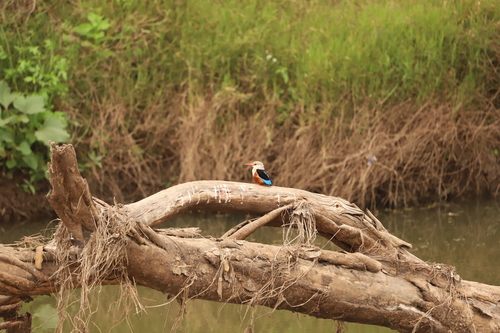 passarinha
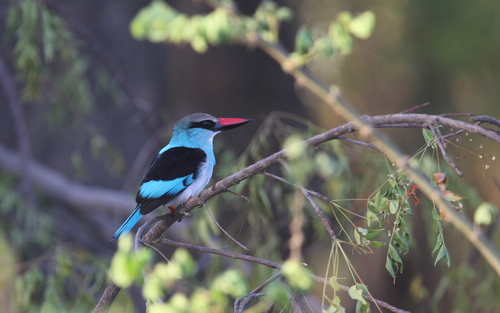 pica-peixe-de-peito-azul
Em resumo
A marca de campo mais confiável para separar a passarinha do pica-peixe-de-peito-azul é a cor e o padrão da cabeça e das partes inferiores: a passarinha tem uma cabeça cinza clara e partes inferiores castanhas ricas, enquanto o pica-peixe-de-peito-azul apresenta uma cabeça azul brilhante e uma barriga branca com uma distinta faixa azul no peito. A cor do bico também é diagnóstica: a passarinha tem um bico totalmente vermelho, enquanto o pica-peixe-de-peito-azul tem uma mandíbula superior vermelha e uma mandíbula inferior preta. Em voo ou empoleirada, o pica-peixe-de-peito-azul parece mais robusto e longo do que a mais esbelta passarinha. Ambas as espécies têm azul nas asas e na cauda, mas a extensão e o tom diferem. Essas distinções se mantêm para os adultos; os juvenis são mais apagados, mas seguem o mesmo padrão.
Dicas de identificação
- Cor da cabeça: A passarinha sempre tem uma cabeça cinza clara (adultos e imaturos), enquanto o pica-peixe-de-peito-azul tem uma cabeça azul brilhante. Esta é a marca de campo mais imediata em qualquer idade.
- Cor das partes inferiores: A passarinha apresenta partes inferiores castanhas ricas (barriga e peito), contrastando com a barriga branca e a faixa azul no peito do pica-peixe-de-peito-azul. Os juvenis seguem o mesmo padrão, embora as cores sejam mais apagadas.
- Faixa no peito: Apenas o pica-peixe-de-peito-azul tem uma distinta faixa azul no peito separando a barriga branca das partes superiores azuis. A passarinha nunca apresenta essa faixa.
- Cor do bico: A passarinha tem um bico totalmente vermelho, enquanto o pica-peixe-de-peito-azul tem uma mandíbula superior vermelha e uma mandíbula inferior preta. Isso é visível mesmo à distância em boa luz.
- Tamanho e estrutura: O pica-peixe-de-peito-azul é maior (25 cm vs. 21 cm), mais robusto, e parece mais forte quando empoleirado. A passarinha é mais esbelta e delicada.
- Cor das asas e cauda: Ambas as espécies têm asas e cauda azuis, mas o azul do pica-peixe-de-peito-azul é mais extenso e brilhante, incluindo a cabeça e as costas. O azul da passarinha é limitado à região do rabo, asas e cauda, com um manto e costas pretos.
- Cor do ombro: O pica-peixe-de-peito-azul tem ombros pretos, enquanto o manto e as costas da passarinha são pretos, mas o ombro não é tão distintamente marcado.
- Contexto do habitat: Se o pássaro estiver em floresta densa, mata ribeirinha ou sombra densa, é mais provável que seja o pica-peixe-de-peito-azul. Em mata aberta, arbustos ou áreas mais secas, especialmente longe da água, espera-se a passarinha.
- Comportamento: A passarinha frequentemente se empoleira exposta e imóvel, às vezes balançando sua cabeça antes de mergulhar. O pica-peixe-de-peito-azul é mais provável de ser visto quieto em sombra densa, cauteloso e territorial.
- Vocalizações: Ouça o agudo 'tchk, tchk, tchk' da passarinha em contraste com o assobio 'pu-pu-pu-pu-ku-ku-ku-ku' do pica-peixe-de-peito-azul. Os chamados são distintos quando ouvidos claramente.
- Estilo de voo: O voo do pica-peixe-de-peito-azul é rápido e direto; o da passarinha é menos descrito, mas não é notado como especialmente rápido ou direto.
- Confusão juvenil: Os juvenis de ambas as espécies são mais apagados, mas mantêm os padrões de cor da cabeça e das partes inferiores. Nenhum padrão de asa juvenil único é descrito para qualquer uma das espécies, então confie na cor da cabeça e da barriga.
- Movimento sazonal: A passarinha é migratória em algumas áreas e pode ser vista longe dos locais de reprodução, enquanto o pica-peixe-de-peito-azul é principalmente residente, mas pode se deslocar localmente na estação seca.
- Diferenças sexuais: Ambas as espécies são sexualmente monomórficas em plumagem, então o sexo não é uma marca de campo útil.
- Forma do bico: Ambas têm bicos grandes e robustos de martinete, mas a diferença de cor é a marca chave.
Tamanho
O pica-peixe-de-peito-azul é visivelmente maior, com uma média de 25 cm de comprimento, em comparação com os 21 cm da passarinha. Essa diferença de tamanho é aparente em campo, com o pica-peixe-de-peito-azul parecendo mais robusto e forte, especialmente quando empoleirado. Ambas as espécies têm proporções semelhantes típicas dos martinetes do gênero Halcyon, mas a construção mais pesada e o corpo mais longo do pica-peixe-de-peito-azul são claros quando vistos lado a lado ou com experiência.
Plumagem
Para todas as idades, a passarinha apresenta uma cabeça cinza clara, manto e costas pretos, rabo, asas e cauda azuis brilhantes, e partes inferiores castanhas. O bico é totalmente vermelho. O pica-peixe-de-peito-azul tem uma cabeça azul brilhante, costas, painel das asas e cauda, com uma barriga branca e uma faixa azul no peito; os ombros são pretos. Seu bico é bicolor: vermelho acima, preto abaixo. Os juvenis de ambas as espécies são mais apagados, mas o padrão de cor da cabeça e das partes inferiores permanece: os juvenis da passarinha mantêm a cabeça cinza e a barriga castanha, enquanto os juvenis do pica-peixe-de-peito-azul têm cabeça azul com barriga branca e faixa azul no peito. Nenhum padrão de asa específico para a idade é descrito para qualquer uma das espécies, mas o contraste geral entre azul e cinza/castanho é forte mesmo em aves imaturas.
Comportamento
A passarinha frequentemente se empoleira imóvel em mata aberta ou arbustos, observando o chão em busca de presas, e está menos ligada à água do que a maioria dos martinetes. Ela pode balançar a cabeça antes de mergulhar. O pica-peixe-de-peito-azul prefere sombra densa em habitats bem arborizados, empoleirando-se silenciosamente e sendo mais cauteloso e territorial. Seu voo é descrito como rápido e direto. Ambas as espécies caçam de poleiros, mas o pica-peixe-de-peito-azul é mais provável de ser encontrado em florestas densas ou ao longo de cursos d'água, enquanto a passarinha se sente mais à vontade em áreas secas e abertas.
Habitat
A passarinha é amplamente distribuída pela África tropical e semi-tropical e sul da Arábia, favorecendo matas, arbustos e áreas cultivadas, muitas vezes longe da água. O pica-peixe-de-peito-azul é restrito à África Equatorial, preferindo habitats bem arborizados e recuando para áreas mais úmidas na estação seca. Ele está mais associado a florestas densas e matas ribeirinhas do que a passarinha, que pode ser encontrada em ambientes mais abertos e áridos.
Voz
A passarinha emite uma sucessão de notas ascendentes e descendentes, tornando-se estridente, e um agudo chamado de alerta 'tchk, tchk, tchk'. O chamado do pica-peixe-de-peito-azul é um assobio 'pu-pu-pu-pu-ku-ku-ku-ku.' Os chamados são bastante diferentes em tom e ritmo, com o da passarinha sendo mais agudo e mecânico, e o do pica-peixe-de-peito-azul mais musical e assobiado.
passarinha · pica-peixe-de-peito-azul · Minhas aves difíceis