

felosa-verde vs felosa-verde-listada
Phylloscopus trochiloides versus Phylloscopus plumbeitarsus
Jogue um quiz com felosa-verde e felosa-verde-listada
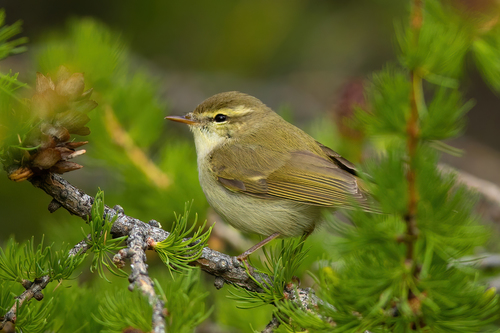 felosa-verde
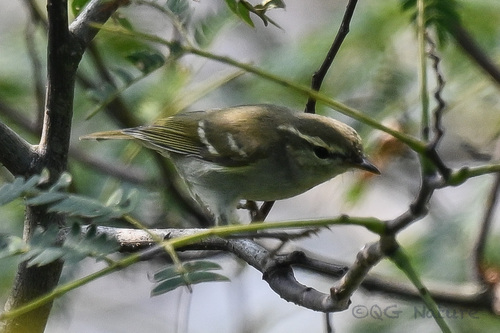 felosa-verde-listada
Em resumo
A marca de campo mais confiável entre a felosa-verde e a felosa-verde-listada é o número de faixas nas asas: a felosa-verde-listada sempre apresenta duas faixas pálidas distintas nas coberturas (tanto em adultos quanto em juvenis), enquanto a felosa-verde tipicamente mostra apenas uma (às vezes fraca) faixa, com uma segunda faixa raramente presente e geralmente muito fraca. Essa diferença é mais evidente em aves empoleiradas e em voo, especialmente em plumagem de outono fresca. Estruturalmente, a felosa-verde é ligeiramente menor e com bico mais fino, mas isso é sutil e melhor utilizado em combinação com a plumagem. Ambas as espécies são esverdeadas por cima e pálidas por baixo, então a cor geral não é um separador seguro. A voz e a distribuição podem ajudar, mas são menos úteis em vagantes ou em silêncio.
Dicas de identificação
- Conte as faixas nas asas: A felosa-verde-listada sempre apresenta duas faixas pálidas distintas (coberturas maiores e medianas) em adultos e juvenis; a felosa-verde geralmente tem apenas uma, com uma segunda faixa raramente presente (principalmente em algumas aves do leste). Esta é a marca de campo mais confiável.
- Procure pela segunda faixa nas asas: Na felosa-verde, se uma segunda faixa estiver presente, geralmente é fraca e nunca tão ousada ou longa quanto na felosa-verde-listada. Na felosa-verde-listada, ambas as faixas são claras e nítidas.
- Verifique em aves de outono frescas: O contraste das faixas nas asas é mais acentuado no outono após a muda, especialmente em juvenis e primeiros invernos. Adultos podem mostrar faixas ligeiramente desgastadas na primavera, mas o padrão de duas faixas persiste na felosa-verde-listada.
- Estrutura do bico: A felosa-verde tem um bico mais fino sem uma ponta escura na mandíbula inferior; o bico da felosa-verde-listada não é descrito como tendo essa característica, mas a diferença é sutil e melhor utilizada como evidência de apoio.
- Supercílios e face: Ambas as espécies têm um supercílios pálido, mas a felosa-verde (especialmente aves ocidentais) pode mostrar uma tonalidade amarelada no supercílios, garganta e peito. Isso é variável e nem sempre confiável.
- Cor das partes superiores: Ambas são esverdeadas por cima e off-white por baixo; não confie na cor geral para separá-las.
- Tamanho e estrutura: A felosa-verde é ligeiramente menor e com bico mais fino, mas isso é difícil de julgar a menos que ambas sejam vistas juntas.
- Canto: Se ouvido, o canto da felosa-verde é um trinado alto e irregular, às vezes com notas descendentes; o canto da felosa-verde-listada é mais longo, com uma parte trêmula seguida por notas ascendentes e descendentes. Use com cautela, pois o canto é variável e nem sempre é emitido.
- Habitat e distribuição: A felosa-verde é mais provável de ser encontrada na Europa Ocidental, especialmente como um vagante; a felosa-verde-listada é mais oriental. No entanto, ambas podem ocorrer fora de suas áreas principais durante a migração.
- Jizz e comportamento: Ambas são felosas ativas e inquietas; o comportamento não é um separador confiável.
- Cuidado com híbridos: Algumas populações de felosa-verde (especialmente nos Himalaias e Baltistão) podem mostrar características intermediárias devido à hibridização, mas essas são raras na Europa Ocidental.
- Não confie na cor das pernas: Nenhuma diferença diagnóstica é notada na cor das pernas entre essas duas espécies.
- Sexo e idade: Ambos os sexos são semelhantes; as diferenças de idade estão principalmente na frescura e contraste das faixas nas asas, não em sua presença ou ausência.
- Visões em voo: Em voo, a dupla faixa da felosa-verde-listada é frequentemente visível como duas linhas pálidas ao longo da asa fechada; a felosa-verde geralmente mostra apenas uma.
- Armadilhas: Não confunda faixas fracas em algumas felosas-verdes com as faixas duplas ousadas da felosa-verde-listada; sempre avalie a força, o comprimento e a clareza de ambas as faixas.
Tamanho
A felosa-verde é ligeiramente menor que a felosa-verde-listada, com um bico mais fino e uma aparência mais delicada no geral. No entanto, essa diferença de tamanho é sutil e muitas vezes difícil de julgar em campo, a menos que ambas as espécies sejam vistas lado a lado. Ambas são típicas felosas pequenas, e o tamanho não deve ser considerado como uma marca de campo primária. [wikipedia]
Plumagem
A principal diferença de plumagem está no padrão das asas, especialmente em aves de outono frescas e juvenis. A felosa-verde-listada sempre apresenta duas faixas pálidas claras nas coberturas maiores e medianas, visíveis tanto quando empoleiradas quanto em voo. A felosa-verde geralmente tem apenas uma única faixa (nas coberturas maiores); uma segunda faixa fraca pode às vezes estar presente em algumas populações do leste, mas é muito menos distinta do que na felosa-verde-listada. Essa diferença se aplica a todas as idades e é mais óbvia no outono, quando a plumagem está fresca. Ambas as espécies são esverdeadas por cima e off-white por baixo, então a coloração geral não é diagnóstica. A cor e a estrutura do bico podem ajudar: a felosa-verde tem um bico mais fino sem uma ponta escura na mandíbula inferior, enquanto o bico da felosa-verde-listada não é descrito dessa forma. [wikipedia]
Comportamento
Ambas as espécies se comportam como felosas típicas: ativas, inquietas e frequentemente forrageando na folhagem. Não há diferenças comportamentais fortes notadas entre as duas nas fontes disponíveis. Ambas podem pairar ou flutuar entre os galhos, e ambas são insetívoras. O jizz não é um separador confiável aqui.
Habitat
A felosa-verde se reproduz em florestas decíduas ou mistas de baixada em toda a Europa nordeste e na Ásia continental temperada a subtropical, e inverna na Índia. Pode ser encontrada como um vagante na Europa Ocidental, às vezes em florestas montanhosas na estação não reprodutiva. A felosa-verde-listada se reproduz mais ao nordeste, na Mongólia do Norte, Manchúria e sul da Sibéria. Ambas são migratórias, mas suas áreas de reprodução não se sobrepõem muito. O habitat não é um separador confiável durante a migração ou vagância, mas a felosa-verde é mais provável na Europa Ocidental. [wikipedia]
Voz
O canto pode ajudar, mas nem sempre é prático para vagantes ou aves silenciosas. A felosa-verde tem um trinado alto e irregular, às vezes com notas descendentes; os cantos são geralmente mais curtos ao redor dos Himalaias. O canto da felosa-verde-listada é mais longo, com uma parte trêmula seguida por uma série de notas ascendentes e descendentes, e sempre contém elementos de duas faixas. No entanto, o canto é variável e existe sobreposição, então use com cautela. [wikipedia]