
águia-malhada vs águia-real
Clanga clanga versus Aquila chrysaetos
Jogue um quiz com águia-malhada e águia-real
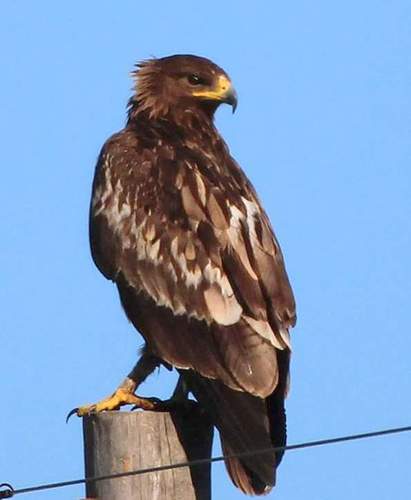 águia-malhada
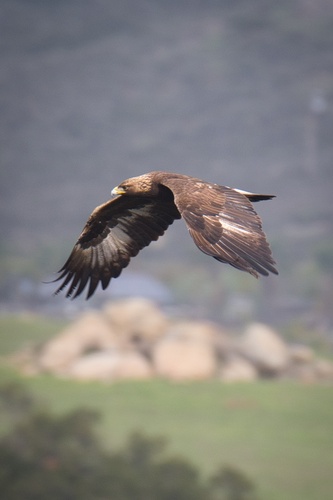 águia-real
Em resumo
A marca de campo mais confiável entre a águia-malhada e a águia-real é a combinação de tamanho geral e estrutura das asas: as águias-reais são muito maiores, com caudas mais longas e asas mais largas e retangulares, enquanto as águias-malhadas são menores e mais compactas, com caudas relativamente mais curtas e asas mais largas para seu tamanho. Em voo, as águias-reais juvenis mostram manchas brancas distintas na base das primárias e da cauda, que nunca são tão extensas ou bem definidas na águia-malhada. As águias-reais adultas têm uma nuca dourada, ausente na águia-malhada, que é overall mais escura e uniforme. Diferenças estruturais, especialmente em aves empoleiradas, e a presença ou ausência de branco nas asas e cauda dos imaturos, são fundamentais para a separação.
Dicas de identificação
- Padrão de asas e cauda juvenil: As águias-reais juvenis mostram grandes manchas brancas bem definidas na base das primárias e uma ampla faixa branca na base da cauda; as águias-malhadas juvenis não têm essas áreas brancas ousadas, mostrando em vez disso algumas manchas ou barras pálidas, mas nunca um branco tão extenso. Esta é a marca mais confiável em voo para os imaturos.
- Cor da nuca adulta: As águias-reais adultas têm uma nuca dourada ou ruiva formando um 'xale', visível de perto ou em boa luz; as águias-malhadas não têm isso, com a nuca apenas ligeiramente mais clara que o resto da plumagem, no máximo.
- Tamanho e estrutura geral: As águias-reais são muito maiores e mais robustas, com caudas mais longas e asas mais largas e retangulares; as águias-malhadas são menores, com caudas mais curtas e asas relativamente mais largas para seu tamanho, dando uma impressão mais compacta e menos alongada.
- Forma da asa em voo: As águias-reais têm asas longas e largas com uma borda de fuga reta e um dihedral pronunciado (forma de V) ao planar; as águias-malhadas têm asas mais curtas e largas, frequentemente parecendo mais arredondadas e menos angulares, e não costumam planar com um dihedral tão pronunciado.
- Comprimento da cauda: A cauda de uma águia-real é visivelmente mais longa, frequentemente parecendo duas a três vezes o comprimento da cabeça em voo; a águia-malhada tem uma cauda mais curta e quadrada.
- Coberturas das asas superiores: As águias-malhadas têm coberturas das asas superiores uniformes e escuras, sem os tons enferrujados ou mais claros às vezes vistos nas águias-reais.
- Contraste da plumagem: As águias-reais, especialmente as adultas, mostram um marrom mais rico com nuca dourada, enquanto as águias-malhadas são mais uniformemente escuras, quase marrom-escuro, com menos contraste overall.
- Cabeça e bico: As águias-reais têm uma cabeça maior e mais saliente e um bico mais pesado; as águias-malhadas têm uma cabeça e bico menores, contribuindo para sua aparência mais compacta.
- Estilo de voo: As águias-reais voam com batidas de asas poderosas e constantes e longos deslizamentos; as águias-malhadas têm um voo mais leve e menos forçado.
- Postura empoleirada: As águias-reais parecem maiores, mais eretas e com pescoço mais longo quando empoleiradas; as águias-malhadas são mais encurvadas e compactas.
- Contexto de habitat: As águias-reais são mais prováveis de serem encontradas em habitats montanhosos, de alta altitude ou em charnecas abertas; as águias-malhadas são mais frequentemente encontradas perto de áreas úmidas, vales de rios ou bordas de florestas, especialmente durante a migração.
- Mancha na nuca juvenil: As águias-malhadas juvenis podem mostrar uma nuca ligeiramente mais clara, mas nunca o rico dourado ou ruivo da águia-real; isso pode ajudar em vistas próximas.
- Padrão na parte inferior da asa: As águias-reais não têm as fortes listras ou manchas às vezes presentes nas águias-malhadas juvenis, que podem mostrar mais padrões nas coberturas da parte inferior da asa.
- Sobreposição de sexo e idade: As fêmeas de águia-malhada podem se aproximar do tamanho de pequenos machos de águia-real, mas as diferenças estruturais e de plumagem acima permanecem confiáveis.
- Cuidado com híbridos e anômalos: Alguns híbridos ou indivíduos aberrantes podem mostrar características intermediárias; sempre use uma combinação de marcas, especialmente estrutura e padrões de asas/cauda específicos para a idade.
Tamanho
A águia-real é dramaticamente maior que a águia-malhada, com uma massa média adulta de cerca de 4383 g [wikidata], em comparação com a águia-malhada, que é menor, não listada, mas significativamente mais leve. As águias-reais têm uma envergadura e cauda muito mais longas, e parecem mais robustas e imponentes tanto em voo quanto empoleiradas. Mesmo a maior fêmea de águia-malhada é notavelmente menor que uma águia-real típica, e a diferença geralmente é óbvia com a experiência, embora aves distantes ou solitárias possam ser enganosas.
Plumagem
As águias-reais juvenis (e alguns imaturos) mostram manchas brancas ousadas na base das primárias e uma ampla faixa branca na base da cauda, contrastando com asas e corpo escuros. Essas áreas brancas são bem definidas e extensas, especialmente no primeiro ou segundo ano, e não são igualadas pela águia-malhada, cujos juvenis podem mostrar algumas manchas pálidas, mas nunca painéis brancos grandes e limpos. As águias-malhadas juvenis são overall marrons escuras, às vezes com pontas mais claras nas coberturas e uma nuca ligeiramente mais clara, mas nunca com a nuca dourada da águia-real adulta. As águias-reais adultas são marrons escuras com uma nuca dourada a ruiva e não têm as coberturas das asas superiores escuras e uniformes da águia-malhada. As águias-malhadas, tanto adultas quanto juvenis, são mais uniformemente escuras, com menos contraste e sem nuca dourada; suas coberturas das asas superiores são escuras e uniformes, não enferrujadas ou claras. Em todas as idades, as águias-reais têm uma cauda mais longa e uma nuca dourada mais pronunciada, enquanto as águias-malhadas permanecem mais compactas e escuras overall.
Comportamento
As águias-reais frequentemente planam com as asas mantidas em um dihedral raso (forma de V), e seu voo é poderoso e constante. Elas também podem deslizar com as asas planas, mas a cauda longa e as asas largas são distintas. As águias-malhadas têm asas mais largas e curtas em relação ao corpo e uma cauda mais curta, dando uma impressão mais compacta em voo. Seu voo é menos forçado e mais leve, e elas podem parecer menos estáveis do que as águias-reais. Empoleiradas, as águias-reais parecem maiores e mais eretas, com uma cauda e pescoço mais longos, enquanto as águias-malhadas são mais compactas e encurvadas.
Habitat
Ambas as espécies podem ocorrer em áreas abertas, mas as águias-reais estão mais tipicamente associadas a terrenos montanhosos ou acidentados, charnecas abertas e grandes extensões de wilderness. As águias-malhadas são mais frequentemente encontradas em áreas úmidas de planície, vales de rios e bordas de florestas, especialmente durante a migração e o inverno. O habitat pode fornecer uma pista, mas não é diagnóstico onde as faixas se sobrepõem ou durante a migração.