

greater coucal vs baya weaver
Centropus sinensis versus Ploceus philippinus
Jogue um quiz com greater coucal e baya weaver
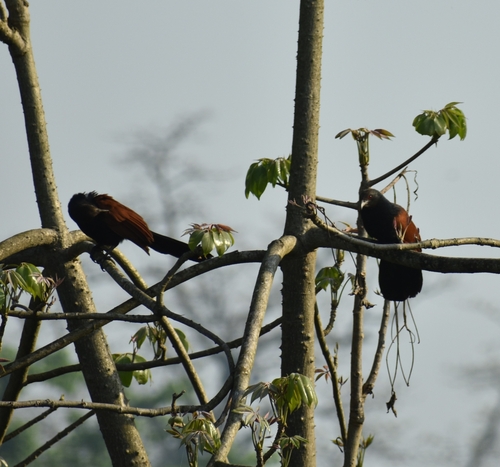 greater coucal
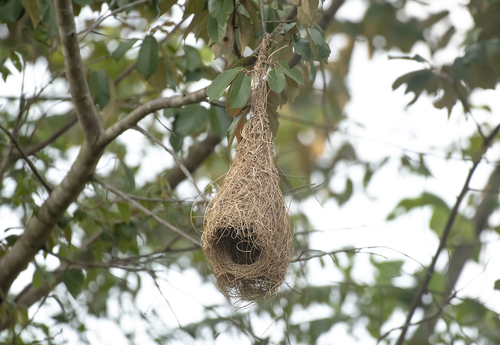 baya weaver
Em resumo
A maneira mais confiável de separar o maior coucal do baya weaver é pelo tamanho e estrutura geral: o maior coucal é uma ave maciça, de cauda longa, do tamanho de um corvo, com asas marrom-cobre e corpo preto brilhante, enquanto o baya weaver é uma ave pequena, do tamanho de um pardal, compacta. Os juvenis de maior coucal apresentam partes inferiores e cauda listradas, enquanto os juvenis de baya weaver são simples e não possuem essas marcas. Em voo ou empoleirado, a longa cauda e o bico pesado do coucal são inconfundíveis em comparação com o baya weaver, que tem cauda curta e bico cônico. Ambas as espécies podem ocorrer em habitats abertos semelhantes, mas seu comportamento, tamanho e plumagem são dramaticamente diferentes em todas as idades.
Dicas de identificação
- O tamanho é o separador mais rápido: O maior coucal é quase 10 vezes mais pesado que o baya weaver; se a ave parece do tamanho de um corvo, não pode ser um tecelão.
- Comprimento e forma da cauda: O coucal tem uma cauda longa, larga e graduada; a cauda do baya weaver é curta e quadrada.
- Forma do bico: O bico do coucal é longo, pesado e ligeiramente curvado; o do baya weaver é curto, grosso e cônico, típico de comedores de sementes.
- Plumagem (adulto): Os adultos de coucal são pretos brilhantes com asas marrom-cobre; os adultos de baya weaver são marrons listrados por cima e pálidos por baixo (fora da época de reprodução), ou têm uma coroa amarela (macho em reprodução), mas nunca mostram brilho preto ou asas castanhas.
- Plumagem (juvenil): O juvenil de coucal apresenta partes inferiores e cauda listradas, às vezes com manchas na coroa; os juvenis de baya weaver são simples e não possuem listras ou manchas.
- Cor dos olhos: O coucal tem olhos rubi impressionantes nos adultos; os olhos do baya weaver são escuros e sem destaque.
- Estilo de voo: O coucal voa com batidas de asas lentas e pesadas, com a longa cauda arrastando; o voo do baya weaver é rápido, saltitante e ágil, com cauda curta.
- Comportamento social: O coucal é solitário ou em pares, raramente em grupos; o baya weaver é gregário, frequentemente em bandos ou colônias de nidificação.
- Indícios de habitat: O coucal prefere cobertura densa e é frequentemente visto se esgueirando; o baya weaver é mais provável de ser encontrado em campos abertos ou em colônias de nidificação em árvores próximas à água.
- Evidência de nidificação: Ninhos pendurados em forma de retorta em colônias são diagnósticos para o baya weaver; os ninhos do coucal são escondidos, em forma de xícara e nunca tecidos.
- Voz: Os chamados profundos e retumbantes do coucal são diferentes dos trinos agudos do baya weaver.
- Diferenças sexuais: Ambas as espécies mostram pouco dimorfismo sexual em campo, exceto pela coroa amarela dos machos em reprodução do baya weaver; os sexos do coucal são semelhantes, embora as fêmeas sejam ligeiramente maiores.
- Mudanças sazonais: Apenas os machos do baya weaver mostram uma coroa amarela brilhante na época de reprodução; o coucal não muda de plumagem sazonalmente.
- Armadilhas comuns: Os coucals imaturos podem parecer mais opacos e menos brilhantes, mas ainda mostram listras e uma cauda longa; os imaturos do baya weaver nunca mostram listras ou uma cauda longa.
- Variação geográfica: As raças de coucal diferem sutilmente em brilho e tom castanho, mas sempre permanecem muito maiores e estruturalmente distintas de qualquer baya weaver.
Tamanho
O maior coucal é vastamente maior, pesando cerca de 283 g e atingindo até 48 cm de comprimento, com uma cauda longa e larga e um bico pesado, ligeiramente curvado [wikidata][wikipedia]. O baya weaver é muito menor, cerca de 25 g, com um corpo compacto, semelhante a um pardal, e um bico curto, grosso e cônico [wikidata]. Mesmo à distância, o tamanho e as proporções do coucal estão mais próximos de um pequeno corvo, enquanto o baya weaver nunca é maior que um tecelão ou pardal típico.
Plumagem
- Aves juvenis/imaturas: O juvenil de maior coucal é preto mais opaco com manchas na coroa e barras esbranquiçadas na parte inferior e na cauda, às vezes com asas sem listras (dependente da raça). Os juvenis de baya weaver são simples, sem listras ou manchas, e se assemelham a pardais apagados.
- Adultos: O adulto de maior coucal tem cabeça, manto superior e partes inferiores pretas brilhantes com asas marrom-cobre e uma cauda longa e escura. Os olhos são rubis impressionantes. Os adultos de baya weaver (fora da época de reprodução) são marrons listrados por cima e pálidos por baixo, sem brilho preto ou asas castanhas; os machos em reprodução têm uma coroa e nuca amarelas brilhantes, mas nunca mostram brilho preto ou castanho nas asas.
- Em voo: As asas largas e arredondadas do coucal brilham em castanho, e a longa cauda é óbvia. O voo do baya weaver é rápido e saltitante, com asas curtas e arredondadas e uma cauda curta; nenhum brilho castanho ou preto é visível.
Comportamento
O maior coucal é tipicamente solitário ou em pares, movendo-se lentamente e frequentemente se esgueirando em vegetação densa, às vezes andando no chão ou voando com batidas de asas pesadas e laboriosas, com a longa cauda arrastando atrás. O baya weaver é altamente social, geralmente em bandos, e é mais frequentemente visto se alimentando ativamente em campos ou tecendo ninhos em colônias. O voo do coucal é lento e direto, enquanto o do baya weaver é rápido, saltitante e ágil.
Habitat
Ambas as espécies podem ser encontradas em áreas abertas, áreas cultivadas e próximas a habitações humanas em todo o subcontinente indiano e no Sudeste Asiático [wikipedia]. O maior coucal prefere sub-bosques densos, arbustos e jardins, frequentemente próximo a coberturas. O baya weaver prefere campos, arbustos abertos e especialmente áreas com árvores adequadas para nidificação, frequentemente próximas à água. A presença de ninhos pendurados em forma de retorta em colônias é um forte indicador do baya weaver.
Voz
O maior coucal emite chamados profundos, ressonantes e retumbantes, frequentemente descritos como notas ‘coop-coop-coop’ ou ‘whoop’, que se propagam longe e geralmente são emitidos de locais cobertos. Os chamados do baya weaver são agudos, rápidos e trêmulos, frequentemente ouvidos em bandos ou em colônias de nidificação. Suas vocalizações são completamente diferentes em tom e entrega.