

garça-branca-grande vs yellow-billed egret
Ardea alba versus Ardea brachyrhyncha
Jogue um quiz com garça-branca-grande e yellow-billed egret
 garça-branca-grande
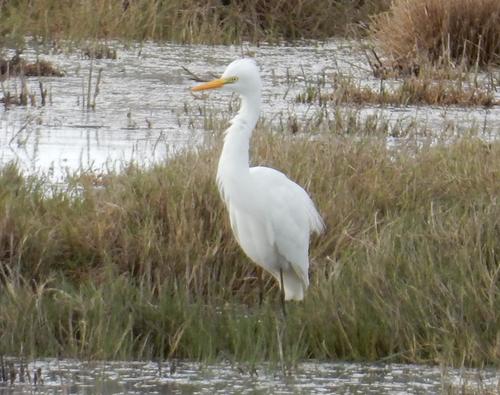 yellow-billed egret
Em resumo
A maneira mais confiável de separar a garça-branca-grande da yellow-billed egret é pelo tamanho e pela estrutura do bico: a garça-branca-grande é muito maior, com um pescoço mais longo e um bico notavelmente mais longo e pesado. No campo, a abertura da garça-branca-grande (a linha onde o bico encontra o rosto) se estende bem atrás do olho, enquanto na yellow-billed egret ela para logo atrás do olho. Ambas são totalmente brancas com bicos amarelos e pernas escuras, mas diferenças sutis na cor das partes nuas e nas proporções são fundamentais. As aves em reprodução mostram diferenças adicionais na cor do bico e das pernas, mas cuidado, pois aves não reprodutoras e imaturas podem parecer muito semelhantes à distância.
Dicas de identificação
- Tamanho e Estrutura: A garça-branca-grande é muito maior e mais alta, com um pescoço e bico notavelmente mais longos. Se você ver uma garça grande e esbelta se destacando entre as outras, é provável que seja uma garça-branca-grande. Se a ave for de tamanho médio, considere a yellow-billed egret.
- Comprimento e Forma do Bico: O bico da garça-branca-grande é mais longo e pesado, enquanto o da yellow-billed egret é mais curto e compacto. Isso é melhor avaliado quando as aves estão lado a lado, mas pode ser estimado com experiência.
- Linha da Abertura: Na garça-branca-grande, a abertura (a linha onde o bico encontra o rosto) se estende bem atrás do olho; na yellow-billed egret, ela termina logo atrás do olho. Esta é uma marca estrutural chave em todas as idades e estações, mas pode ser difícil de ver à distância.
- Cor das Pernas e Pés: A garça-branca-grande tem pernas e pés pretos, embora as pernas inferiores possam ficar mais claras na época de reprodução. A yellow-billed egret tem pernas inferiores e dedos escuros, com uma tíbia mais clara (às vezes avermelhada durante o acasalamento). Essa diferença é sutil e é melhor utilizada em boa luz.
- Cor do Bico na Época de Reprodução: Ambas as espécies têm bicos amarelos fora da época de reprodução, mas na reprodução, o bico da yellow-billed egret torna-se laranja-avermelhado, às vezes com uma ponta preta fora da reprodução. O bico da garça-branca-grande pode escurecer, mas não apresenta ponta preta.
- Lores e Cor dos Olhos na Reprodução: Os lores da yellow-billed egret tornam-se verdes e os olhos ficam vermelhos brilhantes na reprodução; os lores e olhos da garça-branca-grande não mostram essa mudança dramática de cor.
- Plumas: Ambas as espécies crescem plumas ornamentais na reprodução, mas a yellow-billed egret tem longas plumas tanto nas costas quanto no peito, enquanto as da garça-branca-grande estão principalmente nas costas. Isso é sutil e nem sempre visível.
- Aves Juvenis/Imaturas: Os juvenis de ambas as espécies se parecem com adultos não reprodutores; não há padrões de asa ou marcas de voo específicas de idade que os separem.
- Postura de Voo: Ambas voam com os pescoços retraídos; isso não ajuda a separá-las, mas as distingue de cegonhas e grou.
- Contexto de Habitat: Na África, ambas podem ocorrer juntas, mas a garça-branca-grande prefere áreas úmidas maiores e abertas; a yellow-billed egret é mais frequentemente encontrada em campos inundados sazonalmente e corpos d'água menores.
- Associação com Outras Garças: A yellow-billed egret é frequentemente encontrada em bandos mistos com outras garças, às vezes fazendo parecer que é menor em comparação.
- Voz: Não é uma marca de campo confiável; ambas são geralmente silenciosas e os chamados são semelhantes quando emitidos.
- Armadilhas: Cuidado, pois garças-brancas-grandes solitárias podem parecer menores à distância, e que yellow-billed egrets em reprodução podem parecer strikingly diferentes na cor das partes nuas. Sempre verifique múltiplas características quando possível.
- Distribuição Geográfica: Fora da África, qualquer garça branca grande é quase certamente uma garça-branca-grande. Na África Subsaariana, ambas ocorrem, então marcas estruturais e de partes nuas são essenciais.
- Mudanças Sazonais: As cores das partes nuas (bico, pernas, lores, olhos) mudam em ambas as espécies durante a reprodução; sempre considere a época do ano e procure múltiplas marcas de apoio.
Tamanho
A garça-branca-grande é uma garça verdadeiramente grande, atingindo até 1 metro de altura, com um comprimento de 80–104 cm e uma envergadura de 131–170 cm. Ela pesa em média cerca de 1.000 g. Em contraste, a yellow-billed egret é distintamente menor e mais compacta, com um comprimento de 61–69 cm. Essa diferença de tamanho é geralmente óbvia quando ambas as espécies são vistas juntas, mas pode ser subestimada se vistas isoladamente ou à distância. O pescoço e o bico da garça-branca-grande são proporcionalmente mais longos e pesados, dando-lhe uma aparência mais esbelta no geral.
Plumagem
Ambas as espécies são totalmente brancas em todas as idades, e os juvenis se assemelham a adultos não reprodutores em ambas. Não há padrões de asa ou marcas de voo distintivas para separar juvenis ou imaturos; ambas mostram asas brancas simples em voo. Na plumagem de reprodução, ambas desenvolvem plumas ornamentais nas costas, mas a yellow-billed egret também cresce longas plumas no peito. As cores das partes nuas mudam sazonalmente: o bico da garça-branca-grande pode escurecer e as pernas podem ficar mais claras na época de reprodução; o bico da yellow-billed egret torna-se laranja-avermelhado, a tíbia torna-se avermelhada brevemente, e os lores e olhos mudam para verde e vermelho brilhante, respectivamente. Fora da reprodução, o bico da yellow-billed egret pode mostrar uma ponta preta, nunca mostrada pela garça-branca-grande. A cor das pernas também é sutilmente diferente: a garça-branca-grande tem pernas e pés pretos (as pernas inferiores podem clarear na reprodução), enquanto a yellow-billed egret tem pernas inferiores e dedos escuros, com uma tíbia mais clara.
Comportamento
Ambas as espécies são frequentemente encontradas vasculhando águas rasas, movendo-se lentamente e deliberadamente. A garça-branca-grande tende a andar com o pescoço estendido e as asas próximas, e em voo, retrai o pescoço em uma postura clássica de garça. A yellow-billed egret pode ser gregária em bandos soltos, mas é frequentemente solitária; também é encontrada com outras garças. Ambas se reproduzem em colônias, frequentemente com outras garças e herons. Nenhuma diferença comportamental significativa é notada que ajude na separação em campo.
Habitat
A garça-branca-grande é amplamente distribuída por vários continentes e utiliza uma variedade de habitats úmidos, desde lagos e rios até estuários e campos alagados. A yellow-billed egret é restrita à África Subsaariana, tipicamente encontrada em habitats úmidos inundados sazonalmente, campos e bordas de águas rasas. Na África, ambas podem se sobrepor, mas a yellow-billed egret evita desertos e florestas densas. O habitat sozinho não é diagnóstico onde as distribuições se sobrepõem, mas a garça-branca-grande é mais provável de ser encontrada em áreas úmidas maiores e abertas.
Voz
Ambas as espécies são geralmente silenciosas. A garça-branca-grande emite um crocitar baixo e rouco quando perturbada e um alto 'cuk cuk cuk' ou grito em colônias. Nenhuma diferença vocal distintiva é notada para a yellow-billed egret nas fontes; a voz não é uma marca de campo confiável para separação.
garça-branca-grande · yellow-billed egret · Minhas aves difíceis