

marreco vs pato-colhereiro
Spatula querquedula versus Spatula clypeata
Jogue um quiz com marreco e pato-colhereiro
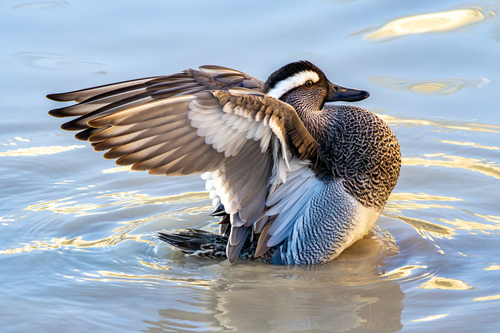 marreco
 pato-colhereiro
Em resumo
A marca de campo mais confiável entre o marreco e o pato-colhereiro é o bico: o pato-colhereiro tem um bico muito grande, largo e em forma de pá, enquanto o bico do marreco é mais fino e mais típico de patos mergulhadores. Em voo, ambos mostram manchas de azul pálido nas asas dianteiras, mas a do pato-colhereiro é mais larga e a ave é mais robusta no geral. O macho do marreco em plumagem de reprodução é inconfundível com seu ousado supercílios brancos (sobrancelha) e rosto castanho, enquanto o macho do pato-colhereiro apresenta uma cabeça verde escura e peito branco. Fêmeas e machos em eclipse são mais complicados, mas as fêmeas do marreco têm marcas faciais mais fortes e uma estrutura mais delicada. Juvenis e fêmeas são frequentemente confundidos, especialmente em voo, mas a atenção cuidadosa à forma do bico, padrão facial e tamanho geral os separará.
Dicas de identificação
- A forma do bico é a característica mais confiável: O pato-colhereiro sempre apresenta um bico muito grande, largo e espatuliforme (em forma de colher), mesmo em fêmeas e juvenis. O bico do marreco é mais fino e mais típico de patos mergulhadores. Use isso em todas as idades e estações.
- Tamanho e estrutura: O pato-colhereiro é mais robusto, longo e pesado que o marreco. O marreco é mais pequeno e compacto, com um voo mais delicado e em água.
- Plumagem de reprodução do macho: O macho do marreco tem um ousado supercílios brancos (ampla lua branca acima do olho) e rosto castanho—único entre patos mergulhadores. O macho do pato-colhereiro tem uma cabeça verde escura (ou escura à distância), peito branco, flancos e barriga castanhos, e um enorme bico preto.
- Padrão facial de fêmeas/juvenis: As fêmeas e juvenis do marreco têm um forte supercílios pálido, faixa ocular escura e uma mancha pálida na lore, cercada por uma segunda linha escura. As fêmeas/juvenis do pato-colhereiro têm um rosto mais simples, sem esse contraste facial nítido.
- Em voo (todas as idades): Ambos mostram manchas de azul pálido nas asas dianteiras, mas a do pato-colhereiro é mais larga e separada do especulum verde por uma borda branca. A do marreco é azul mais pálido, e a ave é menor e mais esbelta em voo.
- Cor das pernas: O pato-colhereiro tem pernas laranja-avermelhadas brilhantes em ambos os sexos; as pernas do marreco são cinzas.
- Comportamento alimentar: O pato-colhereiro frequentemente balança seu bico de lado a lado, filtrando água em busca de invertebrados. O marreco se alimenta mais como um pato mergulhador típico e mostra frequente movimento de cabeça, especialmente nas fêmeas.
- Machos em eclipse: Os machos do pato-colhereiro em eclipse se assemelham às fêmeas, mas mantêm a asa dianteira azul pálida. Os machos do marreco em eclipse são menos distintivos, mas ainda mostram o forte padrão facial.
- Contexto de habitat: O marreco é estritamente migratório e ausente de áreas de reprodução no inverno; o pato-colhereiro é mais disseminado e pode ser encontrado durante todo o ano em algumas áreas.
- Tamanho do grupo: O marreco pode formar grandes bandos no inverno; o pato-colhereiro é menos gregário fora da temporada de reprodução.
- Voz: O macho do marreco tem um chamado de acasalamento estalado; a voz do pato-colhereiro não é distintiva para separação em campo.
- Confusão potencial: A fêmea do marreco pode ser confundida com a fêmea do pato-colhereiro, mas a forma do bico e o padrão facial são fundamentais. Cuidado com machos em eclipse e juvenis, que podem se assemelhar às fêmeas, mas ainda mostram as diferenças estruturais e de padrão facial.
- Quando as marcas falham: A longa distância ou em luz fraca, o tamanho e a forma do bico ainda são geralmente visíveis. Em bandos mistos, compare diretamente se possível.
Tamanho
O pato-colhereiro é distintamente maior e mais pesado que o marreco. O pato-colhereiro mede 44–52 cm de comprimento, com uma envergadura de 70–84 cm e um peso variando de 500–800 g ([wikipedia]). O marreco é um pato mergulhador menor; enquanto as medidas exatas não são fornecidas nas notas, ele é notavelmente mais pequeno e leve em construção do que o pato-colhereiro. Essa diferença de tamanho é geralmente óbvia quando os dois são vistos lado a lado, mas pode ser menos aparente à distância ou com aves solitárias.
Plumagem
- Plumagem de juvenil/immaturo/fêmea: Ambas as espécies são marrons manchados, mas as fêmeas e imaturos do marreco mostram um supercílios pálido distinto, faixa ocular escura e uma mancha pálida na lore, cercada por uma segunda linha escura. As fêmeas/juvenis do pato-colhereiro têm um rosto mais simples, sem esse forte contraste facial, e têm uma aparência mais apagada, mais parecida com a do pato-real. O bico do pato-colhereiro é sempre muito mais largo e longo, mesmo em juvenis e fêmeas.
- Plumagem de reprodução do macho adulto: O macho do marreco é inconfundível com um ousado supercílios brancos (ampla lua branca sobre o olho), rosto castanho, cabeça marrom e corpo cinza. O macho do pato-colhereiro tem uma cabeça verde escura (geralmente parecendo preta à distância), peito branco, flancos e barriga castanhos, e um bico preto notavelmente grande.
- Em voo (todas as idades): Ambos mostram um especulum azul pálido (asa dianteira), mas o do pato-colhereiro é mais largo e separado do especulum verde por uma borda branca. O especulum azul pálido do marreco também é cercado por branco, mas a ave é menor e mais esbelta em voo. A asa dianteira da fêmea do pato-colhereiro é acinzentada, enquanto a do marreco é azul mais pálida.
- Macho em eclipse: Os machos do pato-colhereiro em eclipse se assemelham às fêmeas, mas mantêm a asa dianteira azul pálida; os machos do marreco em eclipse são menos distintivos, mas ainda mostram o forte padrão facial.
Comportamento
Ambas as espécies são patos mergulhadores, mas o pato-colhereiro é notado por seu estilo de alimentação único: balançando seu bico de lado a lado e filtrando alimentos da água usando as lamelas em forma de pente em seu bico. O marreco se alimenta mais como um pato mergulhador típico e é notado por frequentes movimentos de cabeça ao mergulhar, especialmente nas fêmeas. O pato-colhereiro é menos gregário fora da temporada de reprodução, frequentemente em pequenos grupos, enquanto o marreco pode formar grandes bandos em áreas de invernada.
Habitat
Ambas as espécies se reproduzem em pântanos e zonas úmidas em toda a Europa e Palearctic, mas o marreco é estritamente migratório, deixando sua área de reprodução completamente no inverno e se movendo para a África, Índia e Australásia. O pato-colhereiro é mais disseminado, reproduzindo-se em toda a Europa, Ásia e América do Norte, e invernando mais ao sul, mas alguns permanecem no sul da Europa e Ásia. Ambas preferem zonas úmidas rasas e vegetadas, mas o pato-colhereiro está mais ligado a pântanos com fundo lamacento ricos em invertebrados.
Voz
O macho do marreco tem um chamado de acasalamento estalado distinto, enquanto a fêmea é em sua maioria silenciosa, com apenas um quack fraco. As vocalizações do pato-colhereiro não são descritas nas notas, mas geralmente não são uma marca de campo forte para separação.