

toutinegra-das-figueiras vs toutinegra-real-oriental
Sylvia borin versus Curruca crassirostris
Jogue um quiz com toutinegra-das-figueiras e toutinegra-real-oriental
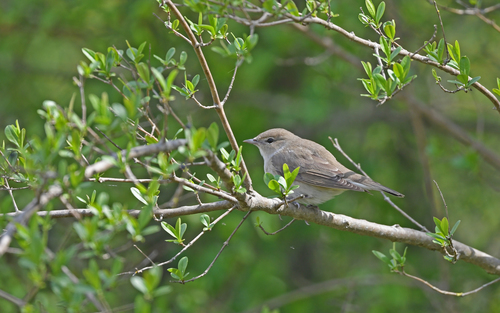 toutinegra-das-figueiras
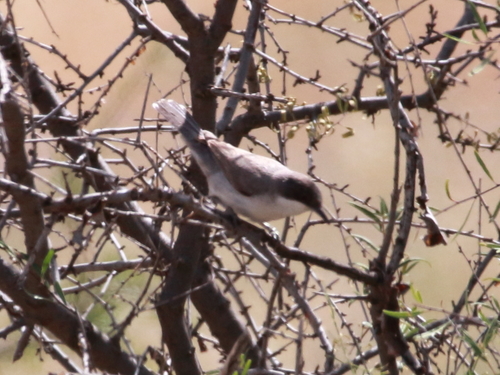 toutinegra-real-oriental
Em resumo
A marca de campo mais confiável entre a toutinegra-das-figueiras e a toutinegra-real-oriental é o tamanho geral e o padrão da cabeça: a toutinegra-real-oriental é distintamente maior, com um bico mais longo e pesado e (em machos adultos) uma cabeça cinza escura impressionante e uma garganta branca, contrastando com uma íris pálida. A toutinegra-das-figueiras é menor, mais simples e não possui marcas faciais fortes, com uma parte superior marrom uniforme e partes inferiores brancas opacas. Os juvenis de ambas as espécies são menos distintivos, mas a toutinegra-real ainda mostra uma estrutura maior e mais pesada e uma cabeça mais clara com um tom acastanhado. Em voo ou em repouso, a toutinegra-das-figueiras sempre parece simples e compacta, enquanto a toutinegra-real é mais robusta e com cauda mais longa. Se você ver uma toutinegra com um rosto simples e sem padrão óbvio na cabeça, pense na toutinegra-das-figueiras; se você ver uma toutinegra grande com um rosto contrastante e íris branca (nos machos), é provável que seja a toutinegra-real.
Dicas de identificação
- Tamanho e estrutura: A toutinegra-real-oriental é distintamente maior e mais robusta do que a toutinegra-das-figueiras. Se o pássaro parecer grande para uma toutinegra, com uma cauda longa e bico pesado, pense na toutinegra-real.
- Formato do bico: A toutinegra-real tem um bico visivelmente mais longo e pontudo do que o bico curto e forte da toutinegra-das-figueiras. Isso é visível mesmo à distância em boa luz.
- Padrão da cabeça (macho adulto de toutinegra-real): Procure uma cabeça cinza escura, máscara ocular preta, garganta branca e íris branca—nenhum dos quais é mostrado pela toutinegra-das-figueiras.
- Padrão da cabeça (fêmea/imatura de toutinegra-real): Fêmeas e imaturos têm uma cabeça mais clara e partes inferiores avermelhadas, mas ainda mostram uma estrutura maior e mais pesada e um bico mais longo do que a toutinegra-das-figueiras. A íris é escura em jovens, então não confie na cor da íris para imaturos.
- Simplicidade da toutinegra-das-figueiras: A toutinegra-das-figueiras é sempre de rosto simples, sem supercílios fortes, máscara ou contraste na garganta. Se o rosto parecer sem características, é provável que seja a toutinegra-das-figueiras.
- Cor da parte superior: A toutinegra-das-figueiras é marrom-oliva acima e branca opaca abaixo, com um supercílios pálido e um tom amarelado na garganta/flancos. A toutinegra-real é mais cinza acima, especialmente em machos adultos.
- Cor da parte inferior: A toutinegra-das-figueiras é branca opaca abaixo com um tom amarelado; fêmeas/imaturos de toutinegra-real têm partes inferiores avermelhadas, o que pode ser uma pista útil.
- Cor da íris: O macho adulto de toutinegra-real tem uma íris branca impressionante; a toutinegra-das-figueiras sempre tem um olho escuro. O imaturo de toutinegra-real tem uma íris escura, então essa marca só funciona para machos adultos.
- Cor das pernas: A toutinegra-das-figueiras tem pernas cinza-azuladas; as pernas da toutinegra-real são pretas. Isso pode ser sutil, mas pode ajudar em boas vistas.
- Comportamento: A toutinegra-das-figueiras é mais propensa a ser vista se escondendo em coberturas densas, enquanto a toutinegra-real pode pousar mais abertamente em arbustos ou árvores.
- Habitat: Na Europa central/norte, a toutinegra-das-figueiras é muito mais provável. Na Europa mediterrânea ou sudeste, ambas são possíveis, mas a toutinegra-real prefere florestas abertas e arbustivas.
- Canto: O canto da toutinegra-das-figueiras é um trinado rico e melódico semelhante ao do chapim-preto; o da toutinegra-real é mais variado, poderoso e semelhante ao rouxinol. Use o canto com cautela, pois ambos podem ser confusos.
- Confusão juvenil: Os juvenis de toutinegra-das-figueiras são especialmente simples, com partes superiores mais claras/cinzentas e partes inferiores amareladas. Os juvenis de toutinegra-real são maiores, com uma cabeça mais clara e partes inferiores avermelhadas, mas carecem do forte padrão de cabeça dos machos adultos.
- Sem padrão nas asas ou cauda: Nenhuma das espécies apresenta marcas distintivas nas asas ou cauda em qualquer idade, então não confie nessas características.
- Armadilhas: Cuidado ao assumir que qualquer toutinegra simples e acastanhada é uma toutinegra-das-figueiras—sempre verifique o tamanho, formato do bico e padrão sutil da cabeça, especialmente na região mediterrânea.
Tamanho
A toutinegra-das-figueiras é uma toutinegra pequena e compacta, com cerca de 14 cm de comprimento, com um comprimento de asa de 7,6–8,4 cm e peso típico de 16–22 g [wikipedia]. A toutinegra-real-oriental é visivelmente maior, com 15–16 cm de comprimento—uma das maiores toutinegras típicas—e parece mais robusta e com cauda mais longa em campo [wikipedia]. O bico da toutinegra-real também é mais longo e mais pontudo, contribuindo para sua aparência mais pesada. Se você ver ambas as espécies lado a lado, a diferença de tamanho e robustez é imediatamente aparente.
Plumagem
-
Juvenis/imaturos: Ambas as espécies têm plumagem mais simples e opaca do que os adultos, mas os juvenis de toutinegra-das-figueiras são especialmente simples, com partes superiores mais claras e cinzentas e um tom amarelado nas partes inferiores. Os juvenis de toutinegra-real têm uma cabeça mais clara e partes inferiores avermelhadas, e suas costas cinzas têm um tom acastanhado; sua íris é escura, não branca [wikipedia]. Nenhum padrão distintivo nas asas ou cauda é mencionado para qualquer uma das espécies em qualquer idade, então confie na coloração geral e no padrão da cabeça.
-
Adultos: Os adultos de toutinegra-das-figueiras são uniformemente marrons acima e brancos opacos abaixo, com um supercílios pálido e um anel ocular esbranquiçado, mas sem marcas faciais fortes. Os machos adultos de toutinegra-real têm uma parte de trás cinza simples, cabeça cinza escura, máscara ocular preta, garganta branca e uma íris branca impressionante. Fêmeas e imaturos são mais opacos, com uma cabeça mais clara e partes inferiores avermelhadas, mas ainda mostram uma estrutura maior e mais pesada e um bico mais longo e pontudo. A toutinegra-das-figueiras sempre carece de qualquer padrão de cabeça contrastante ou fortes contrastes de cor.
Comportamento
Ambas as espécies são típicas de toutinegras, mas a toutinegra-das-figueiras é mais compacta e tende a se esconder em coberturas densas, movendo-se silenciosamente pela vegetação. A toutinegra-real, sendo maior e mais robusta, pode parecer mais deliberada e menos ágil, frequentemente pousando mais abertamente em arbustos ou árvores. A cauda mais longa e o bico mais pesado da toutinegra-real podem ser notáveis em sua postura e comportamento alimentar.
Habitat
A toutinegra-das-figueiras se reproduz em florestas abertas com cobertura densa, geralmente evitando jardins apesar de seu nome [wikipedia]. A toutinegra-real-oriental prefere florestas decíduas abertas, frequentemente em regiões mais ao sul e a leste (Mediterrâneo, Bálcãs, Turquia, Cáucaso, Ásia Central) [wikipedia]. Ambas hibernam na África subsaariana, mas seus habitats de reprodução não se sobrepõem muito, exceto durante a migração. Se você estiver na Europa central ou do norte, a toutinegra-das-figueiras é muito mais provável; na Europa mediterrânea ou sudeste, ambas são possíveis, mas a toutinegra-real prefere florestas abertas e arbustivas.
Voz
O canto da toutinegra-das-figueiras é um trinado rico e melódico, muito semelhante ao do chapim-preto [wikipedia]. O canto da toutinegra-real-oriental é uma série de notas trinado 'liroo-liroo' e notas de advertência, mais variado e se aproximando da riqueza do rouxinol [wikipedia]. Ambos podem ser confusos para o ouvido, mas o canto da toutinegra-real é geralmente mais poderoso e variado. Chamadas não são descritas em detalhes para qualquer uma das espécies nas notas.
toutinegra-das-figueiras · toutinegra-real-oriental · Minhas aves difíceis