

gaivina-de-forster vs trinta-réis-boreal
Sterna forsteri versus Sterna hirundo
Jogue um quiz com gaivina-de-forster e trinta-réis-boreal
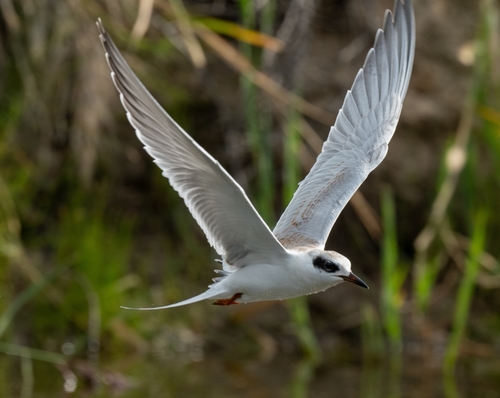 gaivina-de-forster
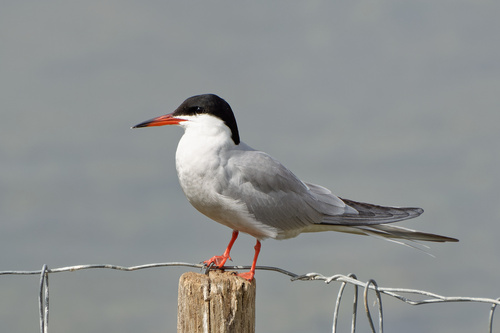 trinta-réis-boreal
Em resumo
A marca de campo mais confiável para separar a gaivina-de-forster do trinta-réis-boreal é o padrão de cabeça de inverno (não reprodutivo): a gaivina-de-forster apresenta uma máscara ocular preta nítida em uma cabeça branca, enquanto o trinta-réis-boreal tem uma touca escura ou borrada sem uma máscara distinta. Em voo, especialmente entre juvenis e aves não reprodutivas, a gaivina-de-forster tem asas superiores mais claras, sem o cunho escuro nas primárias visto no trinta-réis-boreal, e um centro cinza claro na cauda. A estrutura também ajuda: a gaivina-de-forster é ligeiramente maior, com uma cauda mais longa e profundamente bifurcada e uma cabeça mais pesada. Os adultos em reprodução podem ser muito semelhantes, então concentre-se no padrão das asas e da cauda, na cor do bico e no padrão da cabeça fora da temporada de reprodução.
Dicas de identificação
- Padrão de cabeça não reprodutivo: A gaivina-de-forster apresenta uma máscara ocular preta nítida em uma cabeça branca; o trinta-réis-boreal tem uma touca escura ou borrada, sem uma máscara distinta. Esta é a melhor marca única no inverno ou entre imaturos.
- Padrão das asas superiores em voo (todas as idades, especialmente juvenis e não reprodutivos): A gaivina-de-forster tem asas superiores mais claras, sem o cunho escuro nas primárias; o trinta-réis-boreal apresenta um cunho escuro nas primárias, criando uma aparência mais contrastante.
- Padrão da cauda: A gaivina-de-forster tem um centro cinza em sua cauda, que é de outra forma branca; a cauda do trinta-réis-boreal é mais uniformemente branca. Isso é sutil, mas visível em boa luz, especialmente em aves empoleiradas.
- Costas e coberturas das asas de juvenis: A gaivina-de-forster juvenil tem um padrão escamoso, marrom-alaranjado; os juvenis do trinta-réis-boreal apresentam um marrom-cinza mais uniforme com uma barra carpiana escura marcada.
- Cor do bico (plumagem de reprodução): A gaivina-de-forster tem um bico laranja com ponta preta; o bico do trinta-réis-boreal é laranja-avermelhado com uma ponta preta (exceto na subespécie asiática de bico preto). Em luz fraca, isso pode ser difícil de julgar.
- Cor das pernas (plumagem de reprodução): A gaivina-de-forster tem pernas laranja brilhantes; as pernas do trinta-réis-boreal são vermelhas brilhantes. Isso é confiável apenas a curta distância.
- Estrutura: A gaivina-de-forster é ligeiramente maior, com uma cabeça mais pesada, pernas mais longas e uma cauda mais longa e profundamente bifurcada. O trinta-réis-boreal é mais compacto, com uma cauda mais curta e bifurcação menos pronunciada.
- Estilo de voo: A gaivina-de-forster frequentemente parece mais flutuante e apresenta longas fitas na cauda; o voo do trinta-réis-boreal é mais direto e poderoso.
- Contexto de habitat: Na América do Norte, a gaivina-de-forster é mais provável em pântanos de água doce, especialmente no interior; o trinta-réis-boreal é mais costeiro ou em grandes lagos, mas ambos podem se sobrepor durante a migração.
- Padrão de cabeça na plumagem de reprodução: Ambos têm toucas pretas completas, então isso não é útil no verão.
- Voz: Ambos têm chamados agudos, mas a gaivina-de-forster pode soar ligeiramente mais áspera ou mais semelhante a gaivotas. Use com cautela.
- Postura empoleirada: A gaivina-de-forster frequentemente parece ter pernas mais longas e cauda mais longa quando empoleirada, com a cauda se estendendo bem além das pontas das asas.
- Contexto sazonal: A gaivina-de-forster é rara, mas regular na Europa ocidental no inverno; o trinta-réis-boreal é esperado na Europa no verão, mas raro no inverno.
- Armadilhas: Os adultos em reprodução são muito semelhantes; concentre-se no padrão da cauda e das asas, e na cor do bico/pernas se visível. No inverno ou entre imaturos, o padrão da cabeça e o contraste das asas superiores são os mais confiáveis.
- Quando em dúvida: Se você ver uma gaivina com uma máscara ocular preta nítida no inverno, é a gaivina-de-forster. Se a asa superior mostrar um forte cunho escuro em voo, é o trinta-réis-boreal.
Tamanho
A gaivina-de-forster é marginalmente maior (33–36 cm de comprimento, 78–80 cm de envergadura, 130–190 g) do que o trinta-réis-boreal (medidas não citadas diretamente aqui, mas a gaivina-de-forster é descrita como 'obviamente maior' na América do Norte [wikipedia]). A gaivina-de-forster também tem pernas relativamente mais longas e uma cabeça mais pesada. No campo, essa diferença de tamanho é sutil e frequentemente mascarada pela postura ou distância, então marcas estruturais e de plumagem são mais confiáveis.
Plumagem
- Plumagem juvenil e não reprodutiva: A gaivina-de-forster apresenta uma máscara ocular preta distinta em uma cabeça branca, enquanto o trinta-réis-boreal tem uma touca escura ou borrada sem uma máscara clara. A gaivina-de-forster juvenil tem um padrão escamoso, marrom-alaranjado nas costas e coberturas das asas, mas as asas superiores permanecem claras e carecem do cunho escuro nas primárias que é típico do trinta-réis-boreal. Os juvenis do trinta-réis-boreal têm uma barra carpiana escura mais marcada e um cunho escuro nas primárias, dando à asa superior uma aparência mais contrastante em voo.
- Plumagem de reprodução: Ambas as espécies têm toucas pretas, partes superiores cinza pálido e partes inferiores brancas. A gaivina-de-forster na plumagem de reprodução tem um bico laranja com ponta preta e pernas laranja brilhantes, enquanto o bico do trinta-réis-boreal é laranja-avermelhado com uma ponta preta e as pernas são vermelhas brilhantes. A gaivina-de-forster tem um centro cinza em sua cauda branca, enquanto a cauda do trinta-réis-boreal é mais uniformemente branca.
- Asas: As asas superiores da gaivina-de-forster são mais brancas e carecem do cunho primário escuro visto no trinta-réis-boreal, especialmente óbvio em voo e entre imaturos e aves não reprodutivas.
Comportamento
Ambas as espécies são mergulhadoras, mas a gaivina-de-forster normalmente caça pairando brevemente antes de mergulhar diretamente, enquanto o trinta-réis-boreal pode apresentar um comportamento alimentar mais variado. A gaivina-de-forster também é conhecida por caçar insetos sobre pântanos, especialmente em áreas de reprodução. Ambas são nidificadoras coloniais e defendem ferozmente seus ninhos, mas a gaivina-de-forster é mais provável de ser vista em pântanos interiores, enquanto o trinta-réis-boreal é mais costeiro ou encontrado em grandes lagos.
Habitat
A gaivina-de-forster reproduz-se principalmente em pântanos interiores na América do Norte, especialmente no norte dos EUA e sul do Canadá, e inverna no sul dos EUA, México e Caribe. O trinta-réis-boreal tem uma distribuição circumpolar muito mais ampla, reproduzindo-se em regiões temperadas e subárticas da Europa, Ásia e América do Norte, e inverna em regiões costeiras tropicais e subtropicais. Na América do Norte, a gaivina-de-forster é mais provável em pântanos de água doce, enquanto o trinta-réis-boreal é mais frequentemente encontrado ao longo das costas e grandes lagos, mas há sobreposição, especialmente durante a migração.
Voz
O chamado da gaivina-de-forster é semelhante ao do trinta-réis-boreal, mas inclui algumas notas mais ásperas, semelhantes a gaivotas. Ambos têm chamados agudos e altos, mas a voz não é um separador de campo confiável, a menos que você esteja muito familiarizado com os repertórios de ambas as espécies.
gaivina-de-forster · trinta-réis-boreal · Minhas aves difíceis