

Forster's Tern vs Sterna comune
Sterna forsteri contro Sterna hirundo
Fai un quiz con Forster's Tern e Sterna comune
 Forster's Tern
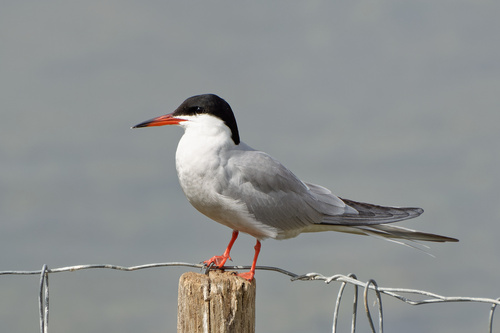 Sterna comune
In breve
Il segno di campo più affidabile per separare il Forster's Tern dal Sterna comune è il motivo della testa in inverno (non riproduttivo): il Forster's mostra una netta maschera nera sugli occhi su una testa bianca, mentre il Sterna comune ha un berretto scuro o sfocato senza una maschera distinta. In volo, specialmente tra i giovani e gli uccelli non riproduttivi, il Forster's Tern ha ali superiori più chiare che mancano del cuneo scuro sulle primarie visibile nel Sterna comune, e un centro grigio chiaro sulla coda. Anche la struttura aiuta: il Forster's è leggermente più grande, con una coda più lunga e profondamente biforcuta e una testa più pesante. Gli adulti in riproduzione possono essere molto simili, quindi concentrati sul motivo delle ali e della coda, sul colore del becco e sul motivo della testa al di fuori della stagione di riproduzione.
Consigli di identificazione
- Motivo della testa non riproduttivo: Il Forster's Tern mostra una netta maschera nera sugli occhi su una testa bianca; il Sterna comune ha un berretto scuro o sfocato, privo di una maschera distinta. Questo è il segno migliore in inverno o tra gli immaturi.
- Motivo delle ali superiori in volo (tutte le età, specialmente giovani e non riproduttivi): Il Forster's Tern ha ali superiori più chiare senza il cuneo scuro sulle primarie; il Sterna comune mostra un cuneo scuro sulle primarie, creando un aspetto più contrastante.
- Motivo della coda: Il Forster's Tern ha un centro grigio sulla sua coda altrimenti bianca; la coda del Sterna comune è più uniformemente bianca. Questo è sottile ma visibile in buona luce, specialmente sugli uccelli appollaiati.
- Schiena e copritrici delle ali dei giovani: Il giovane Forster's Tern ha un motivo squamoso di colore marrone zenzero; i giovani Sterna comune mostrano un grigio-marrone più uniforme con una marcata barra carpale scura.
- Colore del becco (piumaggio di riproduzione): Il Forster's Tern ha un becco arancione con punta nera; il becco del Sterna comune è arancio-rossastro con una punta nera (eccetto nella sottospecie asiatica con becco nero). In scarsa luce, questo può essere difficile da giudicare.
- Colore delle gambe (piumaggio di riproduzione): Il Forster's Tern ha gambe arancioni brillanti; le gambe del Sterna comune sono rosse brillanti. Questo è affidabile solo a distanza ravvicinata.
- Struttura: Il Forster's Tern è leggermente più grande, con una testa più pesante, gambe più lunghe e una coda più lunga e profondamente biforcuta. Il Sterna comune è più compatto, con una coda più corta e una biforcazione meno pronunciata.
- Stile di volo: Il Forster's Tern appare spesso più galleggiante e mostra strisce di coda più lunghe; il volo del Sterna comune è più diretto e potente.
- Contesto dell'habitat: In Nord America, il Forster's Tern è più probabile trovarlo in paludi d'acqua dolce, specialmente nell'entroterra; il Sterna comune è più costiero o su grandi laghi, ma entrambi possono sovrapporsi durante la migrazione.
- Motivo della testa nel piumaggio di riproduzione: Entrambi hanno berretti neri completi, quindi questo non è utile in estate.
- Voce: Entrambi hanno richiami acuti, ma il Forster's può suonare leggermente più aspro o più simile a un gabbiano. Usare con cautela.
- Postura appollaiata: Il Forster's Tern appare spesso con gambe più lunghe e coda più lunga quando è appollaiato, con la coda che si estende ben oltre le punte delle ali.
- Contesto stagionale: Il Forster's Tern è raro ma regolare nell'Europa occidentale in inverno; il Sterna comune è atteso in Europa in estate, ma raro in inverno.
- Trappole: Gli adulti in riproduzione sono molto simili; concentrati sul motivo della coda e delle ali, e sul colore del becco/gambe se visibile. In inverno o tra gli immaturi, il motivo della testa e il contrasto delle ali superiori sono i più affidabili.
- Quando hai dubbi: Se vedi un gabbiano con una netta maschera nera sugli occhi in inverno, è un Forster's. Se l'ala superiore mostra un forte cuneo scuro in volo, è un Sterna comune.
Taglia
Il Forster's Tern è marginalmente più grande (33–36 cm di lunghezza, 78–80 cm di apertura alare, 130–190 g) rispetto al Sterna comune (misurazioni non citate direttamente qui, ma il Forster's è descritto come 'ovviamente più grande' in Nord America [wikipedia]). Il Forster's ha anche gambe relativamente più lunghe e una testa più pesante. Sul campo, questa differenza di dimensioni è sottile e spesso mascherata dalla postura o dalla distanza, quindi i segni strutturali e del piumaggio sono più affidabili.
Piumaggio
- Piumaggio giovanile e non riproduttivo: Il Forster's Tern mostra una distintiva maschera nera sugli occhi su una testa bianca, mentre il Sterna comune ha un berretto scuro o sfocato senza una maschera chiara. Il giovane Forster's Tern ha un motivo squamoso di colore marrone zenzero sulla schiena e sulle copritrici delle ali, ma le ali superiori rimangono chiare e mancano del cuneo scuro sulle primarie che è tipico del Sterna comune. I giovani Sterna comune hanno una barra carpale scura più marcata e un cuneo scuro sulle primarie, dando all'ala superiore un aspetto più contrastante in volo.
- Piumaggio di riproduzione: Entrambe le specie hanno berretti neri, parti superiori grigio chiaro e parti inferiori bianche. Il Forster's Tern in piumaggio di riproduzione ha un becco arancione con punta nera e gambe arancioni brillanti, mentre il becco del Sterna comune è arancio-rossastro con una punta nera e le gambe sono rosse brillanti. Il Forster's Tern ha un centro grigio sulla sua coda bianca, mentre la coda del Sterna comune è più uniformemente bianca.
- Ali: Le ali superiori del Forster's Tern sono più bianche e mancano del cuneo scuro primario visibile nel Sterna comune, specialmente evidente in volo e tra gli immaturi e gli uccelli non riproduttivi.
Comportamento
Entrambe le specie sono tuffatori, ma il Forster's Tern di solito caccia planando brevemente prima di tuffarsi direttamente, mentre il Sterna comune può mostrare un comportamento alimentare più vario. Il Forster's Tern è anche noto per catturare insetti sopra le paludi, specialmente nelle aree di riproduzione. Entrambi sono nidi coloniali e difendono fieramente i loro nidi, ma il Forster's è più probabile che venga visto in paludi interne, mentre il Sterna comune è più costiero o trovato su grandi laghi.
Habitat
Il Forster's Tern nidifica principalmente in paludi interne in Nord America, specialmente nel nord degli Stati Uniti e nel sud del Canada, e sverna nel sud degli Stati Uniti, in Messico e nei Caraibi. Il Sterna comune ha una distribuzione molto più ampia, circumpolare, nidificando in regioni temperate e subartiche di Europa, Asia e Nord America, e svernando in regioni costiere tropicali e subtropicali. In Nord America, il Forster's è più probabile trovarlo in paludi d'acqua dolce, mentre il Sterna comune è più spesso trovato lungo le coste e grandi laghi, ma ci sono sovrapposizioni, specialmente durante la migrazione.
Voce
Il richiamo del Forster's Tern è simile a quello del Sterna comune ma include alcune note più aspre, simili a quelle dei gabbiani. Entrambi hanno richiami acuti e penetranti, ma la voce non è un separatore di campo affidabile a meno che tu non sia molto familiare con i repertori di entrambe le specie.