

laverca vs estorninho
Alauda arvensis versus Sturnus vulgaris
Jogue um quiz com laverca e estorninho
 laverca
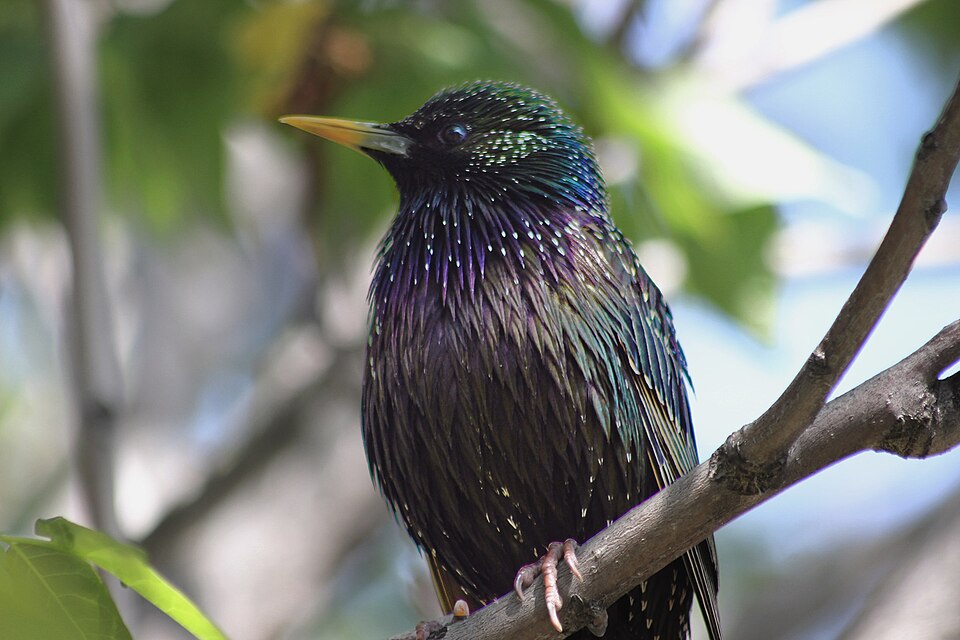 estorninho
Em resumo
A marca de campo mais confiável para separar a laverca do estorninho é a plumagem geral: as lavercas são marrons e pálidas com listras, enquanto os estorninhos são pretos brilhantes com um brilho metálico e (no inverno) manchas brancas. Em voo, a laverca mostra bordas brancas na cauda e na asa traseira, visíveis de trás, enquanto o estorninho tem asas pontudas e uma cauda curta e quadrada sem branco. Os estorninhos juvenis são cinza-marrons simples, mas ainda carecem da aparência listrada e da crista das lavercas. A estrutura e o comportamento também ajudam: as lavercas têm uma crista curta e arredondada e frequentemente pairam enquanto cantam, enquanto os estorninhos têm corpo mais pesado, andam com um andar trôpego e nunca pairam. Ambos são comuns em áreas abertas, mas os estorninhos são mais propensos a serem vistos em bandos e ao redor de habitações humanas.
Dicas de identificação
- Contraste da plumagem: A laverca é sempre marron listrada por cima e pálida por baixo, sem iridescência ou manchas fortes; o estorninho é preto brilhante com um brilho metálico e (no inverno) manchas brancas.
- Crista: A laverca tem uma crista curta e arredondada na cabeça, que pode levantar ou abaixar; os estorninhos nunca mostram crista.
- Padrão da cauda e das asas em voo: A laverca mostra bordas brancas na cauda e na asa traseira, visíveis ao voar para longe; a cauda do estorninho é curta, quadrada e uniformemente escura, sem bordas pálidas.
- Forma da asa: O estorninho tem asas pontudas em voo, dando uma aparência triangular; as asas da laverca são mais curtas e largas, especialmente nos machos.
- Confusão juvenil: Os estorninhos jovens são cinza-marrons simples, sem listras e crista; as lavercas jovens já são listradas e têm crista.
- Bico: O bico do estorninho é longo, estreito e afiado, tornando-se amarelo no verão; o bico da laverca é mais curto, mais grosso e sempre da cor do chifre.
- Cor das pernas: Os estorninhos têm pernas fortes, rosadas ou avermelhadas, especialmente na época de reprodução; as pernas da laverca são menos robustas e não tão coloridas.
- Tamanho e forma: Os estorninhos são mais volumosos, com corpo arredondado e mais pesados; as lavercas são mais esbeltas e delicadas.
- Comportamento no chão: Os estorninhos andam com um andar trôpego, frequentemente em bandos; as lavercas andam ou correm de forma mais secreta, geralmente sozinhas ou em pares.
- Estilo de voo: A laverca frequentemente paira e canta alto no ar; o estorninho voa com batidas de asas rápidas e diretas e deslizamentos curtos, nunca paira ou canta em voo.
- Canto: O canto da laverca é um longo, borbulhante trinado dado em voo; o canto do estorninho é variado, áspero e cheio de imitações, entregue de um poleiro.
- Tamanho do bando: Os estorninhos frequentemente formam grandes e barulhentos bandos, especialmente no inverno; as lavercas são mais solitárias ou em pequenos grupos.
- Habitat: As lavercas são mais prováveis de serem encontradas em terras agrícolas abertas e brejos; os estorninhos são comuns em cidades, parques e jardins, bem como em campos.
- Sutilezas de sexo e idade: Os estorninhos machos têm penas de garganta mais longas e menos manchas, mas isso geralmente não é visível à distância; as lavercas machos têm asas mais largas, mas isso é sutil.
- Armadilhas: Em luz fraca, os estorninhos podem parecer opacos, mas ainda carecem das listras e da crista das lavercas. Os estorninhos juvenis podem ser confundidos com lavercas à primeira vista, mas procure pela simplicidade e falta de listras ou crista.
Tamanho
O estorninho é ligeiramente maior e mais pesado que a laverca. Os estorninhos medem 19–23 cm de comprimento e pesam 58–101 g, com uma envergadura de 31–44 cm. A laverca mede 18–19 cm de comprimento (portanto, ligeiramente mais curta) e é geralmente mais esbelta e leve. No campo, os estorninhos parecem mais robustos, com uma forma de corpo arredondado e pernas fortes e grossas, enquanto as lavercas são mais esbeltas e delicadas. No entanto, o tamanho sozinho nem sempre é confiável devido à sobreposição e às condições de visualização.
Plumagem
- Juvenil/Primeiro inverno: Os estorninhos juvenis são cinza-marrons simples, sem a aparência listrada das lavercas. As lavercas jovens já são marrons listradas por cima e pálidas por baixo, com um toque de crista.
- Adulto (não reprodutor): A laverca é marrom por cima, fortemente listrada, com um ventre pálido e uma crista curta e arredondada. Em voo, procure bordas brancas na cauda e na asa traseira (visíveis de trás). O estorninho é preto brilhante com um brilho metálico roxo ou verde, salpicado de manchas brancas no inverno. As asas do estorninho são pontudas e escuras, sem bordas pálidas, e a cauda é curta e quadrada.
- Adulto (reprodutor): A laverca permanece marron listrada e pálida, enquanto os estorninhos perdem grande parte de suas manchas brancas à medida que as pontas das penas se desgastam, tornando-se mais uniformemente pretos brilhantes. O bico do estorninho torna-se amarelo na época de reprodução (base azul-cinza nos machos, base rosa nas fêmeas), enquanto o bico da laverca permanece curto e da cor do chifre.
- Diferenças sexuais: As lavercas machos têm asas mais largas para pairar, mas isso é sutil. Nos estorninhos, os machos têm penas de garganta mais longas e soltas e menos manchas na parte inferior do que as fêmeas, mas estas geralmente não são diagnósticas à distância.
Comportamento
A laverca é famosa por seu voo de canto pairando, frequentemente alto acima de campos abertos, às vezes aparecendo como um ponto distante. No chão, as lavercas são mais secretivas, frequentemente andando ou correndo pela grama, e podem levantar sua crista curta. Os estorninhos raramente pairam e não cantam em voo; em vez disso, andam ou correm com um andar trôpego, frequentemente em bandos, e são conspícuos quando se alimentam em gramados ou campos. Em voo, os estorninhos têm batidas de asas rápidas e diretas com deslizamentos curtos, e seus bandos giram e se movem em massas apertadas e coordenadas. As lavercas são mais solitárias ou em pequenos grupos fora da migração/inverno.
Habitat
Ambas as espécies podem ser encontradas em áreas abertas, mas a laverca prefere terras agrícolas abertas, brejos e pastagens, geralmente longe de habitações humanas densas. Os estorninhos são altamente adaptáveis e frequentemente encontrados em áreas urbanas, parques, jardins e terras agrícolas, frequentemente em grandes bandos. Se você vê um grande bando barulhento em uma cidade, é quase certamente estorninhos; um único pássaro cantando alto acima de um campo é provavelmente uma laverca.
Voz
A laverca entrega um longo, contínuo e borbulhante trinado em um voo pairando, subindo ou circulando, frequentemente durando vários minutos e às vezes até 20 minutos. O canto é complexo e musical, geralmente dado de alto no ar. O estorninho tem um canto variado, frequentemente áspero e estridente, cheio de apitos, cliques e imitações, entregue de um poleiro em vez de em voo. Os estorninhos também são barulhentos em bandos, produzindo chamados de tagarelice e apitos, mas nunca o longo e ininterrupto canto aéreo da laverca.