

noitibó-cinzento vs andorinhão-preto
Caprimulgus europaeus versus Apus apus
Jogue um quiz com noitibó-cinzento e andorinhão-preto
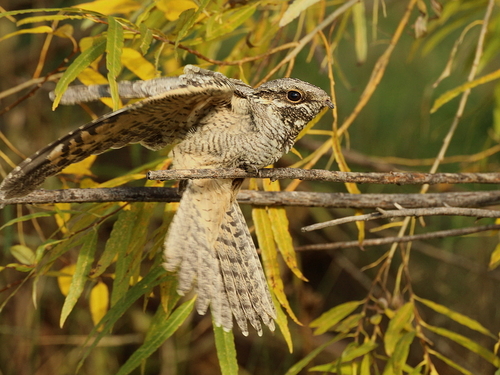 noitibó-cinzento
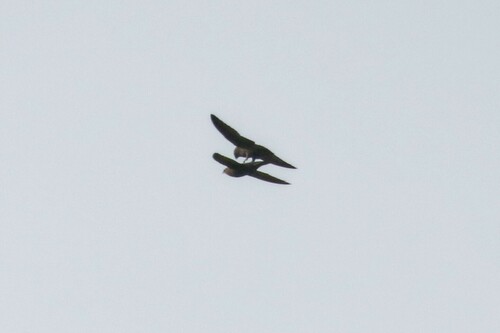 andorinhão-preto
Em resumo
A marca de campo mais confiável é a presença de manchas brancas nas asas e na cauda dos noitibós-cinzentos machos adultos em voo, que estão completamente ausentes nos andorinhões-preto de qualquer idade ou sexo. Noitibós juvenis e fêmeas não possuem essas marcas brancas, mas ainda mostram uma plumagem marrom listrada e críptica e uma forma de asa larga e arredondada, enquanto os andorinhões são uniformemente escuros, com asas longas e em forma de crescente e uma pequena mancha de garganta clara. Noitibós pousam horizontalmente no chão ou em galhos, muitas vezes imóveis, enquanto andorinhões quase nunca são vistos pousados, exceto brevemente em locais de ninho. Em voo, noitibós são flutuantes e semelhantes a mariposas, andorinhões são rápidos, diretos e com asas em forma de foice. A voz também é um separador forte: noitibós fazem churr ou emitem suaves chamados 'cuick', enquanto andorinhões gritam alto em voo.
Dicas de identificação
- Manchas brancas nas asas/cauda (noitibó macho adulto): Se você ver manchas brancas ousadas nas asas e na cauda em voo, é um noitibó-cinzento macho. Nenhum andorinhão mostra isso.
- Cor e padrão geral: Noitibós (todas as idades/sexos) são crípticos, listrados e manchados de marrom/cinza com um colar claro e linha bigode. Andorinhões são uniformemente marrons-escuros com apenas uma pequena mancha de garganta clara.
- Forma da asa em voo: As asas do noitibó são largas na base, pontudas na ponta e parecem em forma de remo ou semelhantes a mariposas. As asas do andorinhão são longas, estreitas e profundamente recuadas, formando um crescente ou bumerangue.
- Forma da cauda: A cauda do noitibó é longa e arredondada (com cantos brancos em machos adultos); a cauda do andorinhão é curta e levemente bifurcada.
- Estilo de voo: Noitibós voam com um voo flutuante, leve e semelhante a mariposas, muitas vezes baixo sobre o solo aberto ao amanhecer/anoitecer. Andorinhões são extremamente rápidos, diretos e ágeis, geralmente altos acima.
- Comportamento de pouso: Noitibós pousam horizontalmente no chão ou em galhos, se misturando perfeitamente. Andorinhões quase nunca são vistos pousados, exceto em locais de ninho.
- Bico e cabeça: Noitibós têm um bico muito curto e largo e uma cabeça grande e achatada; andorinhões têm um bico minúsculo, quase invisível, e uma cabeça aerodinâmica.
- Voz: Machos de noitibó fazem churr por longos períodos ao amanhecer/anoitecer; ambos os sexos emitem suaves chamados 'cuick'. Andorinhões gritam alto em voo, muitas vezes em grupos. Se você ouvir um grito acima, é um andorinhão.
- Hora de atividade: Noitibós são ativos ao amanhecer, anoitecer ou à noite; andorinhões são ativos durante o dia.
- Contexto do habitat: Noitibós são encontrados em florestas abertas, brejos ou clareiras; andorinhões são comuns sobre vilarejos, cidades e campos abertos.
- Impressão de tamanho: Noitibós são maiores, mais robustos e com asas mais longas do que andorinhões, que são compactos e esguios.
- Armadilhas de sexo/idade: Fêmeas e juvenis de noitibó não possuem manchas brancas nas asas/cauda, portanto, confie na estrutura, estilo de voo e padrão de plumagem. Andorinhões nunca mostram branco, exceto pela pequena mancha de garganta.
- Risco de confusão: Ao anoitecer, um noitibó distante em voo pode ser confundido com um andorinhão, mas as asas mais largas, o voo mais lento e flutuante e a falta de chamados gritando indicam um noitibó.
- Quando pousados: Se você ver um pássaro descansando em um galho ou no chão, é um noitibó; andorinhões não pousam em locais abertos.
- Comportamento em grupo: Andorinhões frequentemente voam em grupos barulhentos; noitibós geralmente são solitários ou em pares, e silenciosos ao voar, exceto por chamados suaves.
Tamanho
O noitibó-cinzento é maior e mais robusto: 24,5–28 cm de comprimento com uma envergadura de 52–59 cm, e machos pesam 51–101 g, fêmeas 67–95 g [wikipedia][avonet]. O andorinhão-preto é menor e muito mais leve: 16–17 cm de comprimento, envergadura de 38–40 cm, e é extremamente leve para seu tamanho (não especificado aqui, mas muito mais leve que o noitibó). Noitibós parecem ter asas largas e caudas longas em comparação com o andorinhão compacto, aerodinâmico e esguio.
Plumagem
- Pássaros juvenis/imaturos: Filhotes de noitibó se assemelham a fêmeas adultas: crípticos, cinza-marrom com listras e barras, sem marcas brancas nas asas ou cauda. Andorinhões de todas as idades são uniformemente marrons-escuros com apenas uma pequena mancha de garganta clara, não visível à distância.
- Machos adultos (noitibó): Mostram manchas brancas ousadas em três primárias e pontas brancas nas penas da cauda externa em voo, ausentes em fêmeas e todos os andorinhões.
- Fêmeas adultas (noitibó): Sem manchas brancas nas asas ou cauda, mas ainda mostram uma plumagem marrom listrada e manchada com um colar claro na nuca e linha bigode branca. Andorinhões nunca mostram tal padrão, sempre aparecendo escuros e uniformes, exceto pela garganta.
- Forma da asa: As asas do noitibó são largas e arredondadas na base, pontudas na ponta; as asas do andorinhão são longas, estreitas e profundamente recuadas, formando um crescente ou bumerangue.
- Cauda: A cauda do noitibó é bastante longa e arredondada (com pontas brancas em machos adultos), a cauda do andorinhão é curta e levemente bifurcada.
Comportamento
Noitibós são crepusculares/nocturnos, frequentemente vistos ao amanhecer ou anoitecer, voando baixo e flutuante sobre o solo aberto ou pousando longitudinalmente em galhos ou no chão, onde são muito difíceis de detectar devido ao seu camuflagem. Andorinhões são quase sempre vistos em voo aéreo rápido, ágil e alto, raramente pousando, exceto em locais de ninho (geralmente em edifícios ou penhascos). Andorinhões passam quase todo o seu tempo fora da época de reprodução em voo, até dormindo em voo. Noitibós são silenciosos e imóveis quando pousados, andorinhões são barulhentos e ativos em grupos acima.
Habitat
Noitibós se reproduzem em florestas abertas, brejos e clareiras em toda a Europa e Ásia, geralmente em áreas com solo nu ou vegetação esparsa. Andorinhões se reproduzem em áreas urbanas, vilarejos e penhascos, nidificando em fendas ou edifícios, e são mais frequentemente vistos sobre campos abertos, lagos ou cidades, raramente perto de florestas densas. Noitibós são mais propensos a serem encontrados em habitats rurais e semi-naturais ao anoitecer; andorinhões são comuns sobre vilarejos e cidades durante o dia.
Voz
Machos de noitibó cantam um longo trill mecânico de churr ao amanhecer ou anoitecer, às vezes com trills borbulhantes ou palmas de asas. Ambos os sexos emitem suaves chamados 'cuick' em voo, e vários sibilos ou estalos quando alarmados. Andorinhões nunca fazem churr; em vez disso, emitem gritos altos e penetrantes em voo, muitas vezes em grupos, com dois níveis de tom (mais alto em fêmeas). Chamadas de noitibó são suaves e sutis; chamadas de andorinhão são altas e inconfundíveis.