

bufo-real vs maghreb owl
Bubo bubo versus Strix mauritanica
Jogue um quiz com bufo-real e maghreb owl
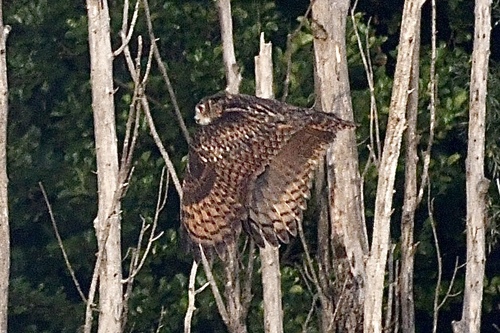 bufo-real
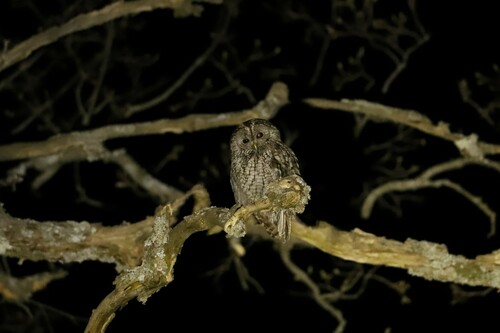 maghreb owl
Em resumo
A maneira mais confiável de separar o bufo-real do maghreb owl é pelo tamanho e estrutura: o bufo-real é vastamente maior, com tufos de penas proeminentes e uma construção poderosa e pesada, enquanto o maghreb owl é muito menor, não possui tufos de penas e tem uma cabeça arredondada. Em voo ou empoleirado, a bulk e os olhos laranja marcantes do bufo-real se destacam, em comparação com as proporções mais modestas e os olhos castanho-escuros do maghreb owl. Ambos podem apresentar partes inferiores estriadas e partes superiores acastanhadas, mas apenas o bufo-real parece verdadeiramente maciço. Se você ver uma grande coruja com tufos de penas, é o bufo-real; uma coruja de cabeça arredondada e tamanho médio sem tufos é o maghreb owl.
Dicas de identificação
- O tamanho é a pista mais decisiva: O bufo-real é enorme, ofuscando o maghreb owl. Se a coruja parecer tão grande quanto um ganso ou um abutre, é o bufo-real. Isso funciona para todas as idades e sexos.
- Tufos de penas: Apenas o bufo-real possui tufos de penas proeminentes e eretos. O maghreb owl sempre os falta, dando-lhe um perfil de cabeça arredondada e semelhante a um gato. Isso é visível tanto empoleirado quanto em voo.
- Disco facial e cor dos olhos: O bufo-real tem um olhar ousado, com olhos laranja e um disco facial forte; o maghreb owl tem olhos castanho-escuros e um rosto mais simples, com menos contraste.
- Formato da cabeça: A cabeça do bufo-real parece angular e chifrada devido aos tufos de penas, enquanto a cabeça do maghreb owl é suavemente arredondada.
- Estrias na plumagem: Ambas as espécies têm partes inferiores estriadas, mas as estrias do bufo-real são mais largas e dramáticas. O maghreb owl é mais claro embaixo, com estrias mais finas.
- Cor das partes superiores: O bufo-real pode parecer acastanhado ou ruivo com uma pesada sobreposição preta; o maghreb owl varia de ruivo a marrom acinzentado, mas nunca é tão escuro ou marcado de forma ousada quanto o bufo-real.
- Silhueta de voo: O bufo-real é maciço em voo, com asas muito largas e uma cauda longa e poderosa. O maghreb owl é muito mais compacto, com asas arredondadas e uma cauda mais curta.
- Postura empoleirada: O bufo-real se senta ereto, muitas vezes em rochas expostas ou penhascos, parecendo imponente. O maghreb owl empoleira-se de forma mais discreta, muitas vezes em folhagem densa.
- Contexto do habitat: O bufo-real prefere áreas abertas, rochosas ou semi-abertas; o maghreb owl é uma ave de floresta. O contexto pode ajudar, mas cuidado com a sobreposição nas bordas da floresta.
- Comportamento: O bufo-real é mais propenso a ser visto em locais abertos e visíveis, especialmente ao amanhecer ou ao anoitecer. O maghreb owl é mais secreto e raramente se empoleira em locais abertos.
- Dimorfismo sexual: Ambas as espécies mostram fêmeas maiores que os machos, mas a diferença de tamanho é muito mais dramática no bufo-real; mesmo a menor fêmea de bufo-real é muito maior do que qualquer maghreb owl.
- Confusão juvenil: Nenhum sinal distintivo de asa ou marca de voo juvenil é notado para qualquer uma das espécies, então confie no tamanho e na estrutura para imaturos também.
- Vocalizações: Não coberto nas notas, então não confie na voz para separação neste contexto.
- Variação sazonal: Ambas as espécies trocam penas gradualmente e não apresentam diferenças sazonais fortes na plumagem; as marcas de campo são confiáveis durante todo o ano.
- Armadilhas comuns: À distância, um maghreb owl empoleirado pode parecer grande se visto sozinho, mas a ausência de tufos de penas e o tamanho menor são sempre diagnósticos. Por outro lado, um bufo-real distante pode parecer menor se não visto com uma referência de tamanho, mas os tufos de penas e os olhos laranja sempre o entregam.
Tamanho
O bufo-real é uma das maiores corujas do mundo, com uma massa média de adulto de cerca de 2686 g, e envergaduras variando de 131 a 168 cm. Em contraste, o maghreb owl (estreitamente relacionado ao tawny owl) é muito menor, com um comprimento de 37 a 46 cm e uma envergadura de 81 a 105 cm, pesando menos de um terço (385 a 800 g). Mesmo à distância ou em luz fraca, o tamanho e a bulk imensos do bufo-real são inconfundíveis ao lado da forma média e robusta do maghreb owl.
Plumagem
Nenhuma marca de padrão de asa ou voo específica para a idade é notada para qualquer uma das espécies, então o foco está na plumagem geral e na estrutura. Os bufos-reais adultos são fortemente estriados acima e abaixo, com uma cor base acastanhada ou ruiva e estrias pretas largas, especialmente na subespécie nominativa. Eles apresentam tufos de penas proeminentes e um disco facial marcante com olhos laranja. O maghreb owl (como o tawny owl) é muito mais simples: tem uma cabeça arredondada sem tufos de penas, uma barriga pálida e estriada, e partes superiores marrons ou acinzentadas, com duas morfologias de cor (ruiva e acinzentada). Ambas as espécies têm partes inferiores estriadas, mas as estrias do bufo-real são mais ousadas e sua coloração geral pode ser mais rica. O disco facial do maghreb owl é simples e os olhos são castanho-escuros, não laranja.
Comportamento
O bufo-real é poderoso e deliberado, frequentemente visto empoleirado em áreas abertas ou rochosas, e voa com batidas lentas e profundas em asas largas. O maghreb owl é mais robusto e voa com longos deslizamentos em asas arredondadas, geralmente a uma altura maior do que outras corujas médias, mas seu voo é pesado e lento na decolagem. O voo do bufo-real é ainda mais ponderoso e imponente, combinando com seu tamanho. Ambas são noturnas e secretivas, mas o bufo-real é mais propenso a ser visto em habitats abertos ou semi-abertos, enquanto o maghreb owl prefere florestas densas.
Habitat
O bufo-real ocupa uma ampla gama na Eurásia, frequentemente encontrado em paisagens rochosas, florestas abertas e até semi-desertos, mas está menos ligado a florestas densas. O maghreb owl é um especialista em florestas, preferindo florestas e áreas arborizadas no Norte da África. Se você encontrar uma grande coruja em um ambiente aberto ou rochoso, é provável que seja o bufo-real; uma coruja de tamanho médio e cabeça arredondada em uma floresta densa é mais provável que seja o maghreb owl.