

Motmot

Búho Real vs Cárabo del Magreb

Bubo bubo frente a Strix mauritanica

Juega un quiz con Búho Real y Cárabo del Magreb
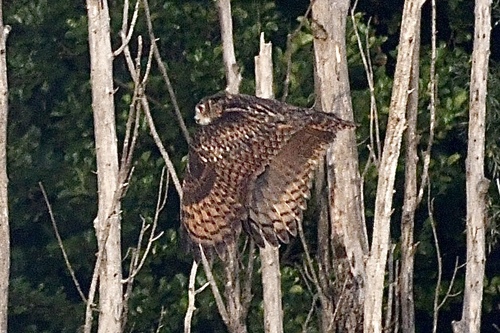
Búho Real (Bubo bubo) Búho Real
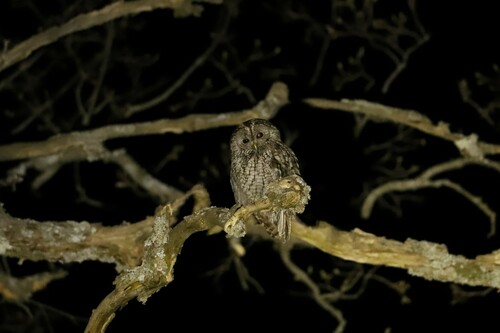
Cárabo del Magreb (Strix mauritanica) Cárabo del Magreb

Medios

Cargando…

En breve

The most reliable way to separate Eurasian Eagle Owl from Maghreb Owl is by sheer size and structure: the eagle owl is vastly larger, with prominent ear tufts and a powerful, heavy build, while the Maghreb Owl is much smaller, lacks ear tufts, and has a rounded head. In flight or perched, the eagle owl’s bulk and striking orange eyes stand out, compared to the Maghreb Owl’s more modest proportions and dark brown eyes. Both can show streaked underparts and brownish upperparts, but only the eagle owl ever appears truly massive. If you see a huge owl with ear tufts, it is the eagle owl; a medium, round-headed owl without tufts is the Maghreb Owl.

Consejos de identificación

  1. Size is the most decisive clue: Eurasian Eagle Owl is enormous, dwarfing the Maghreb Owl. If the owl looks as large as a goose or buzzard, it is the eagle owl. This works for all ages and sexes.
  2. Ear tufts: Only the Eurasian Eagle Owl has prominent, upright ear tufts. Maghreb Owl always lacks them, giving it a rounded, cat-like head profile. This is visible both perched and in flight.
  3. Facial disc and eye color: Eagle Owl has a bold, orange-eyed stare and a strong facial disc; Maghreb Owl has dark brown eyes and a plainer, less contrasting face.
  4. Head shape: The eagle owl’s head appears angular and horned due to ear tufts, while the Maghreb Owl’s head is smoothly rounded.
  5. Plumage streaking: Both species have streaked underparts, but the eagle owl’s streaks are broader and more dramatic. Maghreb Owl is paler below, with finer streaks.
  6. Upperparts color: Eagle Owl can appear brownish or rufous with heavy black overlay; Maghreb Owl varies from rufous to greyish brown, but never as dark or boldly marked as the eagle owl.
  7. Flight silhouette: Eagle Owl is massive in flight, with very broad wings and a long, powerful tail. Maghreb Owl is much more compact, with rounded wings and a shorter tail.
  8. Perched jizz: Eagle Owl sits upright, often on exposed rocks or cliffs, looking imposing. Maghreb Owl perches more discreetly, often in dense foliage.
  9. Habitat context: Eagle Owl favors open, rocky, or semi-open areas; Maghreb Owl is a woodland bird. Context can help, but beware overlap at woodland edges.
  10. Behavior: Eagle Owl is more likely to be seen in open, visible locations, especially at dusk or dawn. Maghreb Owl is more secretive and rarely perches in the open.
  11. Sexual dimorphism: Both species show females larger than males, but the size gap is much more dramatic in the eagle owl; even the smallest female eagle owl is much larger than any Maghreb Owl.
  12. Juvenile confusion: No distinctive juvenile wing or flight marks are noted for either species, so rely on size and structure for immatures as well.
  13. Vocalizations: Not covered in the notes, so do not rely on voice for separation in this context.
  14. Seasonal variation: Both species molt gradually and do not show strong seasonal plumage differences; field marks are reliable year-round.
  15. Common pitfalls: At a distance, a perched Maghreb Owl can look large if seen alone, but the absence of ear tufts and smaller size are always diagnostic. Conversely, a distant eagle owl can appear smaller if not seen with a size reference, but ear tufts and orange eyes always give it away.

Tamaño

Eurasian Eagle Owl is one of the largest owls in the world, with an average adult mass of about 2686 g, and wingspans ranging from 131–168 cm. In contrast, the Maghreb Owl (closely related to Tawny Owl) is much smaller, with a length of 37–46 cm and a wingspan of 81–105 cm, and weighs less than a third as much (385–800 g). Even at a distance or in poor light, the eagle owl’s immense size and bulk are unmistakable next to the Maghreb Owl’s medium, stocky shape.

Plumaje

No age-specific upperwing or flight pattern marks are noted for either species, so focus is on general plumage and structure. Adult Eurasian Eagle Owls are heavily streaked above and below, with a brownish or rufous base color and broad black streaks, especially in the nominate subspecies. They show prominent ear tufts and a striking facial disc with orange eyes. Maghreb Owl (like Tawny Owl) is much plainer: it has a rounded head with no ear tufts, a pale, streaked belly, and brown or greyish-brown upperparts, with two color morphs (rufous and greyish). Both species have streaked underparts, but the eagle owl’s streaking is bolder and its overall coloration can be richer. The Maghreb Owl’s facial disc is plain and the eyes are dark brown, not orange.

Comportamiento

Eurasian Eagle Owl is powerful and deliberate, often seen perched in open or rocky areas, and flies with slow, deep wingbeats on broad wings. Maghreb Owl is stockier and flies with long glides on rounded wings, usually at a greater height than other medium owls, but its flight is heavy and slow at takeoff. The eagle owl’s flight is even more ponderous and imposing, matching its size. Both are nocturnal and secretive, but the eagle owl is more likely to be seen in open or semi-open habitats, while the Maghreb Owl prefers dense woodland.

Hábitat

Eurasian Eagle Owl occupies a wide range across Eurasia, often found in rocky landscapes, open woodlands, and even semi-desert, but is less tied to dense forest. Maghreb Owl is a woodland specialist, favoring forests and wooded areas in North Africa. If you find a huge owl in an open or rocky setting, it is likely the eagle owl; a medium-sized, round-headed owl in dense woodland is more likely the Maghreb Owl.

Enviar una descripción mejor

Usa las mismas secciones que la comparación. El texto se publica al momento.

The most reliable way to separate Eurasian Eagle Owl from Maghreb Owl is by sheer size and structure: the eagle owl is vastly larger, with prominent ear tufts and a powerful, heavy build, while the Maghreb Owl is much smaller, lacks ear tufts, and has a rounded head. In flight or perched, the eagle owl’s bulk and striking orange eyes stand out, compared to the Maghreb Owl’s more modest proportions and dark brown eyes. Both can show streaked underparts and brownish upperparts, but only the eagle owl ever appears truly massive. If you see a huge owl with ear tufts, it is the eagle owl; a medium, round-headed owl without tufts is the Maghreb Owl.

  1. Size is the most decisive clue: Eurasian Eagle Owl is enormous, dwarfing the Maghreb Owl. If the owl looks as large as a goose or buzzard, it is the eagle owl. This works for all ages and sexes.
  2. Ear tufts: Only the Eurasian Eagle Owl has prominent, upright ear tufts. Maghreb Owl always lacks them, giving it a rounded, cat-like head profile. This is visible both perched and in flight.
  3. Facial disc and eye color: Eagle Owl has a bold, orange-eyed stare and a strong facial disc; Maghreb Owl has dark brown eyes and a plainer, less contrasting face.
  4. Head shape: The eagle owl’s head appears angular and horned due to ear tufts, while the Maghreb Owl’s head is smoothly rounded.
  5. Plumage streaking: Both species have streaked underparts, but the eagle owl’s streaks are broader and more dramatic. Maghreb Owl is paler below, with finer streaks.
  6. Upperparts color: Eagle Owl can appear brownish or rufous with heavy black overlay; Maghreb Owl varies from rufous to greyish brown, but never as dark or boldly marked as the eagle owl.
  7. Flight silhouette: Eagle Owl is massive in flight, with very broad wings and a long, powerful tail. Maghreb Owl is much more compact, with rounded wings and a shorter tail.
  8. Perched jizz: Eagle Owl sits upright, often on exposed rocks or cliffs, looking imposing. Maghreb Owl perches more discreetly, often in dense foliage.
  9. Habitat context: Eagle Owl favors open, rocky, or semi-open areas; Maghreb Owl is a woodland bird. Context can help, but beware overlap at woodland edges.
  10. Behavior: Eagle Owl is more likely to be seen in open, visible locations, especially at dusk or dawn. Maghreb Owl is more secretive and rarely perches in the open.
  11. Sexual dimorphism: Both species show females larger than males, but the size gap is much more dramatic in the eagle owl; even the smallest female eagle owl is much larger than any Maghreb Owl.
  12. Juvenile confusion: No distinctive juvenile wing or flight marks are noted for either species, so rely on size and structure for immatures as well.
  13. Vocalizations: Not covered in the notes, so do not rely on voice for separation in this context.
  14. Seasonal variation: Both species molt gradually and do not show strong seasonal plumage differences; field marks are reliable year-round.
  15. Common pitfalls: At a distance, a perched Maghreb Owl can look large if seen alone, but the absence of ear tufts and smaller size are always diagnostic. Conversely, a distant eagle owl can appear smaller if not seen with a size reference, but ear tufts and orange eyes always give it away.

Eurasian Eagle Owl is one of the largest owls in the world, with an average adult mass of about 2686 g, and wingspans ranging from 131–168 cm. In contrast, the Maghreb Owl (closely related to Tawny Owl) is much smaller, with a length of 37–46 cm and a wingspan of 81–105 cm, and weighs less than a third as much (385–800 g). Even at a distance or in poor light, the eagle owl’s immense size and bulk are unmistakable next to the Maghreb Owl’s medium, stocky shape.

No age-specific upperwing or flight pattern marks are noted for either species, so focus is on general plumage and structure. Adult Eurasian Eagle Owls are heavily streaked above and below, with a brownish or rufous base color and broad black streaks, especially in the nominate subspecies. They show prominent ear tufts and a striking facial disc with orange eyes. Maghreb Owl (like Tawny Owl) is much plainer: it has a rounded head with no ear tufts, a pale, streaked belly, and brown or greyish-brown upperparts, with two color morphs (rufous and greyish). Both species have streaked underparts, but the eagle owl’s streaking is bolder and its overall coloration can be richer. The Maghreb Owl’s facial disc is plain and the eyes are dark brown, not orange.

Eurasian Eagle Owl is powerful and deliberate, often seen perched in open or rocky areas, and flies with slow, deep wingbeats on broad wings. Maghreb Owl is stockier and flies with long glides on rounded wings, usually at a greater height than other medium owls, but its flight is heavy and slow at takeoff. The eagle owl’s flight is even more ponderous and imposing, matching its size. Both are nocturnal and secretive, but the eagle owl is more likely to be seen in open or semi-open habitats, while the Maghreb Owl prefers dense woodland.

Eurasian Eagle Owl occupies a wide range across Eurasia, often found in rocky landscapes, open woodlands, and even semi-desert, but is less tied to dense forest. Maghreb Owl is a woodland specialist, favoring forests and wooded areas in North Africa. If you find a huge owl in an open or rocky setting, it is likely the eagle owl; a medium-sized, round-headed owl in dense woodland is more likely the Maghreb Owl.

¿Descartar los cambios?

Tienes ediciones sin guardar. Si sales ahora, se perderán.

Búho Real · Cárabo del Magreb · Mis aves difíciles