

andorinha-das-rochas vs european/african/eastern red-rumped swallow
Ptyonoprogne rupestris versus Cecropis daurica
Jogue um quiz com andorinha-das-rochas e european/african/eastern red-rumped swallow
 andorinha-das-rochas
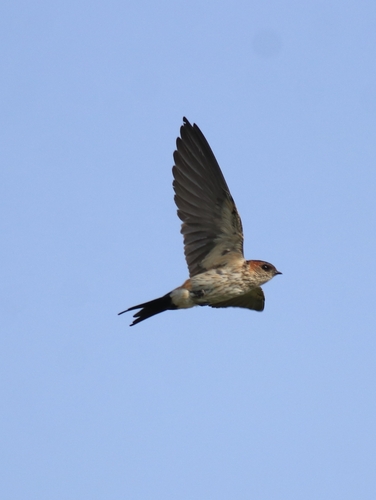 european/african/eastern red-rumped swallow
Em resumo
A marca de campo mais confiável para separar a andorinha-das-rochas da european/african/eastern european/african/eastern european/african/eastern red-rumped swallow é a presença de manchas brancas ousadas nas penas internas da cauda da andorinha-das-rochas, visíveis tanto em voo quanto quando empoleirada com a cauda aberta. A european/african/eastern european/african/eastern european/african/eastern red-rumped swallow, em contraste, apresenta uma cauda profundamente bifurcada sem manchas brancas óbvias e, em vez disso, tem uma distinta região rufosa na cauda e um colar (às vezes fraco ou ausente) com partes superiores azuis brilhantes. As andorinhas-das-rochas juvenis têm pontas amareladas nas partes superiores, enquanto as andorinhas red-rumped juvenis são mais opacas no geral, com uma região rufosa mais clara e streamers de cauda mais curtos. A estrutura também é útil: a andorinha-das-rochas é mais robusta, com uma cauda mais curta e quadrada, enquanto a european/african/eastern european/african/eastern european/african/eastern red-rumped swallow é mais esbelta, com uma cauda mais longa e profundamente bifurcada. Ambas as espécies podem ser vistas voando ao redor de penhascos ou áreas abertas, mas seu estilo de voo e formas de cauda são bastante diferentes.
Dicas de identificação
- Manchas brancas na cauda (todas as idades): A andorinha-das-rochas mostra manchas brancas ousadas nas penas internas da cauda (exceto os pares centrais e mais externos), visíveis em voo e quando a cauda está aberta. A european/african/eastern european/african/eastern european/african/eastern red-rumped swallow não possui essas manchas; sua cauda é uniformemente escura.
- Forma da cauda: A andorinha-das-rochas tem uma cauda curta e quadrada; a european/african/eastern european/african/eastern european/african/eastern red-rumped swallow tem uma cauda longa e profundamente bifurcada com penas externas alongadas (especialmente em adultos), frequentemente caindo quando empoleirada.
- Cor da região rufosa: A european/african/eastern european/african/eastern european/african/eastern red-rumped swallow tem uma região rufosa ou castanha, às vezes com listras escuras dependendo da subespécie. A região rufosa da andorinha-das-rochas é da mesma cor cinza-pardo que o resto das partes superiores, nunca rufosa.
- Cor das partes superiores: A andorinha-das-rochas é uniformemente cinza-parda acima. A european/african/eastern european/african/eastern european/african/eastern red-rumped swallow é azul brilhante acima (exceto pela região rufosa e colar).
- Partes inferiores: A andorinha-das-rochas é simples e pálida por baixo, sem listras fortes. A european/african/eastern european/african/eastern european/african/eastern red-rumped swallow tem partes inferiores brancas com listras escuras pesadas, especialmente no peito e flancos.
- Colar: A european/african/eastern european/african/eastern european/african/eastern red-rumped swallow frequentemente mostra um colar rufoso ao redor da nuca e dos lados do pescoço (pode ser fraco ou ausente em alguns indivíduos). A andorinha-das-rochas nunca mostra um colar.
- Marcas juvenis: As andorinhas-das-rochas juvenis têm pontas amareladas na cabeça, partes superiores e coberturas das asas, dando uma aparência escamosa. As andorinhas red-rumped juvenis são mais marrons opacas, com uma região rufosa mais clara e streamers de cauda mais curtos, mas nunca mostram escamas amareladas ou manchas brancas na cauda.
- Estilo de voo: O voo da andorinha-das-rochas é mais lento e mais flutuante, com planagens frequentes e menos acrobáticas do que a european/african/eastern european/african/eastern european/african/eastern red-rumped swallow. A european/african/eastern european/african/eastern european/african/eastern red-rumped swallow é mais graciosa e rápida, com planagens mais longas e agilidade mais semelhante à das andorinhas.
- Postura empoleirada: A andorinha-das-rochas parece compacta, de corpo largo e cauda curta quando empoleirada. A european/african/eastern european/african/eastern european/african/eastern red-rumped swallow é esbelta, de cauda longa, e frequentemente deixa sua cauda bifurcada cair abaixo do poleiro.
- Bico e pernas: Ambas as espécies têm bicos e pernas pequenos e escuros, não úteis para separação.
- Contexto de habitat: Se vistas perto de penhascos íngremes ou encostas rochosas no sul da Europa ou na Paleártica, a andorinha-das-rochas é mais provável. Em áreas abertas, montanhosas ou cultivadas na Ásia, a european/african/eastern european/african/eastern european/african/eastern red-rumped swallow é mais esperada.
- Voz: A andorinha-das-rochas emite chamadas altas e curtas ('pli', 'piieh', 'tshir'); as chamadas da european/african/eastern european/african/eastern european/african/eastern red-rumped swallow não são descritas aqui, então a voz não é um separador primário.
- Impressão de tamanho: A andorinha-das-rochas é mais pesada e robusta, enquanto a european/african/eastern european/african/eastern european/african/eastern red-rumped swallow é mais longa e esbelta, mas o tamanho por si só nem sempre é confiável devido à postura e distância.
- Armadilhas: As andorinhas red-rumped imaturas com caudas curtas podem parecer menos bifurcadas, mas ainda assim não possuem manchas brancas na cauda e mostram alguma coloração rufosa na região. As andorinhas-das-rochas nunca mostram partes superiores azuis, região rufosa ou listras pesadas nas partes inferiores.
- Sexos: Ambas as espécies são sexualmente monomórficas; o sexo não é útil para separação em campo.
Tamanho
A andorinha-das-rochas é ligeiramente mais pesada e robusta (massa corporal ~20 g) com um comprimento de 13–15 cm e uma envergadura de 32–34,5 cm. A european/african/eastern european/african/eastern european/african/eastern red-rumped swallow é mais longa no geral (cerca de 19 cm), mas mais esbelta, com uma cauda proporcionalmente mais longa e mais profundamente bifurcada. A andorinha-das-rochas parece ter um corpo mais largo e asas mais largas, enquanto a european/african/eastern european/african/eastern european/african/eastern red-rumped swallow é mais aerodinâmica e elegante em voo.
Plumagem
- Juvenis: As andorinhas-das-rochas juvenis têm pontas castanho-amareladas na cabeça, partes superiores e coberturas das asas, fazendo com que pareçam escamosas acima. As andorinhas red-rumped juvenis são no geral mais opacas e marrons, com uma região rufosa mais clara e penas externas da cauda mais curtas, sem as nítidas manchas brancas da cauda da andorinha-das-rochas.
- Adultos: As andorinhas-das-rochas adultas são cinza-pardas acima e mais pálidas abaixo, com uma cauda curta e quadrada mostrando manchas brancas ousadas perto das pontas de todas, exceto das penas centrais e mais externas da cauda. Suas coberturas de asa e cauda são escuras. As european/african/eastern red-rumped swallows têm partes superiores azuis brilhantes, uma região rufosa e (geralmente) colar, e partes inferiores brancas com listras escuras pesadas. Sua cauda é longa e profundamente bifurcada, sem manchas brancas ousadas, e as asas são marrons. A cor da região rufosa e as listras podem variar por subespécie, mas o contraste geral entre as costas azuis e a região rufosa é distintivo. A andorinha-das-rochas não possui tons rufosos ou azuis.
Comportamento
A andorinha-das-rochas tem um voo relativamente lento e flutuante para uma andorinha, com batidas rápidas das asas intercaladas com planagens de asas planas. É ágil ao redor de penhascos e frequentemente voa alto, espalhando sua cauda para mostrar as manchas brancas. A european/african/eastern european/african/eastern european/african/eastern red-rumped swallow é mais graciosa e rápida, com um voo mais típico de andorinha e planagens mais longas. Empoleirada, a andorinha-das-rochas parece compacta e de corpo largo com uma cauda quadrada, enquanto a european/african/eastern european/african/eastern european/african/eastern red-rumped swallow parece mais esbelta e alongada, com a longa cauda bifurcada frequentemente caindo abaixo do poleiro.
Habitat
Ambas as espécies podem ser encontradas em áreas abertas, frequentemente perto de penhascos ou áreas rochosas. A andorinha-das-rochas está mais estritamente associada a encostas rochosas e penhascos, especialmente no sul da Europa e em toda a Paleártica. A european/african/eastern european/african/eastern european/african/eastern red-rumped swallow é mais frequentemente encontrada em áreas abertas e montanhosas com clareiras e cultivo, e é geralmente mais amplamente distribuída na Ásia. A sobreposição é possível em algumas regiões, mas a andorinha-das-rochas está mais ligada a habitats rochosos, enquanto a european/african/eastern european/african/eastern european/african/eastern red-rumped swallow pode ser encontrada em paisagens abertas mais variadas.
Voz
A andorinha-das-rochas emite chamadas curtas e altas 'pli', 'piieh' e 'tshir', que se assemelham um pouco a linnet ou andorinha-da-casa. As vocalizações da european/african/eastern european/african/eastern european/african/eastern red-rumped swallow não são descritas nas notas fornecidas, portanto não são diagnosticamente confiáveis para separação neste contexto.
andorinha-das-rochas · european/african/eastern red-rumped swallow · Minhas aves difíceis