

Rondine montana vs European/African/Eastern Red-rumped Swallow
Ptyonoprogne rupestris contro Cecropis daurica
Fai un quiz con Rondine montana e European/African/Eastern Red-rumped Swallow
 Rondine montana
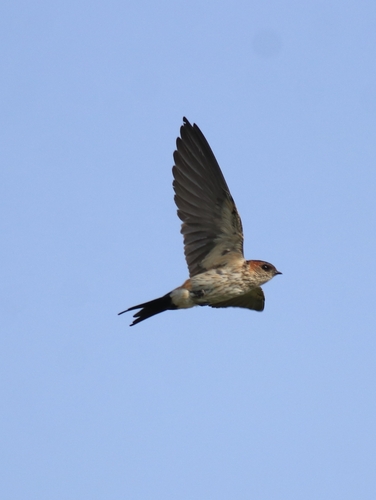 European/African/Eastern Red-rumped Swallow
In breve
Il segno distintivo più affidabile per separare la Rondine montana dalla European/African/Eastern European/African/Eastern European/African/Eastern Red-rumped Swallow è la presenza di macchie bianche audaci sulle penne della coda interne della rondine montana, visibili sia in volo che quando è posata con la coda aperta. La European/African/Eastern European/African/Eastern European/African/Eastern Red-rumped Swallow, al contrario, mostra una coda profondamente forked senza macchie bianche evidenti, e ha invece un caratteristico groppone rufous e un collare (a volte debole o assente) con parti superiori blu lucido. Le rondini montane juvenile hanno punte color crema sulle parti superiori, mentre le rondini red-rumped juvenile sono complessivamente più opache con un groppone più chiaro e streamers della coda più corti. Anche la struttura è utile: la rondine montana è più robusta con una coda più corta e quadrata, mentre la European/African/Eastern European/African/Eastern Red-rumped Swallow è più snella con una coda più lunga e profondamente forked. Entrambe le specie possono essere viste volare intorno a scogliere o campi aperti, ma il loro stile di volo e le forme della coda sono piuttosto diverse.
Consigli di identificazione
- Macchie bianche sulla coda (tutte le età): La Rondine montana mostra macchie bianche audaci sulle penne della coda interne (eccetto le coppie centrali e le più esterne), visibili in volo e quando la coda è aperta. La European/African/Eastern European/African/Eastern European/African/Eastern Red-rumped Swallow manca completamente di queste macchie; la sua coda è uniformemente scura.
- Forma della coda: La rondine montana ha una coda corta e quadrata; la European/African/Eastern European/African/Eastern Red-rumped Swallow ha una coda lunga e profondamente forked con piume esterne allungate (soprattutto negli adulti), spesso che pendono quando è posata.
- Colore del groppone: La European/African/Eastern European/African/Eastern Red-rumped Swallow ha un groppone rufous o castano, a volte con strisce scure a seconda della sottospecie. Il groppone della rondine montana è dello stesso colore grigio-bruno del resto delle parti superiori, mai rufous.
- Colore delle parti superiori: La rondine montana è uniformemente grigio-bruna sopra. La European/African/Eastern European/African/Eastern Red-rumped Swallow è blu lucido sopra (eccetto per il groppone rufous e il collare).
- Parti inferiori: La rondine montana è semplice e chiara sotto, priva di forti striature. La European/African/Eastern European/African/Eastern Red-rumped Swallow ha parti inferiori bianche con forti striature scure, specialmente sul petto e sui fianchi.
- Collare: La European/African/Eastern European/African/Eastern Red-rumped Swallow mostra spesso un collare rufous attorno alla nuca e ai lati del collo (può essere debole o assente in alcuni individui). La rondine montana non mostra mai un collare.
- Segni juvenile: Le rondini montane juvenile hanno punte color crema sulla testa, sulle parti superiori e sulle copritrici delle ali, dando un aspetto squamoso. Le rondini red-rumped juvenile sono di un marrone più opaco, con un groppone più chiaro e streamers della coda più corti, ma non mostrano mai squamature color crema o macchie bianche sulla coda.
- Stile di volo: Il volo della rondine montana è più lento e più fluttuante, con frequenti planate e meno acrobatico rispetto alla European/African/Eastern European/African/Eastern Red-rumped Swallow. La European/African/Eastern European/African/Eastern Red-rumped Swallow è più graziosa e veloce, con planate più lunghe e maggiore agilità simile a quella delle rondini.
- Aspetto posato: La rondine montana appare compatta, con corpo largo e coda corta quando è posata. La European/African/Eastern European/African/Eastern Red-rumped Swallow è snella, con coda lunga, e spesso pende la sua coda forked sotto il posatoio.
- Becco e zampe: Entrambe le specie hanno becchi e zampe piccoli e scuri, non utili per la separazione.
- Contesto dell'habitat: Se vista vicino a scogliere ripide o pendii rocciosi nel sud Europa o nel Palearctico, è più probabile che si tratti di una rondine montana. In aree aperte, collinari o coltivate in Asia, è più attesa la European/African/Eastern European/African/Eastern Red-rumped Swallow.
- Voce: La rondine montana emette richiami brevi e acuti ('pli', 'piieh', 'tshir'); i richiami della European/African/Eastern European/African/Eastern Red-rumped Swallow non sono descritti qui, quindi la voce non è un separatore primario.
- Impressione di dimensione: La rondine montana è più pesante e robusta, mentre la European/African/Eastern European/African/Eastern Red-rumped Swallow è più lunga e snella, ma la dimensione da sola non è sempre affidabile a causa della postura e della distanza.
- Trappole: Le red-rumped swallows immature con code corte possono apparire meno forked, ma mancano comunque di macchie bianche sulla coda e mostrano un po' di rufous sul groppone. Le rondini montane non mostrano mai parti superiori blu, groppone rufous o forti striature nelle parti inferiori.
- Sessi: Entrambe le specie sono sessualmente monomorfiche; il sesso non è utile per la separazione sul campo.
Taglia
La Rondine montana è leggermente più pesante e robusta (massa corporea ~20 g) con una lunghezza di 13–15 cm e un'apertura alare di 32–34.5 cm. La European/African/Eastern European/African/Eastern European/African/Eastern Red-rumped Swallow è più lunga nel complesso (circa 19 cm) ma più snella, con una coda proporzionalmente più lunga e profondamente forked. La rondine montana appare con un corpo più largo e ali più ampie, mentre la European/African/Eastern European/African/Eastern Red-rumped Swallow è più snella ed elegante in volo.
Piumaggio
- Juveniles: Le rondini montane juvenile hanno punte color crema sulla testa, sulle parti superiori e sulle copritrici delle ali, facendole apparire squamose sopra. Le rondini red-rumped juvenile sono complessivamente più opache e marroni, con un groppone più chiaro e piume esterne della coda più corte, mancando delle nette macchie bianche sulla coda della rondine montana.
- Adults: Le rondini montane adulte sono grigio-brune sopra e più chiare sotto, con una coda corta e quadrata che mostra macchie bianche audaci vicino alle punte di tutte tranne le penne centrali e le più esterne. Le loro copritrici sottoala e sotto coda sono nerastre. Le red-rumped swallows hanno parti superiori blu lucido, un groppone rufous e (di solito) un collare, e parti inferiori bianche con forti striature scure. La loro coda è lunga e profondamente forked, senza macchie bianche audaci, e le ali sono marroni. Il colore del groppone e le striature possono variare a seconda della sottospecie, ma il contrasto generale tra il dorso blu e il groppone rufous è distintivo. La rondine montana non presenta toni rufous o blu.
Comportamento
La rondine montana ha un volo relativamente lento e fluttuante per una rondine, con battiti d'ala rapidi intervallati da planate con le ali piatte. È agile intorno alle scogliere e spesso vola in alto, diffondendo frequentemente la sua coda per mostrare le macchie bianche. La European/African/Eastern European/African/Eastern Red-rumped Swallow è più graziosa e veloce, con un volo più tipico delle rondini e planate più lunghe. Posata, la rondine montana appare compatta e con corpo largo con una coda quadrata, mentre la European/African/Eastern European/African/Eastern Red-rumped Swallow appare più snella ed allungata, con la lunga coda forked che spesso pende sotto il posatoio.
Habitat
Entrambe le specie possono essere trovate in campi aperti, spesso vicino a scogliere o aree rocciose. La rondine montana è più strettamente associata a pendii rocciosi e scogliere, specialmente nel sud Europa e attraverso il Palearctico. La European/African/Eastern European/African/Eastern Red-rumped Swallow si trova più spesso in aree aperte e collinari con radure e coltivazioni, ed è generalmente più diffusa in Asia. L'overlap è possibile in alcune regioni, ma la rondine montana è più legata agli habitat rocciosi, mentre la European/African/Eastern European/African/Eastern Red-rumped Swallow può essere trovata in paesaggi aperti più vari.
Voce
La rondine montana emette richiami brevi e alti 'pli', 'piieh' e 'tshir', che somigliano un po' a quelli del linchetto o della rondine domestica. Le vocalizzazioni della European/African/Eastern European/African/Eastern Red-rumped Swallow non sono descritte nelle note fornite, quindi non sono affidabili per la separazione in questo contesto.
Rondine montana · European/African/Eastern Red-rumped Swallow · I miei uccelli difficili