

ganso-imperial vs arara-canindé
Anser canagicus versus Ara ararauna
Jogue um quiz com ganso-imperial e arara-canindé
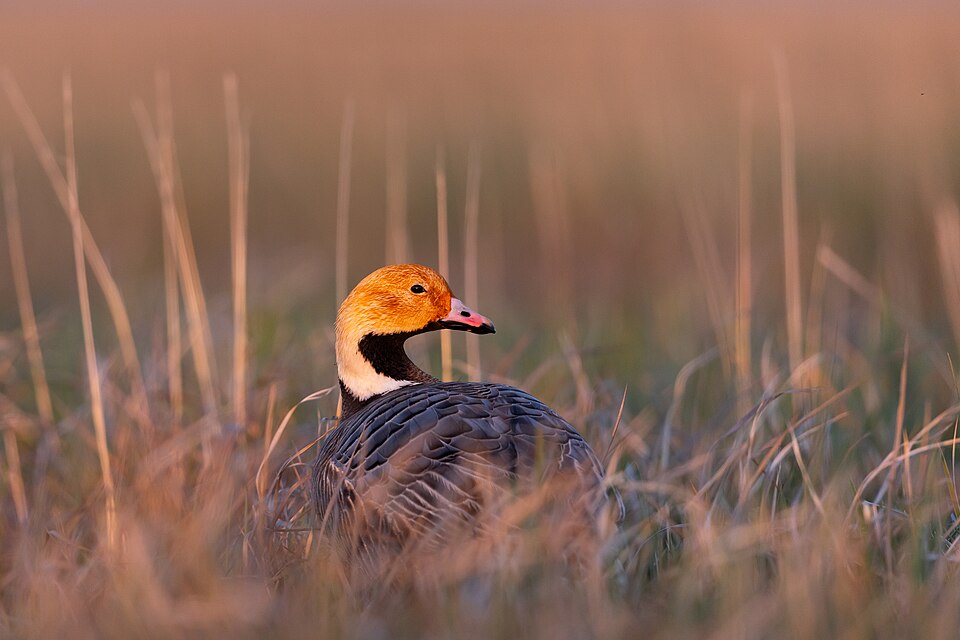 ganso-imperial
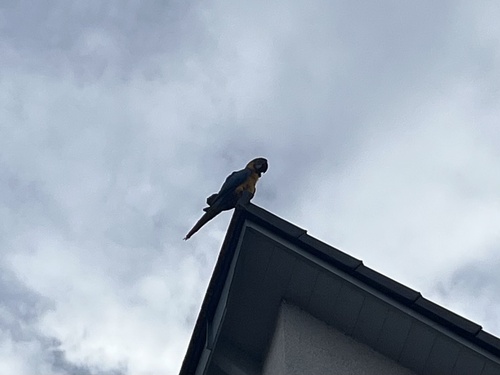 arara-canindé
Em resumo
A maneira mais confiável de separar o ganso-imperial da arara-canindé é pela estrutura geral e estilo de voo: o ganso-imperial é uma ave aquática de corpo pesado e pescoço curto, com plumagem azul-acinzentada escamosa e cabeça branca, enquanto a arara-canindé é um grande papagaio de cauda longa, com coloração azul e amarela vívida e um rosto branco nu. Gansos-imperiais imaturos podem apresentar uma cabeça escura e manchada, mas nunca a coroa verde ou a pele facial da arara. Em voo, as batidas de asa lentas, baixas e diretas do ganso e seu pescoço curto contrastam fortemente com a cauda longa e pontuda da arara, seu voo ágil e seu bico forte e curvado. O habitat também é uma pista forte: o ganso-imperial é estritamente costeiro/arctico, enquanto a arara-canindé é uma ave de floresta tropical.
Dicas de identificação
- Pele facial nua: Apenas a arara-canindé tem uma grande mancha facial branca, sem penas, com linhas de penas pretas; o ganso-imperial sempre tem um rosto com penas.
- Cor da cabeça: O ganso-imperial adulto tem uma cabeça branca e parte de trás do pescoço (frequentemente manchada de ferrugem no verão), enquanto a arara tem uma coroa esverdeada e nuca azul sem branco.
- Formato e cor do bico: O ganso-imperial tem um bico curto e rosa com uma ponta branca; a arara-canindé tem um bico negro maciço e fortemente curvado.
- Estrutura do corpo e pescoço: O ganso é de corpo pesado com pescoço curto; a arara é esbelta com um pescoço proporcionalmente longo para um papagaio e uma cauda muito longa.
- Comprimento e formato da cauda: A cauda da arara é extremamente longa e pontuda, representando quase metade de seu comprimento; o ganso tem uma cauda curta e arredondada.
- Padrão da plumagem: O ganso-imperial tem um corpo azul-acinzentado finamente escamoso e cauda branca; a arara é azul sólida por cima, amarela/laranja por baixo, sem escamas.
- Cor das pernas e pés: O ganso tem pernas e pés amarelo-alaranjados; a arara tem pés cinzas com garras pretas.
- Estilo de voo: O ganso voa baixo e devagar com batidas de asa profundas, pescoço esticado; a arara é ágil, rápida e frequentemente chama alto em voo, com a cauda longa arrastando.
- Confusão juvenil: O ganso-imperial imaturo pode ter uma cabeça e pescoço escuros, mas nunca mostra pele nua ou cores brilhantes; os juvenis da arara se parecem com os adultos.
- Habitat: O ganso é encontrado apenas em costas e tundras árticas/subárticas; a arara é estritamente de floresta/vegetação tropical.
- Tamanho e aparência: O ganso é mais curto, mas muito mais pesado e robusto; a arara é mais longa devido à cauda, mas muito mais leve e esbelta.
- Vocalização: A arara é extremamente barulhenta e estridente; o ganso é silencioso ou grasnando.
- Comportamento: O ganso raramente pousa, geralmente nada ou caminha; a arara pousa em árvores e escala com o bico e os pés.
- Marcas sazonais: A cabeça do ganso-imperial pode estar manchada de ferrugem no verão; a arara não apresenta mudanças sazonais.
- Tamanho do grupo: As araras costumam estar em bandos barulhentos; o ganso-imperial geralmente está em pequenos grupos silenciosos, exceto em locais de reprodução/muda.
Tamanho
O ganso-imperial adulto é mais curto, mas muito mais pesado e robusto do que a arara-canindé. Os machos do ganso-imperial medem 66–71 cm (26–28 pol) de comprimento e pesam 2,8–3,1 kg (6,1–6,9 lb), com uma envergadura de 119 cm (47 pol). A arara-canindé é mais longa, medindo 81–91 cm (32–36 pol), mas muito mais leve, pesando apenas 1,0–1,5 kg (2–3 lb). O comprimento da arara é principalmente cauda, enquanto o ganso é compacto e de corpo pesado, com pescoço curto e asas curtas.
Plumagem
- Ganso-imperial juvenil/imaturo: Cinza no geral com uma cabeça e pescoço escuros, ganhando branco na cabeça e pescoço após outubro, mas ainda com penas escuras espalhadas até o primeiro inverno. Sem pele facial nua ou cores brilhantes.
- Ganso-imperial adulto: Corpo azul-acinzentado com 'escamas' pretas e brancas, cabeça branca e parte de trás do pescoço (frequentemente manchada de ferrugem no verão), garganta preta, cauda branca, bico rosa com ponta branca, pernas amarelo-alaranjadas. A parte inferior da asa é cinza por baixo (não preto e branco).
- Arara-canindé (todas as idades): Parte superior azul vívida, parte inferior amarela a laranja brilhante, coroa esverdeada, queixo preto e grande mancha facial branca nua com linhas de penas pretas esparsas. Bico preto, pés cinzas. Sem escamas ou cabeça branca. Nenhuma mudança sazonal ou relacionada à idade na plumagem observada.
- Contraste chave: Apenas a arara tem pele facial branca nua e verde na coroa; apenas o ganso tem corpo azul-acinzentado escamoso e cabeça branca.
Comportamento
O ganso-imperial é antissocial, geralmente visto em pequenos grupos familiares, exceto durante a reprodução ou muda, e voa baixo com batidas de asa lentas e profundas, frequentemente perto do chão. É um nadador forte e raramente pousa. A arara-canindé é altamente social, frequentemente em bandos barulhentos, e é ágil em voo, com batidas de asa fortes e diretas e cauda longa se arrastando atrás. As araras escalam e pousam em árvores, usam o bico para escalar e são extremamente vocais, especialmente em voo ou quando alarmadas.
Habitat
O ganso-imperial é encontrado estritamente em habitats costeiros remotos árticos e subárticos perto do Mar de Bering, reproduzindo-se na tundra e invernando em mudflats livres de gelo e costas rochosas, nunca em florestas ou áreas interiores. A arara-canindé habita florestas tropicais, matas e savanas da América Central e do Sul, especialmente em florestas ribeirinhas ou de várzea, e nunca ocorre em tundras árticas ou costeiras. Se você vê uma ave em árvores nos trópicos, não é um ganso-imperial; se você vê uma ave em uma costa fria e rochosa, não é uma arara.
Voz
Nenhum detalhe direto de vocalização é dado para o ganso-imperial, mas como um ganso, teria chamados de grasnido ou grunhido. A arara-canindé é extremamente barulhenta, com gritos ásperos e chamados de bando, especialmente em voo ou quando excitada. Se você ouvir um grito penetrante, parecido com o de um papagaio, não é um ganso.