

ミカドガン 対 ルリコンゴウインコ
Anser canagicus 対 Ara ararauna
ミカドガンとルリコンゴウインコのクイズ
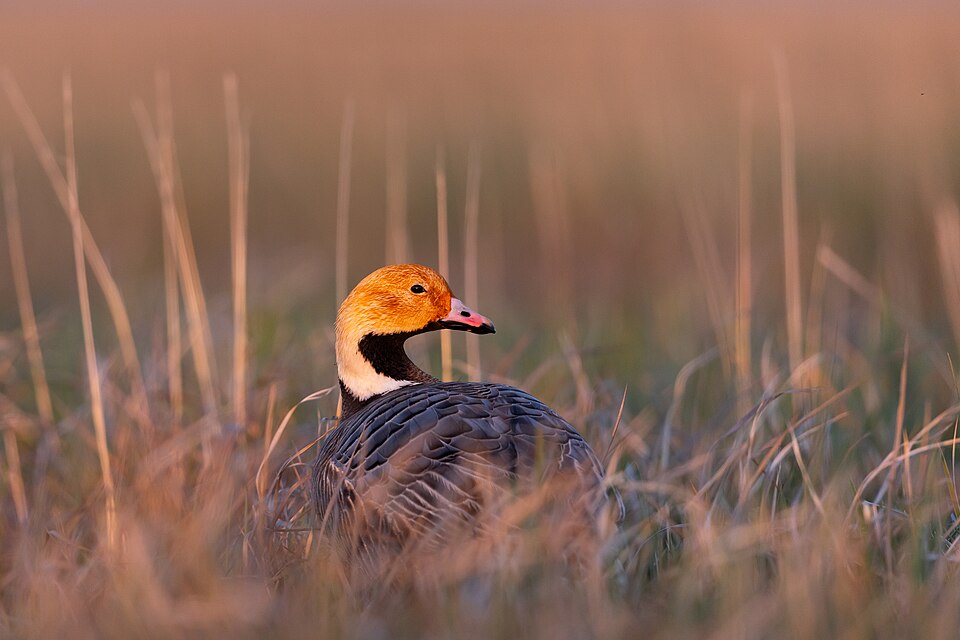 ミカドガン
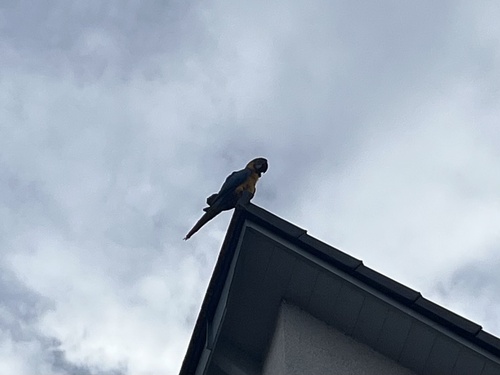 ルリコンゴウインコ
要点
The most reliable way to separate Emperor Goose from Blue-and-yellow Macaw is by overall structure and flight style: Emperor Goose is a heavy-bodied, short-necked waterfowl with scaled blue-gray plumage and white head, while Blue-and-yellow Macaw is a long-tailed, large parrot with vivid blue and yellow coloration and a bare white face. Immature Emperor Geese may show a dark, patchy head but never the macaw’s green crown or facial skin. In flight, the goose’s slow, low, direct wingbeats and short neck contrast sharply with the macaw’s long, pointed tail, agile flight, and strong, curved bill. Habitat is also a strong clue: Emperor Goose is strictly coastal/arctic, while Blue-and-yellow Macaw is a tropical forest bird.
識別のコツ
- Bare facial skin: Only Blue-and-yellow Macaw has a large, white, featherless facial patch with black feather lines; Emperor Goose always has a feathered face.
- Head color: Adult Emperor Goose has a white head and back of neck (often rusty-stained in summer), while macaw has a greenish crown and blue nape with no white.
- Bill shape and color: Emperor Goose has a short, pink bill with a white tip; Blue-and-yellow Macaw has a massive, strongly hooked black bill.
- Body and neck structure: Goose is heavy-bodied with a short neck; macaw is slender with a proportionally long neck for a parrot and a very long tail.
- Tail length and shape: Macaw’s tail is extremely long and pointed, making up nearly half its length; goose has a short, rounded tail.
- Plumage pattern: Emperor Goose has a blue-gray, finely scaled body and white tail; macaw is solid blue above, yellow/orange below, no scaling.
- Leg and foot color: Goose has yellow-orange legs and feet; macaw has gray feet with black talons.
- Flight style: Goose flies low and slow with deep wingbeats, neck outstretched; macaw is agile, fast, and often calls loudly in flight, with long tail trailing.
- Juvenile confusion: Immature Emperor Goose may have a dusky head and neck but never shows bare skin or bright colors; macaw juveniles look like adults.
- Habitat: Goose is found only in arctic/subarctic coasts and tundra; macaw is strictly tropical forest/woodland.
- Size and jizz: Goose is shorter but much heavier and bulkier; macaw is longer due to tail but much lighter and more slender.
- Vocalization: Macaw is extremely loud and screechy; goose is quiet or honking.
- Behavior: Goose rarely perches, mostly swims or walks; macaw perches in trees and climbs with bill and feet.
- Seasonal marks: Emperor Goose’s head may be rusty-stained in summer; macaw shows no seasonal change.
- Group size: Macaws often in noisy flocks; Emperor Goose usually in small, quiet groups except at breeding/molting sites.
大きさ
Adult Emperor Goose is shorter but much heavier and bulkier than Blue-and-yellow Macaw. Emperor Goose males are 66–71 cm (26–28 in) long and weigh 2.8–3.1 kg (6.1–6.9 lb), with a wingspan of 119 cm (47 in). Blue-and-yellow Macaw is longer at 81–91 cm (32–36 in) but much lighter, weighing only 1.0–1.5 kg (2–3 lb). The macaw’s length is mostly tail, while the goose is compact and heavy-bodied with a short neck and short wings.
羽色
- Juvenile/immature Emperor Goose: Gray overall with a dusky head and neck, gaining white on the head and neck after October but still with scattered dark feathers until first winter. No bare facial skin or bright colors.
- Adult Emperor Goose: Blue-gray body with black and white 'scaling', white head and back of neck (often stained rusty in summer), black throat, white tail, pink bill with white tip, yellow-orange legs. Underwing is gray below (not black-and-white).
- Blue-and-yellow Macaw (all ages): Vivid blue upperparts, bright yellow to orange underparts, greenish crown, black chin, and large bare white facial patch with sparse black feather lines. Black bill, gray feet. No scaling or white head. No seasonal or age-related plumage changes noted.
- Key contrast: Only macaw has bare white facial skin and green on crown; only goose has scaled blue-gray body and white head.
行動
Emperor Goose is unsocial, usually seen in small family groups except during breeding or molting, and flies low with slow, deep wingbeats, often close to the ground. It is a strong swimmer and rarely perches. Blue-and-yellow Macaw is highly social, often in noisy flocks, and is agile in flight with strong, direct wingbeats and long tail streaming behind. Macaws climb and perch in trees, use their beak for climbing, and are extremely vocal, especially in flight or when alarmed.
生息環境
Emperor Goose is strictly found in remote arctic and subarctic coastal habitats near the Bering Sea, breeding on tundra and wintering on ice-free mudflats and rocky coasts, never in forest or inland. Blue-and-yellow Macaw inhabits tropical forests, woodlands, and savannahs of Central and South America, especially in riverine or varzea forest, and never occurs in arctic or coastal tundra. If you see a bird in trees in the tropics, it is not an Emperor Goose; if you see a bird on a cold, rocky shore, it is not a macaw.
声
No direct vocalization details are given for Emperor Goose, but as a goose, it would have honking or grunting calls. Blue-and-yellow Macaw is extremely loud, with harsh screams and flock calls, especially in flight or when excited. If you hear a piercing, parrot-like scream, it is not a goose.