

garajau-elegante vs trinta-réis-real
Thalasseus elegans versus Thalasseus maximus
Jogue um quiz com garajau-elegante e trinta-réis-real
 garajau-elegante
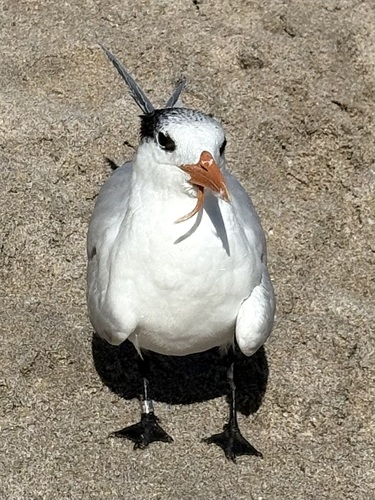 trinta-réis-real
Em resumo
A marca de campo mais confiável entre o garajau-elegante e o trinta-réis-real é a forma e o tamanho do bico: o garajau-elegante tem um bico laranja notavelmente mais longo, mais esbelto e ligeiramente curvado para baixo, enquanto o bico do trinta-réis-real é mais robusto, mais grosso e mais reto. Na plumagem não reprodutiva, o garajau-elegante mantém uma linha preta estreita através do olho (uma 'mancha'), enquanto a touca preta do trinta-réis-real recua mais, deixando a testa e a coroa mais extensivamente brancas. Pássaros juvenis e não reprodutivos são frequentemente confundidos, mas o garajau-elegante é menor e mais esbelto no geral, com uma crista mais longa e partes superiores mais claras. Quando vistos juntos, o tamanho maior e as proporções mais pesadas do trinta-réis-real são óbvios, mas pássaros solitários exigem atenção cuidadosa à estrutura do bico e ao padrão facial.
Dicas de identificação
- Forma e cor do bico: O garajau-elegante tem um bico longo, esbelto e ligeiramente curvado para baixo; o bico do trinta-réis-real é mais robusto, mais grosso, mais reto e laranja-avermelhado. Esta é a marca de campo mais confiável em qualquer idade ou estação.
- Tamanho e estrutura: O trinta-réis-real é muito maior e mais robusto, com uma cabeça e um bico proporcionalmente maiores, e asas mais longas. O garajau-elegante é mais esbelto e mais gracioso, mas isso é melhor avaliado com comparação direta.
- Crista e padrão da cabeça (reprodução): Ambas as espécies têm uma crista preta desgrenhada na plumagem de reprodução, mas a do garajau-elegante é mais longa e mais desgrenhada, frequentemente se estendendo bem até a nuca. A crista do trinta-réis-real é mais curta e menos desordenada.
- Padrão da testa (não reprodução/verão tardio a inverno): O garajau-elegante mantém uma linha preta estreita através do olho, formando uma 'mancha' na frente do olho mesmo enquanto a testa clareia. O preto do trinta-réis-real recua mais, deixando toda a testa e a coroa superior brancas, com preto apenas na nuca. Esta é uma separação chave no inverno e entre imaturos.
- Padrão da asa e costas de juvenis: Os juvenis de garajau-elegante têm costas de um cinza pálido e com aparência escamosa. Os juvenis de trinta-réis-real mostram marcas de cinza mais escuras a negras nas asas e um bico mais amarelado. Essas diferenças são mais úteis no final do verão e no outono.
- Partes superiores e rabo: O garajau-elegante é ligeiramente mais claro acima e tem um rabo completamente branco. O trinta-réis-real é de um cinza prateado-claro acima, mas a diferença é sutil e melhor utilizada em boa luz ou comparação direta.
- Cor das pernas: Ambas as espécies têm pernas pretas; isso não é útil para separação.
- Estilo de voo: O garajau-elegante parece mais leve e esbelto em voo, com um bico mais longo e com aparência mais flexível e uma crista mais longa. O trinta-réis-real parece mais pesado e mais poderoso, com um bico mais grosso e um estilo de voo mais robusto.
- Voz: O garajau-elegante emite um chamado alto, áspero e estridente; os chamados do trinta-réis-real são curtos, claros e agudos ("kree" ou "tsirr") ou um assobio mais longo e rolante. A voz é útil em bandos mistos ou quando os pássaros estão voando.
- Habitat e distribuição: O garajau-elegante é restrito à costa do Pacífico e migra para o sul no inverno; o trinta-réis-real é amplamente distribuído em ambas as costas e pode ocorrer longe da área central do garajau-elegante. Em áreas de sobreposição, atenção cuidadosa à estrutura e plumagem é necessária.
- Temporização da muda: O trinta-réis-real troca a plumagem de reprodução cerca de dois meses mais cedo (junho) do que o garajau-elegante (agosto para populações do norte). Testas brancas precoces em junho-julho sugerem trinta-réis-real.
- Cor do bico em juvenis: O juvenil trinta-réis-real pode mostrar um bico mais amarelado, enquanto o bico do garajau-elegante permanece laranja.
- Comparação direta: Quando ambas as espécies estão presentes, o tamanho maior do trinta-réis-real, o bico mais robusto e o rosto mais branco (na não reprodução) são óbvios. Pássaros solitários exigem uma análise cuidadosa da forma do bico e do padrão facial.
- Erros comuns: Pássaros não reprodutivos e juvenis são frequentemente confundidos, especialmente quando o tamanho é difícil de julgar. Sempre verifique a forma do bico, o padrão facial e o comprimento da crista antes de confiar na impressão geral.
- Sexo e idade: Não há dimorfismo sexual forte em nenhuma das espécies; todas as marcas de campo se aplicam a ambos os sexos. Marcas específicas de idade (asa/costas de juvenil, cor do bico) são mais úteis no final do verão e no outono.
Tamanho
O trinta-réis-real é substancialmente maior: 45–50 cm de comprimento, 125–135 cm de envergadura e 350–500 g de peso. O garajau-elegante é médio-grande para um garajau, mas distintamente menor: 39–42 cm de comprimento, 76–81 cm de envergadura e 190–325 g. Em comparação direta, o trinta-réis-real parece mais robusto, com uma cabeça e um bico maiores, e asas mais longas. No entanto, pássaros solitários podem ser complicados sem uma referência de tamanho direta.
Plumagem
Os juvenis e não reprodutivos de garajau-elegante têm costas de um cinza pálido e com aparência escamosa, enquanto os juvenis de trinta-réis-real mostram marcas de cinza mais escuras a negras nas asas e um bico mais amarelado. Na plumagem não reprodutiva (verão tardio a inverno), a testa do garajau-elegante torna-se branca, mas mantém uma linha preta estreita que se estende através do olho, criando uma pequena mancha preta na frente do olho; o trinta-réis-real, em contraste, perde o preto da testa e da coroa superior, mantendo preto apenas na nuca, de modo que o rosto parece muito mais branco. Adultos reprodutivos de ambas as espécies têm uma crista negra desgrenhada completa, mas a crista do garajau-elegante é mais longa e mais desgrenhada. As partes superiores são de um cinza pálido em ambas, mas o garajau-elegante é ligeiramente mais claro. O rabo é completamente branco no garajau-elegante, enquanto o trinta-réis-real é de um cinza prateado-claro acima. Ambos têm pernas pretas.
Comportamento
Ambas as espécies são coloniais e frequentemente vistas em grupos densos de reprodução nas costas e ilhas. Em voo, o garajau-elegante parece mais esbelto e leve, com um bico mais longo e com aparência mais flexível e uma crista mais longa fluindo atrás da cabeça. O trinta-réis-real parece mais pesado e mais poderoso, com um bico mais grosso e um estilo de voo mais robusto. Ambos mergulham para pescar, mas o garajau-elegante pode parecer mais ágil e menos desajeitado.
Habitat
O garajau-elegante se reproduz na costa do Pacífico do sul da Califórnia e do oeste do México, migrando para o sul até o Peru, Equador e Chile durante o inverno do norte. Alguns se dispersam para o norte até o Oregon e raramente Washington. O trinta-réis-real é amplamente distribuído nas Américas, se reproduzindo ao longo das costas atlântica e pacífica e ocorrendo como um vagante na Europa. A sobreposição ocorre ao longo da costa do Pacífico, especialmente no sul da Califórnia e no México, mas o trinta-réis-real é muito mais amplamente distribuído no geral.
Voz
O garajau-elegante emite um chamado alto e áspero típico dos garajaus do gênero Thalasseus. Os chamados do trinta-réis-real são curtos, claros e agudos ("kree" ou "tsirr") e às vezes um assobio mais longo, rolante e mais melodioso. A voz do garajau-elegante é mais áspera e mais estridente; a do trinta-réis-real é mais clara e mais ressonante. Os chamados são úteis quando os pássaros estão voando ou em bandos mistos.