
Charrán Elegante vs Charrán Real Americano
Thalasseus elegans frente a Thalasseus maximus
Juega un quiz con Charrán Elegante y Charrán Real Americano
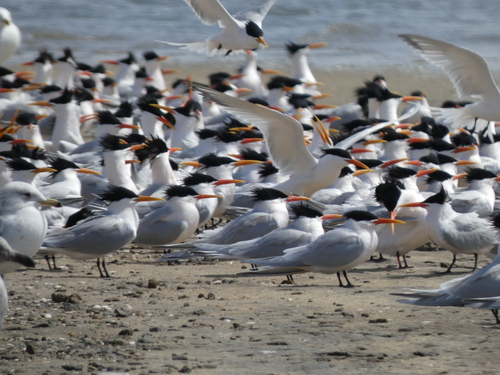 Charrán Elegante
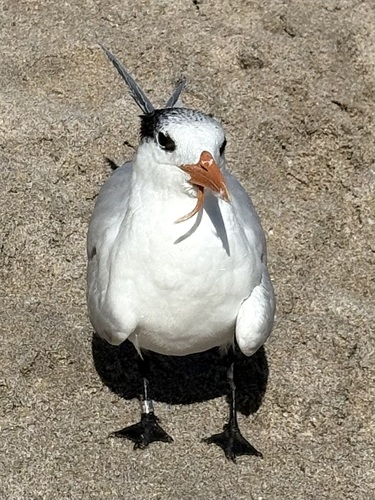 Charrán Real Americano
En breve
La marca de campo más confiable entre el Charrán Elegante y el Charrán Real Americano es la forma y el tamaño del pico: el Charrán Elegante tiene un pico naranja notablemente más largo, más delgado y ligeramente curvado hacia abajo, mientras que el pico del Charrán Real Americano es más robusto, más grueso y más recto. En plumaje no reproductivo, el Charrán Elegante conserva una línea negra estrecha a través del ojo (una 'mancha'), mientras que la gorra negra del Charrán Real Americano se retrae más, dejando la frente y la corona más extensamente blancas. Las aves juveniles y no reproductivas a menudo se confunden, pero el Charrán Elegante es más pequeño y más delgado en general, con una cresta más larga y partes superiores más pálidas. Cuando se ven juntas, el tamaño más grande y las proporciones más pesadas del Charrán Real Americano son obvios, pero las aves solitarias requieren atención cuidadosa a la estructura del pico y el patrón facial.
Consejos de identificación
- Forma y color del pico: El Charrán Elegante tiene un pico largo, delgado y ligeramente curvado hacia abajo de color naranja; el pico del Charrán Real Americano es más robusto, más grueso, más recto y de color naranja-rojo. Esta es la marca de campo más confiable a cualquier edad o estación.
- Tamaño y estructura: El Charrán Real Americano es mucho más grande y voluminoso, con una cabeza y un pico proporcionalmente más grandes, y alas más largas. El Charrán Elegante es más delgado y más elegante, pero esto se juzga mejor con una comparación directa.
- Cresta y patrón de la cabeza (reproducción): Ambas especies tienen una cresta negra desaliñada en plumaje de reproducción, pero la del Charrán Elegante es más larga y más desordenada, a menudo extendiéndose bien por el cuello. La cresta del Charrán Real Americano es más corta y menos desordenada.
- Patrón de la frente (no reproductivo/verano tardío a invierno): El Charrán Elegante conserva una línea negra estrecha a través del ojo, formando una 'mancha' frente al ojo incluso cuando la frente se blanquea. La negra del Charrán Real Americano se retrae más, dejando toda la frente y la parte superior de la corona blancas, con negro solo en la nuca. Esta es una separación clave en invierno y entre inmaduros.
- Patrón de alas y espalda juvenil: Los Charranes Elegantes juveniles tienen una espalda de color gris pálido y escamoso. Los Charranes Reales juveniles muestran marcas de color gris más oscuro a negro en las alas y un pico más amarillo. Estas diferencias son más útiles a finales del verano y en otoño.
- Partes superiores y rabadilla: El Charrán Elegante es ligeramente más pálido por encima y tiene una rabadilla completamente blanca. El Charrán Real Americano es de color gris plateado pálido por encima, pero la diferencia es sutil y se utiliza mejor con buena luz o comparación directa.
- Color de las patas: Ambas especies tienen patas negras; esto no es útil para la separación.
- Estilo de vuelo: El Charrán Elegante parece más ligero y delgado en vuelo, con un pico más largo y flexible y una cresta más larga. El Charrán Real Americano se ve más pesado y poderoso, con un pico más grueso y un estilo de vuelo más robusto.
- Voz: El Charrán Elegante emite un llamado fuerte, chirriante y áspero; los llamados del Charrán Real Americano son cortos, claros y agudos ("kree" o "tsirr") o un silbido más largo y rodante. La voz es útil en bandadas mixtas o cuando las aves están volando.
- Hábitat y rango: El Charrán Elegante está restringido a la costa del Pacífico y migra hacia el sur en invierno; el Charrán Real Americano está ampliamente distribuido en ambas costas y puede ocurrir lejos del rango central del Charrán Elegante. En áreas de superposición, se necesita atención cuidadosa a la estructura y el plumaje.
- Momento de la muda: El Charrán Real Americano muda de plumaje reproductivo aproximadamente dos meses antes (junio) que el Charrán Elegante (agosto para poblaciones del norte). Las frentes blancas tempranas en junio-julio sugieren Charrán Real Americano.
- Color del pico en juveniles: El Charrán Real Americano juvenil puede mostrar un pico más amarillo, mientras que el pico del Charrán Elegante permanece naranja.
- Comparación directa: Cuando ambas especies están presentes, el tamaño más grande del Charrán Real Americano, su pico más robusto y su cara más blanca (en no reproductivo) son obvios. Las aves solitarias requieren un examen cuidadoso de la forma del pico y el patrón facial.
- Trampas comunes: Las aves no reproductivas y juveniles son las que más a menudo se confunden, especialmente cuando es difícil juzgar el tamaño. Siempre verifique la forma del pico, el patrón facial y la longitud de la cresta antes de confiar en la impresión general.
- Sexo y edad: No hay un fuerte dimorfismo sexual en ninguna de las especies; todas las marcas de campo se aplican a ambos sexos. Las marcas específicas de edad (alas/espalda juveniles, color del pico) son más útiles a finales del verano y en otoño.
Tamaño
El Charrán Real Americano es sustancialmente más grande: 45–50 cm de longitud, 125–135 cm de envergadura y 350–500 g de peso. El Charrán Elegante es de tamaño mediano-grande para un charrán, pero claramente más pequeño: 39–42 cm de largo, 76–81 cm de envergadura y 190–325 g. En comparación directa, el Charrán Real Americano se ve más voluminoso, con una cabeza y un pico más grandes, y alas más largas. Sin embargo, las aves solitarias pueden ser complicadas sin una referencia de tamaño directa.
Plumaje
Los Charranes Elegantes juveniles y no reproductivos tienen una espalda de color gris pálido y escamoso, mientras que los Charranes Reales juveniles muestran marcas de color gris más oscuro a negro en las alas y un pico más amarillo. En plumaje no reproductivo (verano tardío a invierno), la frente del Charrán Elegante se vuelve blanca pero conserva una línea negra estrecha que se extiende a través del ojo, creando una pequeña mancha negra frente al ojo; el Charrán Real Americano, en contraste, pierde negro de la frente y la parte superior de la corona, manteniendo negro solo en la nuca, por lo que la cara se ve mucho más blanca. Los adultos en reproducción de ambas especies tienen una cresta negra desaliñada completa, pero la cresta del Charrán Elegante es más larga y más desordenada. Las partes superiores son de color gris pálido en ambas, pero el Charrán Elegante es ligeramente más pálido. La rabadilla es completamente blanca en el Charrán Elegante, mientras que el Charrán Real Americano es de color gris plateado pálido por encima. Ambas tienen patas negras.
Comportamiento
Ambas especies son coloniales y a menudo se ven en grupos de reproducción densos en costas e islas. En vuelo, el Charrán Elegante parece más delgado y ligero, con un pico más largo y flexible y una cresta más larga que fluye detrás de la cabeza. El Charrán Real Americano se ve más pesado y poderoso, con un pico más grueso y un estilo de vuelo más robusto. Ambas se lanzan en picado para pescar, pero el Charrán Elegante puede parecer más ágil y menos torpe.
Hábitat
El Charrán Elegante cría en la costa del Pacífico del sur de California y el oeste de México, migrando hacia el sur a Perú, Ecuador y Chile para el invierno del norte. Algunos se dispersan hacia el norte a Oregón y raramente a Washington. El Charrán Real Americano está ampliamente distribuido en las Américas, criando a lo largo de ambas costas atlántica y pacífica y ocurriendo como un vagabundo en Europa. La superposición ocurre a lo largo de la costa del Pacífico, especialmente en el sur de California y México, pero el Charrán Real Americano es mucho más común en general.
Voz
El Charrán Elegante emite un llamado fuerte y chirriante típico de los charranes Thalasseus. Los llamados del Charrán Real Americano son cortos, claros y agudos ("kree" o "tsirr") y a veces un silbido más largo, rodante y melodioso. La voz del Charrán Elegante es más áspera y más chirriante; la del Charrán Real Americano es más clara y resonante. Los llamados son útiles cuando las aves están volando o en bandadas mixtas.
Charrán Elegante · Charrán Real Americano · Mis aves difíciles