

eastern rosella vs red-rumped parrot
Platycercus eximius versus Psephotus haematonotus
Jogue um quiz com eastern rosella e red-rumped parrot
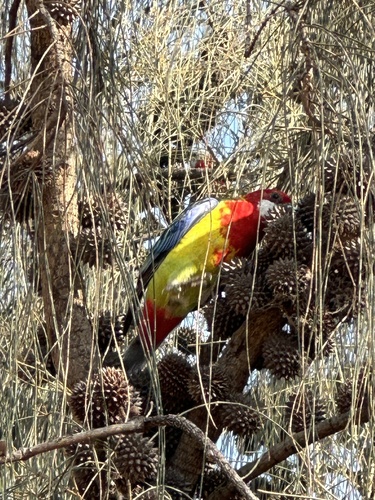 eastern rosella
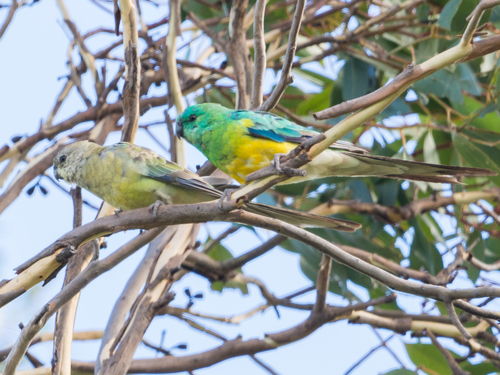 red-rumped parrot
Em resumo
A marca de campo mais confiável é a mancha branca na bochecha e a cabeça vermelha do eastern rosella (todas as idades e sexos) em comparação com a ausência de ambas no red-rumped parrot, que, em vez disso, apresenta uma cabeça verde e, apenas em machos adultos, uma distinta mancha vermelha na cauda. Para aves imaturas em voo, procure pela faixa sob as asas: tanto as fêmeas quanto os juvenis de eastern rosellas têm uma faixa sob as asas pálida, assim como as fêmeas e os machos imaturos de red-rumped parrots, mas apenas os machos adultos de red-rumped parrots perdem essa marca. Machos adultos de red-rumped parrots são verdes brilhantes com uma cauda vermelha e partes inferiores amarelas, enquanto eastern rosellas são mais multicoloridos, com um dorso escamoso preto e amarelo e azul nas asas. A estrutura também é útil: eastern rosellas são mais robustos, com uma cabeça mais larga e um bico mais forte, enquanto red-rumped parrots são mais esguios e com cauda mais longa. Ambas as espécies podem ser encontradas no sudeste da Austrália, mas o habitat e o contexto podem ajudar em casos ambíguos.
Dicas de identificação
- Mancha branca na bochecha (todas as idades, ambos os sexos): Apenas o eastern rosella mostra uma grande mancha branca na bochecha em uma cabeça vermelha. O red-rumped parrot nunca tem uma bochecha branca ou cabeça vermelha.
- Cabeça vermelha (todas as idades, ambos os sexos): O eastern rosella sempre tem uma cabeça vermelha, enquanto a cabeça do red-rumped parrot é verde nos machos e oliva opaca nas fêmeas/juvenis.
- Cauda vermelha (apenas machos adultos): O macho adulto do red-rumped parrot tem uma cauda vermelha brilhante, visível em voo ou quando empoleirado com a cauda levantada. O eastern rosella nunca mostra uma cauda vermelha; sua cauda é verde pálido ou verde-azulado, dependendo da subespécie.
- Faixa sob as asas (em voo, específica por idade): Tanto as fêmeas quanto os juvenis de eastern rosellas têm uma faixa sob as asas pálida. No red-rumped parrot, todas as fêmeas e machos imaturos têm uma barra sob as asas off-white, mas os machos adultos (com cerca de 2 anos ou mais) perdem essa marca. Assim, um papagaio verde com uma cauda vermelha e sem barra sob as asas em voo é um macho adulto de red-rumped parrot.
- Padrão das costas: O eastern rosella tem um dorso preto com margens escamosas amareladas ou esverdeadas, dando uma aparência escamosa. As costas do red-rumped parrot são verde-azul simples (macho) ou verde-oliva (fêmea/juvenil), sem o padrão escamoso.
- Cor do peito e do abdômen: O eastern rosella tem um peito superior vermelho, um peito inferior amarelo e um abdômen verde pálido. Os machos de red-rumped parrot têm partes inferiores amarelas; as fêmeas são pálidas e oliva por baixo.
- Cor das asas: Ambos têm azul nas asas, mas o azul do eastern rosella é mais extenso e inclui penas laterais da cauda. Os machos de red-rumped parrot têm destaques azuis e manchas amarelas nos ombros.
- Cor do bico: O bico do eastern rosella é branco; o do red-rumped parrot é cinza (mais escuro nos machos) e marronzado em imaturos.
- Tamanho e forma: O eastern rosella é ligeiramente maior e mais robusto, com uma cabeça mais larga e um bico mais forte. O red-rumped parrot é mais esguio, com uma cauda mais longa e pontuda.
- Dimorfismo sexual: O red-rumped parrot é fortemente dimórfico; apenas os machos têm a cauda verde brilhante, amarela e vermelha. Fêmeas e juvenis são verde-oliva opaca, sem a cauda vermelha. O eastern rosella é menos dimórfico; as fêmeas são mais opacas, mas ainda têm a cabeça vermelha e a bochecha branca.
- Confusão juvenil: Os juvenis de eastern rosellas são mais opacos, mas mantêm a cabeça vermelha e a bochecha branca. Os juvenis de red-rumped parrots se assemelham às fêmeas, mas têm uma cauda vermelha e um rosto azul-verde claro.
- Contexto do habitat: Em áreas gramadas abertas, especialmente campos de golfe e gramados urbanos, o red-rumped parrot é mais provável. Na borda da floresta, parques com árvores maduras ou jardins, o eastern rosella é mais provável.
- Voo: O red-rumped parrot é mais esguio e voa rápido e direto, muitas vezes baixo sobre a grama. O eastern rosella é mais robusto e pode parecer mais deliberado em voo.
- Variação entre subespécies: As subespécies de eastern rosella diferem na cor da cauda e das costas, mas todas mantêm a cabeça vermelha e a bochecha branca, que são sempre diagnósticas.
- Armadilha: Fêmeas e juvenis de red-rumped parrots não têm a cauda vermelha e são verde opaca, o que pode levar à confusão com outros papagaios verdes, mas nunca mostram uma cabeça vermelha ou bochecha branca.
Tamanho
O eastern rosella é ligeiramente maior, com uma média de 30 cm (12 pol) de comprimento [wikipedia], enquanto o red-rumped parrot tem cerca de 28 cm (11 pol) [wikipedia]. O eastern rosella parece mais robusto e com corpo mais pesado, com uma cabeça mais larga e um bico mais forte, em comparação com o red-rumped parrot, que é mais esguio e mais alongado. O peso do red-rumped parrot varia de 45 a 77 g; não há peso direto fornecido para o eastern rosella, mas geralmente é mais pesado e mais robusto em aparência.
Plumagem
- Faixa sob as asas de juvenis e fêmeas: As fêmeas e juvenis de ambas as espécies mostram uma faixa sob as asas pálida, visível em voo. No eastern rosella, isso está presente em todas as fêmeas e juvenis. No red-rumped parrot, a barra sob as asas está presente em todas as fêmeas e em machos imaturos, mas é perdida por machos adultos (a partir de cerca de 2 anos). Assim, um macho de red-rumped parrot sem barra sob as asas é um macho adulto; todos os outros a mostram.
- Cor da cabeça e bochecha: O eastern rosella sempre tem uma cabeça vermelha e uma grande mancha branca na bochecha (todas as idades e sexos). O red-rumped parrot nunca tem uma cabeça vermelha ou bochechas brancas; os machos têm uma cabeça e rosto verdes, enquanto as fêmeas e juvenis são de um verde-oliva mais opaco.
- Costas e cauda: O eastern rosella tem um dorso preto escamoso com margens amarelas ou verdes, e uma cauda verde pálido ou verde-azulado (dependendo da subespécie). Machos adultos de red-rumped parrot têm uma cauda vermelha brilhante, que é diagnóstica; fêmeas e juvenis têm uma cauda verde-lima.
- Corpo e partes inferiores: O eastern rosella tem um peito superior vermelho, um peito inferior amarelo, desvanecendo para um verde pálido no abdômen. Machos de red-rumped parrot são verde-esmeralda brilhante por cima, com partes inferiores amarelas; as fêmeas são muito mais opacas, principalmente verde-oliva com partes inferiores mais claras.
- Asas: Ambas as espécies têm azul nas asas, mas as penas do eastern rosella e as penas laterais da cauda são mais extensivamente azuladas, e a cauda é verde escura. O red-rumped parrot tem destaques azuis e manchas amarelas nos ombros (nos machos), com pontas externas das asas azuis visíveis em voo.
- Bico e íris: O eastern rosella tem um bico branco e íris marrom; o red-rumped parrot tem um bico cinza (mais escuro nos machos) e íris marrom claro ou cinza-marronzada.
Comportamento
Os eastern rosellas são frequentemente vistos se alimentando no chão ou empoleirados em árvores, às vezes em pares ou pequenos grupos. Eles podem parecer mais deliberados e menos inquietos do que os red-rumped parrots. Os red-rumped parrots são tipicamente vistos em pares ou pequenos bandos, frequentemente se alimentando no chão em áreas gramadas abertas. Seu voo é rápido e direto, e eles podem se assustar facilmente do chão. As exibições de cortejo nos machos de red-rumped parrot envolvem a abertura da cauda e movimentos de cabeça, expondo manchas amarelas e azuis nas asas, mas esse comportamento não é uma marca de campo confiável para separação, a menos que observado de perto.
Habitat
Ambas as espécies ocorrem no sudeste da Austrália, mas com algumas preferências de habitat. O eastern rosella é frequentemente encontrado em florestas abertas, parques, jardins e bordas de florestas, e também está estabelecido em partes da Nova Zelândia. O red-rumped parrot está mais associado a florestas abertas, áreas gramadas e à Bacia Murray-Darling, e é comumente visto em áreas abertas, campos de golfe e espaços urbanos gramados. A sobreposição é possível, mas o red-rumped parrot é menos provável em florestas densas ou florestas em comparação com o eastern rosella.