

damara tern vs trinta-réis-de-bico-preto
Sternula balaenarum versus Gelochelidon nilotica
Jogue um quiz com damara tern e trinta-réis-de-bico-preto
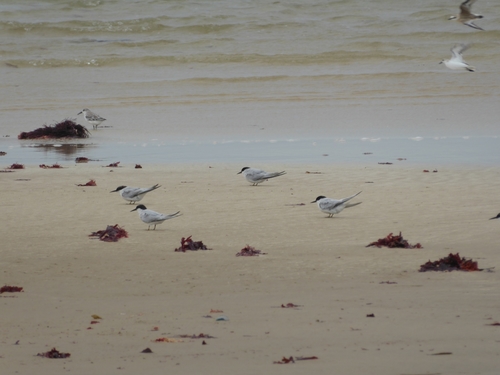 damara tern
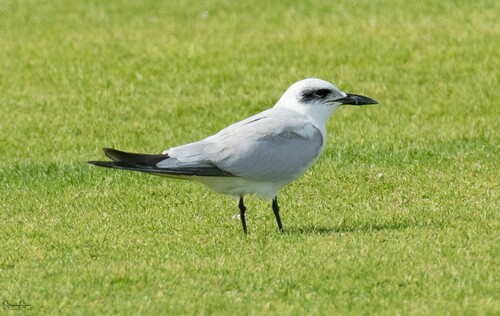 trinta-réis-de-bico-preto
Em resumo
A marca de campo mais confiável que separa o trinta-réis-damará do trinta-réis-de-bico-preto é o tamanho e a estrutura: o damará é muito menor, com uma construção delicada e bico fino, enquanto o trinta-réis-de-bico-preto é robusto, com um bico grosso e curto, semelhante ao de uma gaivota. Em voo, o trinta-réis-damará mostra um triângulo preto afiado na ponta da asa (adultos), enquanto as asas do trinta-réis-de-bico-preto são mais largas e não apresentam um triângulo preto tão bem definido. Os trinta-réis-damará juvenis têm barras cor de palha na capa, uma característica não vista no trinta-réis-de-bico-preto. O formato do bico e as proporções gerais são as verificações mais rápidas à distância, especialmente quando empoleirados ou se alimentando.
Dicas de identificação
- Tamanho e estrutura: O trinta-réis-damará é muito menor e com bico mais fino do que o trinta-réis-de-bico-preto. Se o pássaro parecer robusto, com um bico grosso e curto, não é um damará.
- Formato do bico: O damará tem um bico esguio e pontudo; o bico do trinta-réis-de-bico-preto é grosso, curto e quase semelhante ao de uma gaivota, especialmente óbvio à queima-roupa ou de perfil.
- Padrão da ponta da asa (adultos em voo): O trinta-réis-damará mostra um triângulo preto bem definido na ponta da asa, estendendo-se do carpo até a ponta. A asa superior do trinta-réis-de-bico-preto é cinza uniforme, sem nenhum triângulo preto afiado.
- Plumagem juvenil/imatura: Procure por barras cor de palha na capa dos jovens trinta-réis-damará; os juvenis do trinta-réis-de-bico-preto não apresentam isso, parecendo em vez disso adultos mais apagados com uma máscara ocular fraca.
- Capuz de reprodução: Ambas as espécies têm um capuz preto na plumagem de reprodução, mas o do damará é proporcionalmente maior em relação à sua cabeça pequena. Na não-reprodução, ambos perdem o capuz e mostram uma máscara ocular preta, então isso não é confiável sozinho.
- Comprimento das pernas: O trinta-réis-de-bico-preto tem pernas visivelmente longas para um trinta-réis, frequentemente óbvias quando em pé. As pernas do damará são curtas e finas.
- Formato do corpo em voo: O damará é esbelto e ágil, com asas estreitas; o trinta-réis-de-bico-preto é de asas largas e robusto, com um estilo de voo mais pesado.
- Comportamento alimentar: O damará mergulha para pescar; o trinta-réis-de-bico-preto frequentemente caça insetos sobre a terra ou pega presas do chão. Se visto se alimentando sobre campos, é quase certamente um trinta-réis-de-bico-preto.
- Contexto de habitat: O damará é estritamente costeiro no sul da África; o trinta-réis-de-bico-preto pode ser encontrado no interior ou na costa, mas está ausente da área de reprodução do damará fora do sul da África.
- Postura empoleirada: O damará parece pequeno e delicado, frequentemente diminuído em comparação com outros trinta-réis; o trinta-réis-de-bico-preto parece atarracado e robusto.
- Voz: Se você ouvir um 'ker-wik' áspero, é o trinta-réis-de-bico-preto. O chamado do damará não é descrito aqui.
- Espaçamento em bandos: Os trinta-réis-damará se alimentam espaçados (10–50 m); o trinta-réis-de-bico-preto pode ser visto em grupos mais soltos, especialmente quando caçando insetos.
- Confusão sazonal: Na plumagem de não-reprodução, ambos mostram uma máscara ocular escura, mas o tamanho menor do damará e seu bico mais fino permanecem diagnósticos.
- Comparação com outros trinta-réis: O juvenil trinta-réis-de-bando pode ser confundido com o trinta-réis-de-bico-preto devido ao bico curto, mas o damará é muito menor do que ambos.
- Quando em dúvida: Se você não tiver certeza, concentre-se na espessura do bico e no tamanho geral—essas são as diferenças mais consistentes em todas as idades e estações.
Tamanho
O trinta-réis-damará é minúsculo e leve (massa corporal ~46 g), com um comprimento de cerca de 23 cm (9,1 pol.). O trinta-réis-de-bico-preto é muito maior e mais pesado (comprimento 33–42 cm/13–17 pol., massa 150–292 g), com um corpo muito mais volumoso e asas mais largas. A diferença é impressionante lado a lado, mas mesmo sozinho, o damará parece pequeno e delicado, enquanto o trinta-réis-de-bico-preto parece robusto e poderoso.
Plumagem
- Juvenil/imaturo trinta-réis-damará: Mostra barras cor de palha distintas na capa, uma característica única não presente no trinta-réis-de-bico-preto em nenhuma idade.
- Adulto trinta-réis-damará (reprodução): Capuz preto da testa até a nuca, costas cinza muito pálido, e em voo, uma ponta de asa triangular preta afiada do carpo até a ponta.
- Adulto trinta-réis-damará (não-reprodução): Testa e coroa brancas, máscara preta através do olho até a nuca.
- Trinta-réis-de-bico-preto (adulto em reprodução): Parte superior cinza, parte inferior branca, capuz preto completo, mas sem triângulo preto afiado nas pontas das asas. O bico é grosso e preto.
- Trinta-réis-de-bico-preto (não-reprodução/juvenil): O capuz recua para uma mancha ocular escura (máscara), de outra forma semelhante ao damará de inverno, mas carece da estrutura fina do damará e das barras cor de palha na capa. Os juvenis têm uma máscara fraca, mas sem padrão forte na capa.
- Em voo: O triângulo preto do damará na ponta da asa é diagnóstico para adultos; as asas do trinta-réis-de-bico-preto são largas e cinzas uniformes acima, sem marcas pretas afiadas.
Comportamento
O trinta-réis-damará se alimenta mergulhando repetidamente para pequenos peixes, tipicamente sozinho e bem espaçado de outros, frequentemente sobre águas costeiras rasas. O trinta-réis-de-bico-preto não costuma mergulhar; em vez disso, caça insetos em voo, frequentemente sobre campos ou pântanos, e também pode pegar presas do chão, incluindo pequenos mamíferos e anfíbios. A forragem do trinta-réis-de-bico-preto é mais reminiscentes de trinta-réis de pântano do que de trinta-réis típicos do gênero Sterna.
Habitat
O trinta-réis-damará é um criador do sul da África, estritamente costeiro, e inverna ao longo das costas tropicais da África. É quase sempre visto perto do mar ou lagoas costeiras. O trinta-réis-de-bico-preto é cosmopolita, reproduzindo-se em colônias dispersas pela Europa, Ásia, África e Américas, e utiliza uma gama mais ampla de habitats, incluindo lagos interiores, pântanos e áreas costeiras. Na África, o damará é estritamente costeiro; o trinta-réis-de-bico-preto pode ser encontrado bem no interior, assim como na costa.
Voz
O trinta-réis-de-bico-preto emite um chamado distintivo e áspero 'ker-wik'. Nenhuma vocalização específica é descrita para o trinta-réis-damará nas notas fornecidas, então a voz só é diagnóstica se o chamado do trinta-réis-de-bico-preto for ouvido.
damara tern · trinta-réis-de-bico-preto · Minhas aves difíceis