

crested serpent-eagle vs mountain hawk-eagle
Spilornis cheela versus Nisaetus nipalensis
Jogue um quiz com crested serpent-eagle e mountain hawk-eagle
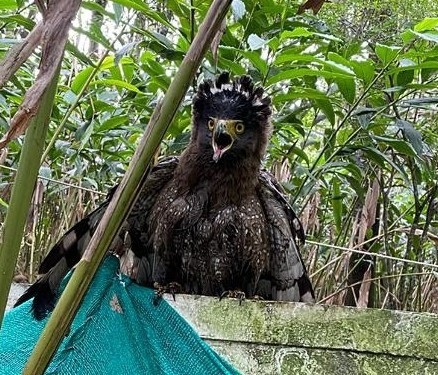 crested serpent-eagle
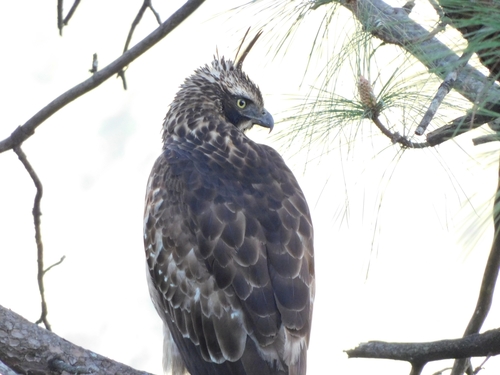 mountain hawk-eagle
Em resumo
A marca de campo mais confiável entre crested serpent-eagle e mountain hawk-eagle é o padrão da asa inferior e da cauda em voo, especialmente em juvenis: juvenis de crested serpent-eagle mostram barras brancas largas e ousadas nas penas de voo e na cauda negras, enquanto juvenis de mountain hawk-eagle têm barras escuras mais finas e desbotadas e uma asa inferior mais manchada e de cor tawny-buff. Estruturalmente, o crested serpent-eagle é mais robusto, com uma cauda mais curta e uma aparência de pescoço grosso devido à sua crista nucal proeminente, enquanto o mountain hawk-eagle tem asas mais longas e cauda mais longa, com um perfil mais esbelto e rapace. Os adultos são separados pela parte inferior manchada do serpent-eagle e asas em forma de pá, em contraste com a parte inferior barrada de ruivo do hawk-eagle e cabeça ruiva proeminente. Ambas as espécies podem planar com as asas em um V raso, mas suas proporções e plumagem são distintas com uma observação cuidadosa.
Dicas de identificação
- Padrão de voo juvenil: O juvenil de crested serpent-eagle mostra barras brancas largas e ousadas na asa inferior e na cauda negras; o juvenil de mountain hawk-eagle tem barras escuras mais finas e desbotadas e uma asa inferior mais manchada e de cor buffy. Use isso em todas as aves imaturas vistas em voo.
- Cabeça e crista: O crested serpent-eagle tem uma crista curta, em forma de leque, preta e branca, que dá uma aparência de pescoço grosso e robusto; a crista do mountain hawk-eagle é mais longa, principalmente preta, com uma pequena ponta buffy ou branca, e a cabeça é mais esbelta e com listras ruivas nos adultos.
- Pele facial e pés: O serpent-eagle mostra pele facial nua amarela brilhante e pés; os pés do hawk-eagle são amarelos opacos a amarelo-esbranquiçados, e a pele facial é menos proeminente.
- Partes inferiores (adultos): O serpent-eagle tem manchas brancas e marrom-amareladas nas partes inferiores; o hawk-eagle é barrado de ruivo sobre branco, com um colar ruivo e listras de garganta pretas ousadas.
- Padrão da cauda: A cauda do serpent-eagle é preta com barras brancas largas (todas as idades); a cauda do hawk-eagle é marrom-cinza com bandas pretas mais finas e obscuras e uma ponta esbranquiçada.
- Forma da asa em voo: O serpent-eagle tem asas largas, em forma de pá, mantidas em um V raso, parecendo curtas e arredondadas; as asas do hawk-eagle também são arredondadas, mas mais longas e estreitas na base traseira, com uma cabeça mais proeminente e cauda mais longa.
- Postura empoleirada: O serpent-eagle parece robusto, com pescoço grosso e cauda curta, muitas vezes com a crista levantada; o hawk-eagle é mais ereto, com cauda longa e esbelto.
- Cor da cabeça juvenil: O juvenil de serpent-eagle tem muito branco na cabeça; a cabeça do juvenil de hawk-eagle é de cor buffy a tawny com listras marrons escuras.
- Coberturas da asa inferior: Em voo, a asa inferior do serpent-eagle é manchada ou barrada; a do hawk-eagle é mais manchada e ruiva (adulto) ou buffy (juvenil).
- Cor dos olhos: O adulto hawk-eagle tem olhos dourados ou amarelo-alaranjados; a cor dos olhos do serpent-eagle não é especificada, mas é menos marcante nas notas.
- Contexto do habitat: Florestas densas de planície ou perto da água favorecem o serpent-eagle; elevações mais altas e colinas florestadas acidentadas favorecem o hawk-eagle.
- Comportamento: O serpent-eagle é frequentemente visto empoleirado e chama com frequência; o hawk-eagle é mais provável de ser visto caçando ativamente ou planando alto.
- Vocalização: Se você ouvir um kluee-wip-wip repetido, é o serpent-eagle.
- Sexo/estação: Nenhum dimorfismo sexual forte ou diferenças sazonais de plumagem são notadas para ambas as espécies; a idade é mais importante para separação.
- Quando em dúvida: Foque na combinação de barras da asa inferior/cauda, estrutura geral e habitat. Se a ave for robusta com barras pretas e brancas ousadas, é quase certamente um crested serpent-eagle; se for de cauda longa, barrada de ruivo e mais parecida com uma águia, é um mountain hawk-eagle.
Tamanho
O crested serpent-eagle é altamente variável em tamanho em sua área de distribuição, mas geralmente é um rapinante de tamanho médio-grande e robusto (comprimento 41–75 cm, envergadura 89–169 cm, massa 420–2300 g dependendo da subespécie) [wikipedia]. O mountain hawk-eagle é consistentemente grande e poderoso, com uma cauda longa e asas longas, geralmente maior e mais alongado do que a maioria das raças de crested serpent-eagle (comprimento não especificado aqui, mas consistentemente descrito como maior e com asas mais longas) [wikipedia]. No campo, o hawk-eagle parece mais esguio e mais parecido com uma águia, enquanto o serpent-eagle é compacto e robusto.
Plumagem
Aves juvenis/imaturas são mais facilmente separadas em voo:
-
Juvenil Crested Serpent-Eagle: Mostra muito branco na cabeça, e a asa inferior e a cauda são barradas em preto e branco de forma ousada. As partes inferiores são manchadas de branco e marrom-amareladas. Em voo, as asas largas, em forma de pá, e a cauda curta com barras brancas largas são distintas.
-
Juvenil Mountain Hawk-Eagle: Acima, marrom escuro com bordas de penas claras de creme/esbranquiçadas para um efeito escalonado, e manchas de meio-asa mais tawny. Abaixo, simples buffy a tawny nas partes inferiores e forros das asas, com barras escuras finas e desbotadas nas penas de voo cinza-esbranquiçadas e uma cauda levemente bandada com uma ponta esbranquiçada. A asa inferior é mais manchada e carece das barras pretas e brancas ousadas do serpent-eagle. A crista é preta com uma pequena ponta branca.
-
Adultos: O crested serpent-eagle é marrom escuro acima, com uma crista curta, em forma de leque, preta e branca, pele facial nua amarela e partes inferiores manchadas. A cauda e as penas de voo são pretas com barras brancas largas. Os adultos do mountain hawk-eagle são marrom escuro acima com cabeça ruiva e listrada e uma crista principalmente preta com ponta buffy; as partes inferiores são barradas de ruivo sobre branco, com um efeito de colar ruivo e listras de garganta pretas ousadas. A cauda é marrom-cinza com bandas pretas obscuras e uma ponta esbranquiçada.
-
Em todas as idades: As barras da asa inferior e da cauda do crested serpent-eagle são mais largas e contrastantes; as do mountain hawk-eagle são mais finas e menos distintas, com mais tons tawny ou ruivos na asa inferior e no corpo.
Comportamento
O crested serpent-eagle passa a maior parte do dia empoleirado em folhagens densas, frequentemente chamando de um poleiro proeminente e subindo em térmicas no final da manhã. Ele caça principalmente escaneando de um poleiro ou planando sobre florestas e gramados adjacentes, com preferência por répteis. O mountain hawk-eagle é mais ativo e ágil, notado por seu voo rápido e manobrável com batidas de asas poderosas e rasas. É mais provável ser visto caçando ativamente ou planando alto sobre colinas e montanhas florestadas, e é descrito como mais parecido com uma águia em seu estilo de voo. Ambas podem planar com as asas em um V raso, mas o hawk-eagle é mais dinâmico e menos sedentário do que o frequentemente empoleirado serpent-eagle.
Habitat
Ambas as espécies são encontradas em habitats florestais pela Ásia, mas o crested serpent-eagle está mais intimamente ligado a florestas de planície e sopé, frequentemente perto de gramados úmidos ou vegetação densa em planícies e colinas baixas. O mountain hawk-eagle é mais estritamente uma ave de florestas de montanha e regiões montanhosas, frequentemente em elevações mais altas. Se visto em densa selva de planície ou perto da água, o serpent-eagle é mais provável; em colinas ou montanhas florestadas mais altas e acidentadas, o hawk-eagle é favorecido.
Voz
O crested serpent-eagle emite um chamado distintivo, repetido kluee-wip-wip, com a primeira nota alta e ascendente, frequentemente ouvido de poleiros ou enquanto plana. As vocalizações do mountain hawk-eagle não são descritas nas notas fornecidas, então a voz é apenas diagnóstica para o serpent-eagle se esse chamado for ouvido.
crested serpent-eagle · mountain hawk-eagle · Minhas aves difíceis