

crested duck vs marreca-de-asa-azul
Lophonetta specularioides versus Spatula discors
Jogue um quiz com crested duck e marreca-de-asa-azul
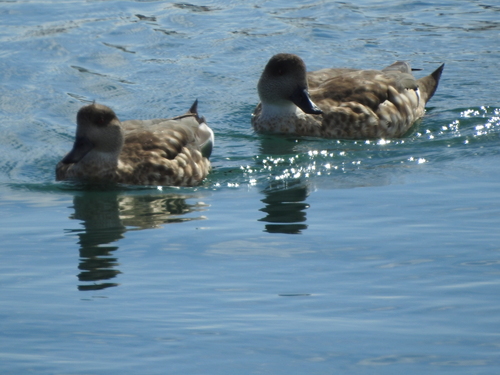 crested duck
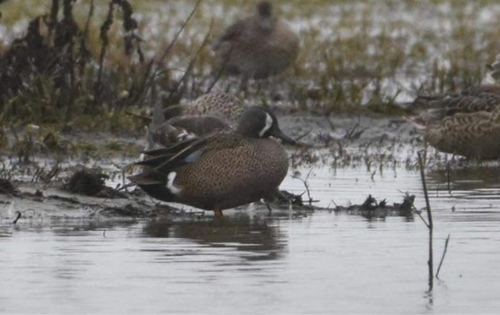 marreca-de-asa-azul
Em resumo
A marca de campo mais confiável para separar a crested duck da marreca-de-asa-azul é o padrão da asa superior em voo: a crested duck (adulto e juvenil) apresenta um espéculo iridescente que varia de cobre a verde, com uma ampla faixa preta atrás, estreitamente bordada de branco, enquanto a marreca-de-asa-azul (todas as idades) exibe coberturas de asa de um azul celeste distinto e um espéculo verde. No chão, a crested duck é maior, mais robusta e frequentemente apresenta uma crista proeminente (adultos), enquanto a marreca-de-asa-azul é menor, mais delicada, e os machos têm um ousado crescente branco no rosto. Os juvenis de crested duck não têm a crista e possuem abdômens mais claros, mas ainda diferem da marreca-de-asa-azul pela estrutura e padrão da asa. Ambas as espécies podem ser marrons manchadas, mas a combinação de tamanho, estrutura e coloração da asa é diagnóstica.
Dicas de identificação
- Asa superior em voo (todas as idades): Procure por coberturas de asa azul celeste na marreca-de-asa-azul—isso está ausente na crested duck, que em vez disso mostra um espéculo que varia de cobre a verde, com uma ampla faixa preta e uma borda branca estreita.
- Plumagem juvenil: Os juvenis de crested duck não têm a crista, mas ainda têm um rosto pálido e abdômens mais claros, e seu padrão de asa superior permanece distinto dos juvenis de marreca-de-asa-azul, que sempre mostram coberturas azul celeste.
- Crista: Os adultos de crested duck têm uma crista proeminente na cabeça (machos mais do que fêmeas), enquanto a marreca-de-asa-azul nunca mostra uma crista em nenhuma idade.
- Padrão facial (macho adulto de marreca-de-asa-azul): Procure pelo ousado crescente branco no rosto do macho de marreca-de-asa-azul—nenhuma marca desse tipo está presente na crested duck.
- Estrutura do corpo: A crested duck é mais robusta, com uma cauda preta mais longa e uma construção mais robusta. A marreca-de-asa-azul é menor, mais esbelta e mais delicada em aparência.
- Partes inferiores: A crested duck tem partes inferiores e flancos cinza claro, enquanto a marreca-de-asa-azul apresenta um corpo marrom claro com uma mancha branca perto da parte traseira (macho adulto).
- Bico e rosto: As fêmeas de marreca-de-asa-azul têm um rosto marrom manchado com uma área esbranquiçada na base do bico; os juvenis de crested duck têm um rosto marrom claro, mas os adultos são mais uniformemente coloridos com um bico escuro.
- Cauda: A cauda da crested duck é distintamente alongada e preta, frequentemente óbvia quando empoleirada ou nadando. A marreca-de-asa-azul tem uma cauda preta mais curta e menos proeminente.
- Tamanho: Se vistas juntas ou com outros patos para escala, a crested duck é muito maior e mais pesada do que a marreca-de-asa-azul.
- Estilo de voo: A marreca-de-asa-azul é rápida e ágil, frequentemente em bandos apertados; a crested duck é mais pesada e mais lenta em voo.
- Habitat: Na América do Norte, qualquer pato mergulhador pequeno e ágil com coberturas de asa azul celeste é quase certamente uma marreca-de-asa-azul. Na América do Sul, um pato de tamanho médio, com crista e espéculo de cobre é a crested duck.
- Dimorfismo sexual: Ambos os sexos da crested duck são semelhantes (exceto pela proeminência da crista), enquanto os machos e fêmeas da marreca-de-asa-azul diferem fortemente no padrão da cabeça.
- Juvenis de crested duck: Não têm a crista, mas nunca mostram as coberturas de asa azuis da marreca-de-asa-azul.
- Cor do espéculo: Cobre/verde na crested duck, verde na marreca-de-asa-azul (mas sempre com coberturas azuis na marreca-de-asa-azul).
- Voz: Apenas os chamados da marreca-de-asa-azul são descritos; use com cautela, pois a voz da crested duck não é detalhada.
Tamanho
A crested duck é um pato de tamanho médio, com adultos pesando pouco mais de 1 kg, tornando-a muito mais pesada e robusta do que a marreca-de-asa-azul, que pesa em média 370 g. Em comprimento, a marreca-de-asa-azul mede cerca de 40 cm, com uma envergadura de 58 cm, enquanto a crested duck é notavelmente maior e mais robusta no geral. A diferença é óbvia em comparação direta ou quando familiarizado com os tamanhos típicos de patos mergulhadores: a crested duck parece robusta com uma cauda preta relativamente longa, enquanto a marreca-de-asa-azul é compacta e esbelta.
Plumagem
- Juvenis: Os juvenis de crested duck não têm a crista, têm um rosto marrom claro e abdômens mais claros, mas sua asa superior ainda mostra um espéculo que varia de cobre a verde, com uma ampla faixa preta e uma borda branca estreita—nunca as coberturas azul celeste da marreca-de-asa-azul. Os juvenis e fêmeas de marreca-de-asa-azul são marrons manchados, mas sempre mostram coberturas de asa azul celeste e um espéculo verde em voo.
- Machos adultos: Os machos de crested duck têm uma crista proeminente, partes superiores marrons escuras manchadas com centros claros, partes inferiores cinza claro e uma longa cauda preta. Os machos de marreca-de-asa-azul têm uma cabeça azulada-cinza com um ousado crescente facial branco, corpo marrom claro, mancha branca na parte traseira e cauda preta. Ambos os sexos de marreca-de-asa-azul têm coberturas de asa azul celeste e espéculo verde.
- Fêmeas adultas: As fêmeas de crested duck são semelhantes aos machos, mas com uma crista menos proeminente. As fêmeas de marreca-de-asa-azul são marrons manchadas com uma área esbranquiçada na base do bico, sem crista, e ainda mostram coberturas de asa azul celeste em voo.
- Asa superior em voo (todas as idades): Crested duck: espéculo cobre/verde, ampla faixa preta, borda branca. Marreca-de-asa-azul: coberturas azul celeste, espéculo verde, sem tons de cobre.
Comportamento
A crested duck é tipicamente vista como um pássaro mais pesado e de movimento mais lento, frequentemente mergulhando ou descansando em águas abertas ou ao longo das margens. Seu voo é forte e direto, com asas largas e uma aparência ligeiramente trabalhosa devido ao seu tamanho. A marreca-de-asa-azul é mais ágil e flutuante, frequentemente vista em bandos apertados, rápida para levantar voo e frequentemente voando baixo sobre pântanos. As marrecas-de-asa-azul estão entre os primeiros patos a migrar para o sul no outono e os últimos a retornar ao norte na primavera, frequentemente vistas em grupos inquietos e ativos.
Habitat
A crested duck é nativa da América do Sul e é encontrada em uma variedade de habitats úmidos, frequentemente em águas abertas ou ao longo das margens. A marreca-de-asa-azul se reproduz na América do Norte e prefere pântanos rasos, lagoas e lagos com vegetação emergente densa. As marrecas-de-asa-azul são mais propensas a serem vistas em bordas gramadas ou lamacentas, descansando em casas de muskrats, planícies de lama ou rochas, enquanto a crested duck é mais frequentemente vista em águas abertas ou na costa. A distribuição não se sobrepõe, exceto como vagantes.
Voz
Os machos de marreca-de-asa-azul emitem um assobio curto, e as fêmeas um quack suave. Nenhum detalhe de vocalização é fornecido para a crested duck nas fontes, então a voz não é um separador confiável aqui.