
trinta-réis-boreal vs garajau-pequeno
Sterna hirundo versus Thalasseus bengalensis
Jogue um quiz com trinta-réis-boreal e garajau-pequeno
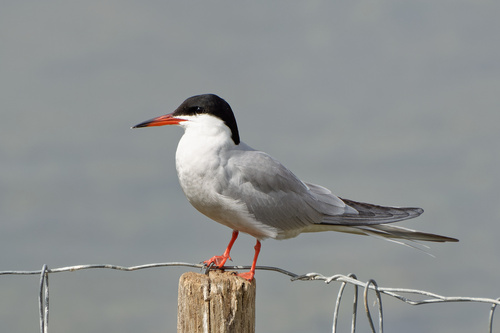 trinta-réis-boreal
 garajau-pequeno
Em resumo
A marca de campo mais confiável para separar o trinta-réis-boreal do garajau-pequeno é a cor do bico e das pernas em adultos: o trinta-réis-boreal apresenta um bico laranja-avermelhado esguio com a ponta preta e pernas vermelhas brilhantes, enquanto o garajau-pequeno tem um bico longo e afiado, totalmente laranja, e pernas pretas. Em voo, o trinta-réis-boreal (especialmente os adultos) frequentemente mostra uma cunha escura na asa superior e um efeito mais translúcido restrito às primárias mais internas, enquanto o garajau-pequeno tem asas superiores uniformemente cinzas com primárias escurecidas no verão e um rabo cinza. O trinta-réis-boreal juvenil e o garajau-pequeno são bastante diferentes, com o primeiro mostrando padrões de asas superiores e tertiais mais distintos. Estruturalmente, o garajau-pequeno é mais robusto, com uma cabeça mais pesada e um bico mais longo e semelhante a uma adaga. Ambas as espécies podem ocorrer em habitats costeiros, mas o garajau-pequeno é mais estritamente marinho e colonial.
Dicas de identificação
- Cor e Forma do Bico (Adulto): O trinta-réis-boreal tem um bico laranja-avermelhado esguio com a ponta preta; o garajau-pequeno tem um bico longo, afiado e totalmente laranja. Esta é a marca mais confiável em adultos.
- Cor das Pernas (Adulto): O trinta-réis-boreal apresenta pernas vermelhas brilhantes; o garajau-pequeno tem pernas pretas. Verifique a cor das pernas quando os pássaros estiverem empoleirados ou em pé.
- Padrão da Asa Superior Juvenil: O trinta-réis-boreal juvenil tem barras escuras fortes nas tertiais, visíveis na asa fechada e em voo. O garajau-pequeno juvenil é mais claro, com apenas crescentes escuros fracos nas penas do manto e sem barras fortes na asa superior.
- Cor do Rabo em Voo: O garajau-pequeno sempre tem um rabo cinza; o trinta-réis-boreal tem um rabo branco na plumagem de reprodução, às vezes cinza na não reprodução.
- Translucidez das Primárias (Adulto): Em luz brilhante, apenas as quatro primárias mais internas do trinta-réis-boreal são translúcidas, enquanto a asa superior do garajau-pequeno é mais uniformemente cinza com primárias escurecidas no verão.
- Cunha da Asa: O trinta-réis-boreal desenvolve uma cunha escura na asa superior à medida que a temporada de reprodução avança; o garajau-pequeno não apresenta essa característica.
- Forma da Cauda: Ambas as espécies têm caudas bifurcadas, mas as penas centrais da cauda do garajau-pequeno são cinzas e não tão longas ou profundamente bifurcadas como algumas outras espécies de trinta-réis; a cauda do trinta-réis-boreal é mais uniformemente branca.
- Estrutura da Cabeça e Pescoço: O garajau-pequeno parece mais robusto, com uma cabeça mais pesada e um bico mais longo e semelhante a uma adaga. O trinta-réis-boreal é mais delicado, com uma cabeça menor e um bico mais fino.
- Comprimento das Pernas: O trinta-réis-boreal tem pernas mais longas em relação ao tamanho do corpo, mas isso é sutil e melhor utilizado em comparação direta.
- Estilo de Voo: O trinta-réis-boreal tem asas mais triangulares e rígidas e um voo mais ágil e flutuante. O garajau-pequeno voa com batidas de asa mais pesadas e diretas.
- Contexto do Habitat: Se visto no interior, o trinta-réis-boreal é muito mais provável. O garajau-pequeno é quase sempre costeiro ou marinho.
- Sazonalidade da Plumagem: Na plumagem não reprodutiva, ambas as espécies desenvolvem uma testa branca, mas a cor do bico e das pernas permanece diagnóstica.
- Densidade da Colônia: O garajau-pequeno se reproduz em colônias muito densas, frequentemente com outros trinta-réis do gênero Thalasseus; as colônias do trinta-réis-boreal são menos densas e mais variadas em localização.
- Vocalização: Se ouvido, o garajau-pequeno dá um chamado alto e áspero semelhante ao trinta-réis-de-bando, mas isso nem sempre é confiável para separação do trinta-réis-boreal.
- Armadilhas: Não confie apenas no tamanho geral ou na aparência geral de 'trinta-réis'; concentre-se na cor do bico e das pernas, no padrão da asa superior (especialmente em juvenis) e no contexto do habitat para a separação mais confiável.
Tamanho
O garajau-pequeno é notavelmente mais pesado (massa corporal média ~209 g) e mais longo (35–43 cm de comprimento, 88–105 cm de envergadura) do que o trinta-réis-boreal, que é menor e mais leve (nenhuma massa direta fornecida, mas o trinta-réis-boreal é distintamente mais leve e mais delicado em campo). O garajau-pequeno parece mais robusto, com uma cabeça mais pesada e um bico mais longo. Em comparação direta, o trinta-réis-boreal é mais aerodinâmico e compacto, com pernas mais curtas e um bico mais fino.
Plumagem
-
Juvenil/Imaturo: O trinta-réis-boreal juvenil mostra barras escuras distintas nas tertiais, que são óbvias tanto na asa fechada quanto em voo—isso não está presente nos juvenis do garajau-pequeno. O garajau-pequeno juvenil é mais claro no geral, com apenas crescentes escuros fracos nas penas do manto e um bico amarelo-laranja, sem o forte padrão da asa superior dos juvenis do trinta-réis-boreal.
-
Adulto em Reprodução: Os adultos do trinta-réis-boreal têm uma touca preta, bico laranja-avermelhado com a ponta preta e pernas vermelhas brilhantes. As asas superiores são cinzas claras com uma cunha escura se desenvolvendo à medida que a temporada de reprodução avança, e apenas as quatro primárias mais internas são translúcidas. Os adultos do garajau-pequeno têm uma touca preta completa, bico laranja longo e afiado, e pernas pretas. As suas asas superiores, rabo e penas centrais da cauda são cinzas, e as partes inferiores são brancas; as penas de voo primárias escurecem no verão, e o rabo é cinza (não branco como no trinta-réis-boreal).
-
Adulto Não Reprodutivo: Ambas as espécies desenvolvem uma testa branca, mas o trinta-réis-boreal pode mostrar um rabo cinza, enquanto o garajau-pequeno sempre tem um rabo cinza. A cor do bico permanece uma diferença chave: o trinta-réis-boreal retém um pouco de preto na ponta do bico, o garajau-pequeno não.
Comportamento
O garajau-pequeno tipicamente mergulha diretamente para pegar peixes e é mais estritamente marinho, alimentando-se em ambientes salinos e se reproduzindo em colônias costeiras densas. O trinta-réis-boreal também é um mergulhador, mas é mais versátil, ocorrendo em águas interiores, bem como em costas. Em voo, o trinta-réis-boreal é mais ágil e flutuante com asas mais rígidas e triangulares, enquanto o garajau-pequeno parece mais pesado e mais intencional, com um bico mais longo e afiado e uma cabeça mais robusta.
Habitat
O trinta-réis-boreal se reproduz e se alimenta em uma ampla gama de habitats, incluindo lagos interiores, rios e áreas costeiras em regiões temperadas e subárticas. O garajau-pequeno é mais restrito a ambientes costeiros salinos e se reproduz em colônias densas em costas e ilhas. Se visto no interior, o trinta-réis-boreal é muito mais provável.
Voz
O garajau-pequeno emite um chamado alto e áspero semelhante ao trinta-réis-de-bando. Nenhuma vocalização distinta é descrita para o trinta-réis-boreal nas notas fornecidas, então a voz não é uma marca de campo primária para separação entre esses dois.