

Sterna comune vs Sterna di Rueppell
Sterna hirundo contro Thalasseus bengalensis
Fai un quiz con Sterna comune e Sterna di Rueppell
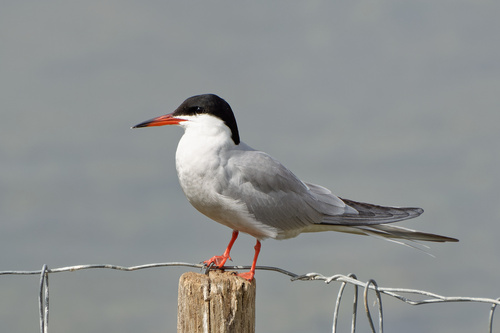 Sterna comune
 Sterna di Rueppell
In breve
Il segno di campo più affidabile per separare Sterna comune da Sterna di Rueppell è il colore del becco e delle zampe negli adulti: Sterna comune mostra un becco slanciato arancio-rosso con una punta nera e zampe rosse brillanti, mentre Sterna di Rueppell ha un becco lungo e affilato, completamente arancione e zampe nere. In volo, Sterna comune (soprattutto gli adulti) mostra spesso un cuneo scuro sulla parte superiore dell'ala e un effetto più traslucido limitato alle primarie più interne, mentre Sterna di Rueppell ha ali superiori uniformemente grigie con primarie scure in estate e un sopracciglio grigio. I giovani Sterna comune e Sterna di Rueppell sono abbastanza diversi, con il primo che mostra schemi più distintivi sulle ali superiori e sulle terziali. Strutturalmente, Sterna di Rueppell è più robusta, con una testa più pesante e un becco più lungo e simile a un pugnale. Entrambe le specie possono verificarsi in habitat costieri, ma Sterna di Rueppell è più strettamente marina e coloniale.
Consigli di identificazione
- Colore e forma del becco (Adulto): Sterna comune ha un becco slanciato arancio-rosso con una punta nera; Sterna di Rueppell ha un becco lungo, affilato e completamente arancione. Questo è il segno più affidabile negli adulti.
- Colore delle zampe (Adulto): Sterna comune mostra zampe rosse brillanti; Sterna di Rueppell ha zampe nere. Controlla il colore delle zampe quando gli uccelli sono posati o in piedi.
- Schema delle ali superiori nei giovani: Il giovane Sterna comune ha forti barre scure sulle terziali, visibili sull'ala chiusa e in volo. Il giovane Sterna di Rueppell è più chiaro, con solo deboli crescenti scuri sulle piume del mantello e senza forti barre sulle ali superiori.
- Colore del sopracciglio in volo: Sterna di Rueppell ha sempre un sopracciglio grigio; Sterna comune ha un sopracciglio bianco in abito nuziale, a volte grigiastro in non-nuziale.
- Traslucenza delle primarie (Adulto): In luce brillante, solo le quattro primarie più interne di Sterna comune sono traslucide, mentre l'ala superiore di Sterna di Rueppell è più uniformemente grigia con primarie scure in estate.
- Cuneo dell'ala: Sterna comune sviluppa un cuneo scuro sulla parte superiore dell'ala man mano che la stagione riproduttiva avanza; Sterna di Rueppell non mostra questa caratteristica.
- Forma della coda: Entrambe le specie hanno code forked, ma le piume centrali della coda di Sterna di Rueppell sono grigie e non così lunghe o profondamente forked come alcune altre sterne; la coda di Sterna comune è più uniformemente bianca.
- Struttura della testa e del collo: Sterna di Rueppell appare più robusta, con una testa più pesante e un becco più lungo e simile a un pugnale. Sterna comune è più delicata, con una testa più piccola e un becco più fine.
- Lunghezza delle zampe: Sterna comune ha zampe più lunghe rispetto alla dimensione del corpo, ma questo è sottile e meglio utilizzato in confronto diretto.
- Stile di volo: Sterna comune ha ali più triangolari e rigide e un volo più agile e galleggiante. Sterna di Rueppell vola con battiti d'ala più pesanti e diretti.
- Contesto dell'habitat: Se vista nell'entroterra, Sterna comune è molto più probabile. Sterna di Rueppell è quasi sempre costiera o marina.
- Stagionalità del piumaggio: In piumaggio non riproduttivo, entrambe le specie sviluppano una fronte bianca, ma il colore del becco e delle zampe rimane diagnostico.
- Densità della colonia: Sterna di Rueppell nidifica in colonie molto dense, spesso con altre sterne Thalasseus; le colonie di Sterna comune sono meno dense e più varie nella posizione.
- Vocalizzazione: Se sentita, Sterna di Rueppell emette un richiamo forte e stridente simile a Beccapesci, ma questo non è sempre affidabile per la separazione da Sterna comune.
- Trappole: Non fare affidamento solo sulla dimensione complessiva o sull'aspetto generale di 'sterna'; concentrati sul colore del becco e delle zampe, sullo schema delle ali superiori (soprattutto nei giovani) e sul contesto dell'habitat per la separazione più affidabile.
Taglia
Sterna di Rueppell è notevolmente più pesante (massa corporea media ~209 g) e più lunga (35–43 cm di lunghezza, 88–105 cm di apertura alare) rispetto a Sterna comune, che è più piccola e più leggera (nessuna massa diretta fornita, ma Sterna comune è nettamente più leggera e più delicata sul campo). Sterna di Rueppell appare più robusta, con una testa più pesante e un becco più lungo. In confronto diretto, Sterna comune è più aerodinamica e compatta, con zampe più corte e un becco più fine.
Piumaggio
-
Giovane/Immatura: Il giovane Sterna comune mostra barre scure distintive sulle terziali, che sono evidenti sia sull'ala chiusa che in volo—questo non è presente nei giovani Sterna di Rueppell. Il giovane Sterna di Rueppell è più chiaro nel complesso, con solo deboli crescenti scuri sulle piume del mantello e un becco giallo-arancione, privo del forte schema delle ali superiori dei giovani Sterna comune.
-
Adulto in riproduzione: Gli adulti di Sterna comune hanno un cappello nero, un becco arancio-rosso con una punta nera e zampe rosse brillanti. Le ali superiori sono grigie chiare con un cuneo scuro che si sviluppa man mano che la stagione riproduttiva avanza, e solo le quattro primarie più interne sono traslucide. Gli adulti di Sterna di Rueppell hanno un cappello nero completo, un becco arancione lungo e affilato e zampe nere. Le loro ali superiori, il sopracciglio e le piume centrali della coda sono grigie, e le parti inferiori sono bianche; le piume primarie di volo scuriscono in estate, e il sopracciglio è grigio (non bianco come in Sterna comune).
-
Adulto non in riproduzione: Entrambe le specie sviluppano una fronte bianca, ma Sterna comune può mostrare un sopracciglio grigiastro, mentre Sterna di Rueppell ha sempre un sopracciglio grigio. Il colore del becco rimane una differenza chiave: Sterna comune conserva un po' di nero sulla punta del becco, Sterna di Rueppell no.
Comportamento
Sterna di Rueppell tuffa tipicamente direttamente per pesci ed è più strettamente marina, nutrendosi in ambienti salini e nidificando in colonie costiere dense. Sterna comune è anche un tuffatore, ma è più versatile, verificandosi in acque interne così come sulle coste. In volo, Sterna comune è più agile e galleggiante con ali più rigide e triangolari, mentre Sterna di Rueppell appare più pesante e più determinata, con un becco più lungo e affilato e una testa più robusta.
Habitat
Sterna comune nidifica e si nutre in una vasta gamma di habitat, comprese laghi interni, fiumi e aree costiere in regioni temperate e subartiche. Sterna di Rueppell è più ristretta a ambienti costieri salini e nidifica in colonie dense sulle coste e sulle isole. Se vista nell'entroterra, Sterna comune è di gran lunga più probabile.
Voce
Sterna di Rueppell emette un richiamo forte e stridente simile a Beccapesci. Nessuna vocalizzazione distintiva è descritta per Sterna comune nelle note fornite, quindi la voce non è un segno di campo primario per la separazione tra questi due.
Sterna comune · Sterna di Rueppell · I miei uccelli difficili