
bacurau-norte-americano vs esmeralda-de-cauda-azul
Chordeiles minor versus Chlorostilbon mellisugus
Jogue um quiz com bacurau-norte-americano e esmeralda-de-cauda-azul
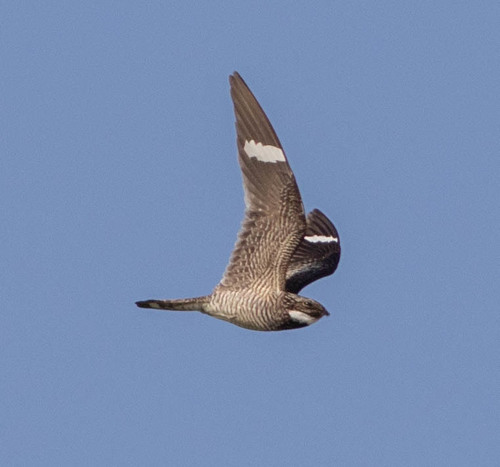 bacurau-norte-americano
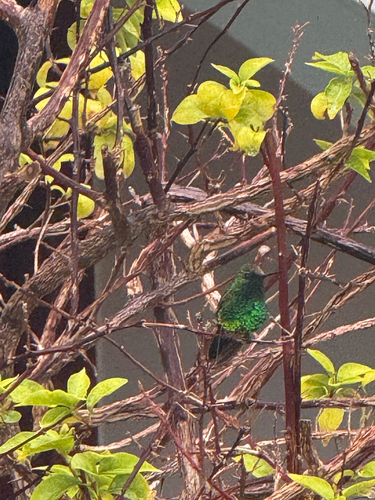 esmeralda-de-cauda-azul
Em resumo
A maneira mais confiável de separar o bacurau-norte-americano da esmeralda-de-cauda-azul é pela estrutura geral e estilo de voo: os bacurais têm asas longas e voos erráticos, com um distintivo padrão branco nas asas (menor em juvenis), enquanto as esmeraldas-de-cauda-azul são beija-flores pequenos e compactos, com um bico reto e plumagem verde metálica ou azul-esverdeada. Os bacurais juvenis podem ser mais claros e ter um padrão branco nas asas menor, mas mesmo assim, seu padrão críptico e listrado e asas longas são diferentes de qualquer beija-flor. As duas espécies diferem drasticamente em tamanho, forma e comportamento, tornando a confusão mais provável apenas em vistas fugazes, em silhueta ou em luz fraca. Use o estilo de voo, a forma do bico e a estrutura da cauda como suas primeiras verificações.
Dicas de identificação
- O tamanho é a primeira verificação: O bacurau-norte-americano é muito maior e mais robusto do que qualquer beija-flor, incluindo a esmeralda-de-cauda-azul. Se o pássaro parecer do tamanho de um pardal ou maior, não é uma esmeralda.
- Padrão das asas em voo: Todas as idades do bacurau-norte-americano mostram um padrão branco nas asas (menor em juvenis), visível de baixo e de cima em voo. A esmeralda-de-cauda-azul nunca mostra um padrão branco nas asas.
- Forma do bico: O bacurau-norte-americano tem um bico pequeno e plano com uma boca enorme; a esmeralda-de-cauda-azul tem um bico curto, reto e semelhante a uma agulha, preto. Se você ver um bico longo e esbelto, é a esmeralda.
- Forma da cauda: O bacurau-norte-americano tem uma cauda longa, com entalhes ou ligeiramente bifurcada; os machos da esmeralda-de-cauda-azul têm uma cauda profundamente bifurcada, azul aço, enquanto as fêmeas têm uma cauda azul-preta com pontas claras. No entanto, a cauda do bacurau é proporcionalmente muito mais longa em relação ao seu corpo.
- Cor da plumagem: O bacurau-norte-americano é crípticamente listrado em cinza, marrom e preto, nunca iridescente. Os machos da esmeralda-de-cauda-azul são verdes metálicos e azuis, enquanto as fêmeas são verdes metálicas acima e claras abaixo. Qualquer sinal de iridescência ou brilho metálico descarta o bacurau.
- Postura ao empoleirar: O bacurau-norte-americano empoleira-se horizontalmente, paralelo ao galho ou ao chão; a esmeralda-de-cauda-azul empoleira-se ereta como um típico beija-flor.
- Estilo de voo: O bacurau-norte-americano tem um voo errático e flutuante, semelhante a uma mariposa, frequentemente planando ou pairando. A esmeralda-de-cauda-azul voa com batidas rápidas das asas, paira em flores e nunca plana.
- Período de atividade: O bacurau-norte-americano é crepuscular/nocturno, mais ativo ao amanhecer ou ao entardecer. A esmeralda-de-cauda-azul é ativa durante o dia.
- Contexto do habitat: O bacurau-norte-americano prefere áreas abertas, telhados e clareiras; a esmeralda-de-cauda-azul é encontrada em jardins, bordas de florestas e matas tropicais.
- Voz: Ouça o alto 'peent' do bacurau ao entardecer; as esmeraldas são mais silenciosas, emitindo suaves cliques ou trilos.
- Confusão juvenil: Os bacurais juvenis são mais claros e têm um padrão branco nas asas menor, mas ainda mostram listras crípticas e asas longas. Nenhuma idade da esmeralda-de-cauda-azul mostra tal padrão.
- Características faciais: O bacurau-norte-americano não possui penas rictais e tem uma cabeça grande e plana com olhos grandes; a esmeralda-de-cauda-azul tem uma cabeça pequena e arredondada e um bico reto.
- Comportamento alimentar: O bacurau-norte-americano captura insetos em voo; a esmeralda-de-cauda-azul se alimenta em flores pairando.
- Comportamento em grupo: O bacurau-norte-americano é geralmente solitário ou em grupos soltos; a esmeralda-de-cauda-azul pode visitar comedouros com outros beija-flores, mas geralmente está sozinha em uma flor.
- Risco de confusão: Apenas em luz fraca ou silhueta distante essas espécies podem ser confundidas; use tamanho, padrão das asas e estilo de voo como suas primeiras verificações.
Tamanho
Há uma diferença extrema de tamanho: o bacurau-norte-americano é um pássaro de tamanho médio, pesando cerca de 79,3 g e medindo 22–25 cm de comprimento com uma envergadura de 51–61 cm [wikidata, wikipedia]. Em contraste, a esmeralda-de-cauda-azul é um pequeno beija-flor, com machos medindo 7,5–9,5 cm de comprimento e pesando cerca de 2,7 g, e fêmeas ainda menores [wikipedia]. Mesmo à distância, o bacurau é várias vezes maior e mais robusto do que o beija-flor.
Plumagem
Os bacurais juvenis são mais claros e têm um padrão branco nas asas menor do que os adultos; esse padrão ainda está presente e é diagnóstico em voo para todas as idades. Os adultos mostram listras crípticas em cinza, marrom e preto com padrões brancos nas asas e uma cauda entalhada. Os machos da esmeralda-de-cauda-azul são verdes metálicos com uma cauda azul aço, profundamente bifurcada e partes inferiores brilhantes; as fêmeas são verdes metálicas acima com uma cauda azul-preta com pontas cinza claras e partes inferiores cinza claras. Nenhum bacurau, de qualquer idade ou sexo, mostra cores iridescentes ou metálicas, enquanto nenhuma esmeralda-de-cauda-azul mostra o padrão listrado e críptico ou o padrão branco nas asas de um bacurau. A plumagem do bacurau é adaptada para camuflagem, enquanto a da esmeralda é para exibição.
Comportamento
O bacurau-norte-americano é mais frequentemente visto voando ao amanhecer ou ao entardecer em um voo flutuante e errático, frequentemente alto no céu ou forrageando em áreas abertas. Ele empoleira-se horizontalmente em galhos, postes ou no chão, raramente ereto. A esmeralda-de-cauda-azul é ativa durante o dia, pairando em flores ou empoleirando-se ereta em ramos; seu voo é direto, rápido e típico de beija-flores, com batidas rápidas das asas e frequente pairar. O bacurau nunca paira como um beija-flor, e a esmeralda nunca plana ou desliza como um bacurau.
Habitat
O bacurau-norte-americano ocorre em habitats abertos, incluindo áreas urbanas, campos e clareiras, em grande parte das Américas, e é mais ativo ao crepúsculo ou à noite. A esmeralda-de-cauda-azul é encontrada na América do Sul tropical e subtropical a leste dos Andes, em jardins, bordas de florestas e matas abertas, ativa durante o dia. Seus habitats se sobrepõem apenas no norte da América do Sul, mas seus habitats preferidos e períodos de atividade diária diferem acentuadamente.
Voz
O bacurau-norte-americano é melhor detectado por seu distintivo chamado nasal 'peent', especialmente ao amanhecer ou ao entardecer. A esmeralda-de-cauda-azul, como a maioria dos beija-flores, emite cliques ou trilos rápidos e agudos, mas geralmente é muito mais silenciosa e menos conspícua do que o bacurau. O chamado do bacurau é alto e se propaga longe, enquanto o da esmeralda é suave e facilmente perdido.
bacurau-norte-americano · esmeralda-de-cauda-azul · Minhas aves difíceis