
Common Nighthawk vs Blue-tailed Emerald
Chordeiles minor contro Chlorostilbon mellisugus
Fai un quiz con Common Nighthawk e Blue-tailed Emerald
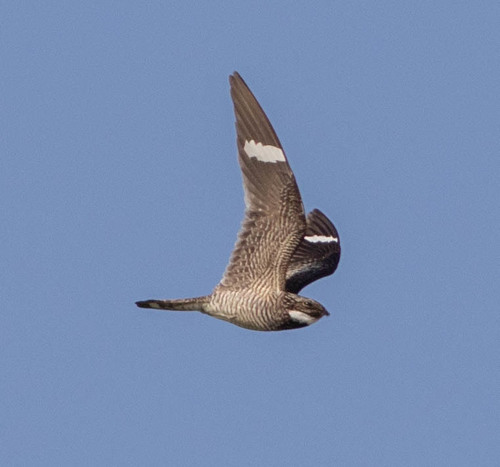 Common Nighthawk
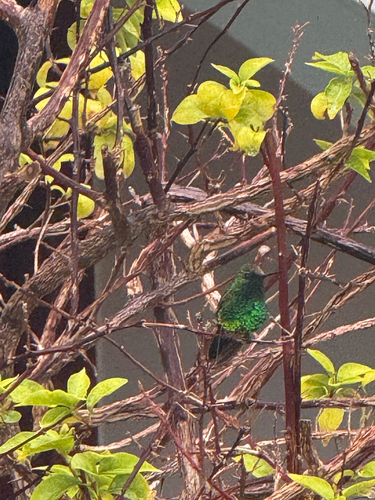 Blue-tailed Emerald
In breve
Il modo più affidabile per separare il Common Nighthawk dal Blue-tailed Emerald è attraverso la struttura generale e lo stile di volo: i nighthawk hanno ali lunghe e volo erratico, sono dei succiacapre notturni con una distintiva macchia bianca sulle ali (più piccola nei giovani), mentre i Blue-tailed Emerald sono colibrì piccoli e compatti con un becco dritto e piumaggio verde metallico o blu-verde. I nighthawk giovani possono essere più chiari e avere una macchia bianca sulle ali più piccola, ma anche in quel caso, il loro motivo criptico a barre e le ali lunghe non assomigliano a nessun colibrì. Le due specie differiscono drasticamente in dimensioni, forma e comportamento, rendendo la confusione più probabile solo in visioni fugaci, in silhouette o in scarsa luce. Usa lo stile di volo, la forma del becco e la struttura della coda come tuoi primi controlli.
Consigli di identificazione
- Size is the first check: Il Common Nighthawk è molto più grande e massiccio di qualsiasi colibrì, incluso il Blue-tailed Emerald. Se l'uccello sembra delle dimensioni di un passero o più grande, non è un emerald.
- Wing pattern in flight: Tutte le età del Common Nighthawk mostrano una macchia bianca sulle ali (più piccola nei giovani), visibile dall'alto e dal basso in volo. Il Blue-tailed Emerald non mostra mai una macchia bianca sulle ali.
- Bill shape: Il Nighthawk ha un becco piccolo e piatto con una grande bocca; il Blue-tailed Emerald ha un becco corto, dritto e simile a un ago di colore nero. Se vedi un becco lungo e sottile, è l'emerald.
- Tail shape: Il Nighthawk ha una coda lunga, incisa o leggermente biforcuta; i maschi del Blue-tailed Emerald hanno una coda blu acciaio profondamente biforcuta, le femmine una coda blu-nera con punte chiare. Tuttavia, la coda del nighthawk è proporzionalmente molto più lunga rispetto al suo corpo.
- Plumage color: Il Nighthawk è grigio, marrone e nero a barre criptiche, mai iridescente. I maschi del Blue-tailed Emerald sono verdi e blu metallici, le femmine verdi metalliche sopra e chiare sotto. Qualsiasi segno di iridescenza o lucentezza metallica esclude il nighthawk.
- Perching posture: Il Nighthawk si posiziona orizzontalmente, parallelo al ramo o al suolo; il Blue-tailed Emerald si posiziona eretto come un tipico colibrì.
- Flight style: Il Nighthawk ha un volo galleggiante, erratico e simile a una falena, spesso planando o librandosi. Il Blue-tailed Emerald vola con battiti d'ali rapidi, si libra sui fiori e non plana mai.
- Activity period: Il Nighthawk è crepuscolare/nocturno, più attivo al crepuscolo o all'alba. Il Blue-tailed Emerald è attivo di giorno.
- Habitat context: Il Nighthawk predilige aree aperte, tetti e radure; il Blue-tailed Emerald si trova in giardini, bordi di foreste e boschi tropicali.
- Voice: Ascolta il forte 'peent' del nighthawk al crepuscolo; gli emerald sono più silenziosi, emettendo soft chips o trilli.
- Juvenile confusion: I nighthawk giovani sono più chiari e hanno una macchia bianca sulle ali più piccola, ma mostrano comunque barre criptiche e ali lunghe. Nessuna età del Blue-tailed Emerald mostra un tale motivo.
- Facial features: Il Nighthawk non ha setole rictali e ha una grande testa piatta con occhi grandi; il Blue-tailed Emerald ha una testa piccola e arrotondata e un becco dritto.
- Feeding behavior: Il Nighthawk cattura insetti in volo; il Blue-tailed Emerald si nutre sui fiori librandosi.
- Group behavior: Il Nighthawk è per lo più solitario o in gruppi sciolti; il Blue-tailed Emerald può visitare mangiatoie con altri colibrì ma di solito è solo su un fiore.
- Confusion risk: Solo in scarsa luce o silhouette distante potrebbero essere confusi; usa dimensione, macchia sulle ali e stile di volo come tuoi primi controlli.
Taglia
C'è una differenza di dimensioni estrema: il Common Nighthawk è un uccello di dimensioni medie, che pesa circa 79,3 g e misura 22–25 cm di lunghezza con un'apertura alare di 51–61 cm [wikidata, wikipedia]. Al contrario, il Blue-tailed Emerald è un colibrì minuscolo, con maschi di 7,5–9,5 cm di lunghezza e un peso di circa 2,7 g, le femmine ancora più piccole [wikipedia]. Anche a distanza, il nighthawk è diverse volte più grande e massiccio del colibrì.
Piumaggio
I nighthawk giovani sono più chiari e hanno una macchia bianca sulle ali più piccola rispetto agli adulti; questa macchia è comunque presente e diagnostica in volo per tutte le età. Gli adulti mostrano barre criptiche grigie, marroni e nere con macchie bianche sulle ali e una coda incisa. I maschi del Blue-tailed Emerald sono verdi metallici con una coda blu acciaio, profondamente biforcuta e parti inferiori di smeraldo luccicanti; le femmine sono verdi metalliche sopra con una coda blu-nera con punte grigie chiare e parti inferiori grigie chiare. Nessun nighthawk, di qualsiasi età o sesso, mostra colori iridescenti o metallici, mentre nessun Blue-tailed Emerald mostra il motivo a barre criptico o la macchia bianca sulle ali di un nighthawk. Il piumaggio del nighthawk è adattato per il camuffamento, mentre quello dell'emerald è per la visualizzazione.
Comportamento
Il Common Nighthawk è più spesso visto volare al crepuscolo o all'alba in un volo galleggiante, erratico e simile a una falena, spesso in alto sopra la testa o foraggiando in aree aperte. Si posiziona orizzontalmente su rami, pali o sul suolo, raramente eretto. Il Blue-tailed Emerald è attivo di giorno, librandosi sui fiori o posandosi eretto su rametti; il suo volo è diretto, veloce e tipico dei colibrì, con battiti d'ali rapidi e frequenti soste in volo. Il nighthawk non si libra mai come un colibrì, e l'emerald non plana mai come un nighthawk.
Habitat
Il Common Nighthawk si trova in habitat aperti, comprese aree urbane, praterie e radure, in gran parte delle Americhe, ed è più attivo al crepuscolo o di notte. Il Blue-tailed Emerald si trova in Sud America tropicale e subtropicale a est delle Ande, in giardini, bordi di foreste e boschi aperti, attivo di giorno. I loro territori si sovrappongono solo nel nord del Sud America, ma i loro habitat preferiti e i periodi di attività quotidiana differiscono nettamente.
Voce
Il Common Nighthawk è meglio rilevato dal suo distintivo richiamo nasale 'peent', specialmente al crepuscolo o all'alba. Il Blue-tailed Emerald, come la maggior parte dei colibrì, emette chips o trilli rapidi e acuti, ma è generalmente molto più silenzioso e meno appariscente del nighthawk. Il richiamo del nighthawk è forte e si sente lontano, mentre quello dell'emerald è morbido e facilmente trascurato.
Common Nighthawk · Blue-tailed Emerald · I miei uccelli difficili