

bushtit vs estrelinha-de-fogo
Psaltriparus minimus versus Corthylio calendula
Jogue um quiz com bushtit e estrelinha-de-fogo
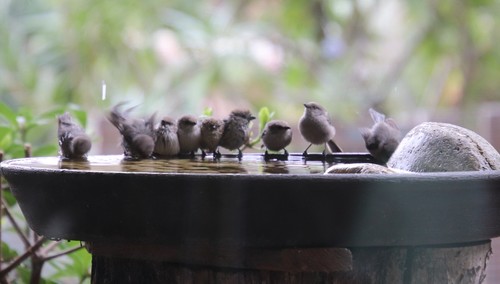 bushtit
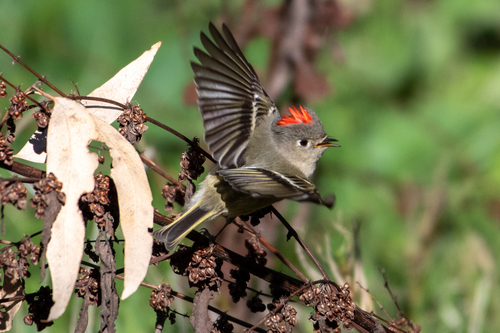 estrelinha-de-fogo
Em resumo
A marca de campo mais confiável para separar bushtit de estrelinha-de-fogo é a presença de barras brancas bold nas asas e um anel ocular branco quebrado na estrelinha, que estão completamente ausentes no bushtit. O bushtit é um pássaro minúsculo, simples, de cor cinza-marrom, com uma cauda longa e sem barras nas asas ou anel ocular, enquanto a estrelinha-de-fogo é ligeiramente maior, de cor verde-oliva, e apresenta duas barras brancas distintas e um anel ocular quebrado; machos adultos podem mostrar uma mancha vermelha oculta na coroa. Em voo ou empoleirado, o padrão das asas da estrelinha e seu comportamento mais ativo, com movimentos de asas, são pistas fortes. Ambas as espécies são pequenas, mas o bushtit é ainda menor e mais arredondado, frequentemente se movendo em bandos apertados e tagarelando, enquanto as estrelinhas são solitárias ou em bandos mistos soltos e são mais inquietas. Se você ver um pássaro sem barras nas asas e com uma cauda longa e fina, é um bushtit; se você ver barras nas asas e um anel ocular quebrado, é uma estrelinha-de-fogo.
Dicas de identificação
- Barras nas asas: A estrelinha-de-fogo sempre mostra duas barras brancas nítidas em cada asa (incluindo imaturos e fêmeas); o bushtit nunca mostra barras nas asas em nenhuma idade. Se você ver barras nas asas, é uma estrelinha.
- Anel ocular: A estrelinha tem um anel ocular branco quebrado, dando uma aparência de óculos; o bushtit não possui nenhum anel ocular ou marcas faciais. Isso é visível em todas as plumagens.
- Mancha na coroa: Machos adultos de estrelinhas às vezes mostram uma mancha escarlate na coroa, mas isso geralmente está escondido. Fêmeas e imaturos não possuem a mancha, então a ausência de vermelho não exclui a estrelinha.
- Cor geral: O bushtit é cinza-marrom simples por cima e por baixo, sem contraste. A estrelinha é verde-oliva por cima e oliva-buff por baixo, com mais contraste e uma aparência geral mais brilhante.
- Formato do bico: O bushtit tem um bico muito curto e grosso; o bico da estrelinha é ligeiramente mais longo e mais pontudo, embora ainda fino e pequeno.
- Cauda: O bushtit tem uma cauda proporcionalmente longa e fina que é frequentemente levantada ou agitada; a cauda da estrelinha é mais curta e menos proeminente.
- Formato do corpo: O bushtit parece extremamente pequeno, arredondado e com cabeça gorda, com uma cabeça grande para seu corpo e uma aparência compacta e fofinha. A estrelinha é mais alongada e menos arredondada.
- Comportamento: Os bushtits se movem em bandos apertados e barulhentos, frequentemente pendurados de cabeça para baixo ou se movendo acrobaticamente entre os galhos. As estrelinhas são solitárias ou em grupos soltos, sempre agitando suas asas e se movendo inquietamente.
- Estilo de voo: As estrelinhas têm um voo rápido, abrupto e errático com batidas rápidas das asas; os bushtits voam fracos e tendem a se mover em pequenos saltos flutuantes entre os arbustos.
- Habitat: Os bushtits preferem florestas abertas com sub-bosque arbustivo, especialmente no Oeste; as estrelinhas se reproduzem em florestas de coníferas, mas hibernam em uma variedade de habitats florestais, às vezes se sobrepondo ao habitat do bushtit.
- Tamanho do bando: Se você ver um grupo de 10+ pássaros minúsculos se movendo juntos, é provável que seja um bushtit. As estrelinhas raramente estão em bandos tão grandes e apertados.
- Vocalizações: Não é diagnóstico a partir das notas fornecidas, mas na prática, o bushtit emite chamadas altas, finas e sibilantes, enquanto as chamadas da estrelinha são mais agudas, variadas e incluem notas rápidas "jidit-jidit".
- Contexto sazonal: Na época de reprodução, as estrelinhas estão em florestas de coníferas, muitas vezes longe do habitat do bushtit. No inverno, ambas podem ocorrer juntas em jardins e parques no Oeste.
- Estrutura do ninho: Não visível no campo, mas o bushtit constrói um ninho pendurado distinto; o ninho da estrelinha é uma taça, frequentemente escondida em coníferas.
- Armadilhas: As estrelinhas imaturas ainda mostram barras nas asas e anel ocular; o bushtit nunca mostra. Não confie apenas na presença ou ausência da mancha vermelha na coroa.
Tamanho
O bushtit está entre os menores passeriformes da América do Norte, notavelmente menor que a estrelinha-de-fogo. O bushtit tem um bico muito curto e grosso e uma cauda longa e estreita que acentua seu corpo minúsculo e arredondado. A estrelinha-de-fogo ainda é muito pequena (9–11 cm de comprimento, 5–10 g), mas é ligeiramente maior e mais alongada, com uma cauda proporcionalmente mais curta e um bico ligeiramente maior e mais pontudo. Em comparação direta, o bushtit parece mais diminuto, com uma cabeça menor e asas mais curtas em relação ao tamanho do corpo. [wikipedia][avonet]
Plumagem
Os bushtits juvenis e adultos de todas as idades são cinza-marrom simples por cima e por baixo, sem barras nas asas, sem anel ocular e sem marcas faciais. Sua plumagem é uniforme e carece de contraste, fazendo-os parecer suaves e sem características. A estrelinha-de-fogo de todas as idades (incluindo imaturos e fêmeas) mostra duas barras brancas nítidas em cada asa, com a barra de cobertura maior sendo mais larga e destacada por uma faixa escura. A estrelinha também tem um anel ocular branco quebrado, dando uma aparência de óculos. Machos adultos podem mostrar uma mancha escarlate oculta na coroa, mas isso geralmente está escondido; fêmeas e imaturos não possuem a mancha da coroa, mas de outra forma parecem idênticos. A plumagem da estrelinha é verde-oliva por cima e oliva-buff por baixo, com um rosto simples, além do anel ocular. Em voo, as barras das asas da estrelinha são especialmente óbvias, enquanto o bushtit permanece uniformemente simples. [wikipedia]
Comportamento
Os bushtits são altamente sociais, movendo-se em bandos apertados e tagarelando de 10 a 40 pássaros, frequentemente vistos forrageando acrobaticamente em arbustos e árvores, às vezes pendurados de cabeça para baixo. Eles são geralmente silenciosos, exceto por suas chamadas agudas e raramente agitam suas asas. As estrelinhas são mais solitárias ou em bandos mistos soltos, extremamente ativas e constantemente agitam suas asas enquanto forrageiam. Seu movimento é descrito como rápido, abrupto e errático, com frequentes saltos curtos e explosões rápidas de batidas das asas. As estrelinhas são menos propensas a serem vistas em grupos apertados e mais propensas a serem vistas sozinhas ou com alguns outros pequenos insetívoros. [wikipedia]
Habitat
Os bushtits são tipicamente encontrados em florestas abertas mistas, especialmente com carvalhos e chaparral, mas também ocorrem em jardins e parques no oeste dos EUA e na América Central. Eles preferem áreas com vegetação densa e baixa. As estrelinhas se reproduzem em florestas de abetos e pinheiros do norte e montanhosas da América do Norte, mas são migrantes amplamente distribuídos e hibernam em uma variedade de habitats florestais, incluindo florestas decíduas e mistas, parques e jardins. No inverno, as estrelinhas são mais propensas a serem encontradas em uma gama mais ampla de habitats, incluindo aqueles usados pelos bushtits, mas os bushtits geralmente estão ausentes de florestas de coníferas onde as estrelinhas se reproduzem. [wikipedia]