

bullock's oriole vs scott's oriole
Icterus bullockii versus Icterus parisorum
Jogue um quiz com bullock's oriole e scott's oriole
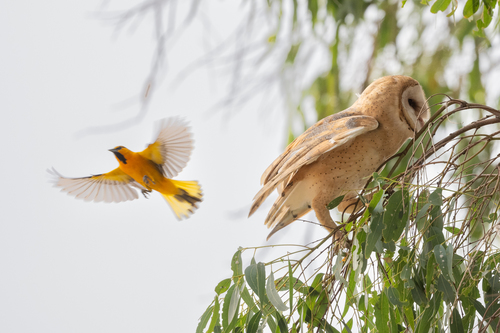 bullock's oriole
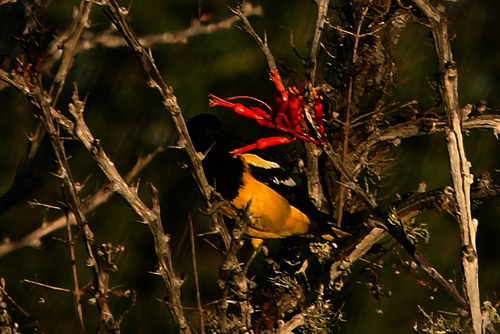 scott's oriole
Em resumo
A marca de campo mais confiável para separar o bullock's oriole do scott's oriole é o padrão e o contraste de cores na cabeça e nas partes inferiores em adultos: os machos do bullock's oriole apresentam uma coroa preta ousada, linha do olho e mancha na garganta com partes inferiores amarelo-laranja brilhantes, enquanto os machos do scott's oriole têm a cabeça, peito e costas totalmente pretos com uma barriga e um rabo amarelo-limão em forte contraste. Fêmeas e imaturos são mais complicados, mas as fêmeas e juvenis do bullock's oriole não têm o extenso preto na cabeça e no peito típico do scott's, e mostram um amarelo ou laranja mais uniforme abaixo. Em voo ou empoleirados, observe os padrões da cauda e das asas: o scott's oriole tem uma cauda principalmente preta com bases amarelas e pontas brancas (especialmente nas penas externas), enquanto o bullock's tem uma cauda longa, quadrada e preta como carvão nos machos. Ambas as espécies se sobrepõem em distribuição no sudoeste dos EUA, mas o habitat e os detalhes sutis da plumagem ajudam a confirmar a identificação.
Dicas de identificação
- Padrão da cabeça do macho adulto: Os machos do bullock's oriole têm uma coroa preta, linha do olho e mancha na garganta, mas rosto e partes inferiores amarelo-laranja; os machos do scott's oriole têm toda a cabeça, garganta e peito solidamente pretos. Esta é a marca mais confiável na primavera e no verão.
- Cor das partes inferiores: Os machos do bullock's oriole são amarelo-laranja abaixo; os machos do scott's oriole são amarelo limão abaixo, com um contraste acentuado no peito preto. As fêmeas do bullock's são amarelo opaco a laranja abaixo, enquanto as fêmeas do scott's são amarelo-oliva pálido, frequentemente com uma garganta e parte superior do peito pretas.
- Padrão da cauda: Os machos do bullock's oriole têm uma cauda longa, quadrada e preta como carvão; o scott's oriole tem uma cauda principalmente preta com bases amarelas e pontas brancas, especialmente proeminentes nas penas externas. Isso é visível em aves empoleiradas e em voo.
- Padrão das asas: O bullock's oriole mostra uma mancha branca na asa (nas coberturas); o scott's oriole tem duas barras brancas distintas nas asas (coberturas medianas e maiores) e coberturas menores amareladas formando um epaulete. Em voo, as barras das asas do scott's e o epaulete amarelo se destacam, enquanto o bullock's mostra uma única mancha branca.
- Cabeça/garganta de fêmeas e imaturos: As fêmeas e juvenis do bullock's oriole não têm o extenso preto na cabeça e no peito visto nas fêmeas do scott's oriole, embora fêmeas mais velhas do bullock's possam ter uma pequena mancha escura na garganta. As fêmeas do scott's oriole geralmente têm um queixo, garganta e parte superior do peito pretos, mesmo em plumagem não reprodutiva.
- Cor do bico de juvenis: Os juvenis do bullock's oriole têm um bico rosado ou esbranquiçado, enquanto os juvenis do scott's oriole têm um bico preto ou azul-escuro com uma base cinza na mandíbula. Isso é sutil, mas pode ajudar em vistas próximas.
- Cor e estrias nas costas: As fêmeas e imaturos do bullock's oriole são marrom-cinza acima com poucas estrias; as fêmeas do scott's oriole são oliva-cinza acima com estrias mais escuras, especialmente nas costas e escapulares.
- Tamanho e estrutura: O scott's oriole é maior, mais longo e frequentemente parece mais magro e de cauda longa do que o bullock's, que é mais compacto. Isso é mais aparente quando ambas as espécies são vistas juntas ou em habitats familiares.
- Contexto do habitat: No sudoeste, um oriole brilhante em deserto aberto, especialmente perto de yuccas ou agaves, é provavelmente um scott's; em florestas ribeirinhas ou áreas suburbanas com grandes árvores decíduas, o bullock's é mais provável.
- Vocalizações: A canção do bullock's oriole é rápida, doce e um tanto áspera, semelhante à do corrupião-de-baltimore. A canção do scott's oriole é mais musical e menos áspera, mas isso é sutil e nem sempre diagnóstico.
- Dimorfismo sexual: Ambas as espécies mostram dimorfismo sexual, mas é mais pronunciado no bullock's oriole, onde apenas os machos têm a coroa e a linha do olho totalmente pretas. No scott's, ambos os sexos podem mostrar preto na garganta e no peito, embora os machos sejam mais extensivamente pretos.
- Barras das asas vs. mancha: No campo, as duas barras brancas do scott's oriole e o epaulete amarelo são distintivos; a única mancha branca do bullock's oriole é mais larga, mas menos nitidamente definida.
- Cauda em voo: O padrão da cauda do scott's oriole (bases amarelas, pontas brancas) é especialmente visível em voo, enquanto a cauda do bullock's oriole permanece uniformemente preta em machos adultos.
- Cor do bico: O bullock's oriole adulto tem um bico preto com uma base azulada-cinza na mandíbula inferior; o scott's oriole tem um bico preto ou azul-escuro com uma base cinza, mas isso é sutil e nem sempre visível no campo.
- Armadilhas: Os imaturos do bullock's oriole podem ser confundidos com as fêmeas do scott's, mas não têm o extenso preto na garganta e no peito e têm um bico mais claro, rosado. Sempre verifique o padrão da cabeça/garganta e o contexto do habitat.
Tamanho
O scott's oriole é visivelmente maior e mais longo que o bullock's oriole. O scott's mede cerca de 23 cm (9,1 pol) de comprimento com uma envergadura de 32 cm (13 pol), enquanto o bullock's oriole é menor, medindo de 17 a 19 cm (6,7 a 7,5 pol) de comprimento e uma envergadura de 31 cm (12,2 pol). O peso se sobrepõe, mas o scott's é ligeiramente mais pesado em média (32 a 41 g contra 28 a 43 g do bullock's). No campo, o scott's frequentemente parece mais magro e de cauda longa, especialmente quando empoleirado verticalmente em yuccas ou galhos abertos.
Plumagem
Para adultos, os machos do bullock's oriole têm uma impressionante coroa preta, linha do olho e mancha na garganta, com rosto, peito e partes inferiores amarelo-laranja, e uma mancha branca na asa. Sua cauda é longa, quadrada e preta como carvão. Os machos do scott's oriole, em contraste, têm a cabeça, costas e peito totalmente pretos, com uma barriga e um rabo amarelo-limão bem definidos, e sua cauda é principalmente preta com bases amarelas e pontas brancas (especialmente nas penas externas). Fêmeas e imaturos são mais sutis: as fêmeas do bullock's oriole são marrom-cinza acima com amarelo opaco abaixo, às vezes com uma pequena mancha escura na garganta, mas nunca com a cabeça ou peito totalmente pretos. As fêmeas do scott's oriole são oliva-cinza acima com estrias mais escuras, amarelo-oliva pálido abaixo, e a maioria tem um queixo, garganta e parte superior do peito pretos. Os juvenis do bullock's se assemelham a fêmeas adultas, mas com asas mais escuras e um bico rosado ou esbranquiçado, sem a garganta e o peito pretos do scott's. Ambas as espécies mostram barras nas asas, mas o scott's tem duas barras brancas distintas (coberturas medianas e maiores) e coberturas menores amareladas formando um epaulete, enquanto o bullock's mostra uma mancha branca nas coberturas das asas.
Comportamento
Ambas as espécies são ativas, mas o scott's oriole é frequentemente visto forrageando mais alto em yuccas, agaves ou encostas áridas abertas, às vezes cantando de poleiros expostos. O bullock's oriole é mais provável de ser visto em florestas ribeirinhas, pomares ou florestas decíduas abertas, tecendo ninhos pendentes. Em voo, o scott's pode parecer de cauda mais longa e mais leve, enquanto o bullock's é mais compacto. Ambas as espécies cantam, mas o scott's é mais provável de ser ouvido em áreas áridas e abertas.
Habitat
O bullock's oriole é amplamente distribuído no oeste da América do Norte, preferindo corredores ribeirinhos, florestas abertas e áreas suburbanas com grandes árvores decíduas. O scott's oriole está mais intimamente ligado a habitats áridos e abertos com yuccas, agaves ou encostas desérticas, especialmente no sudoeste dos EUA e no México. A sobreposição ocorre no sudoeste, mas o scott's é raramente encontrado nas zonas ribeirinhas exuberantes preferidas pelo bullock's.
Voz
Ambas as espécies cantam, mas o bullock's oriole tem uma canção semelhante à do corrupião-de-baltimore—doce, rápida e um tanto áspera. A canção do scott's oriole não é descrita em detalhes nas notas, mas é geralmente considerada mais musical e menos áspera do que a do bullock's. As fêmeas de ambas as espécies cantam, mas as fêmeas do bullock's são notadas como cantoras mais prolíficas, com uma voz menos doce do que os machos.