

Motmot

brown-throated sunbird vs van hasselt's sunbird

Anthreptes malacensis versus Leptocoma brasiliana

Jogue um quiz com brown-throated sunbird e van hasselt's sunbird
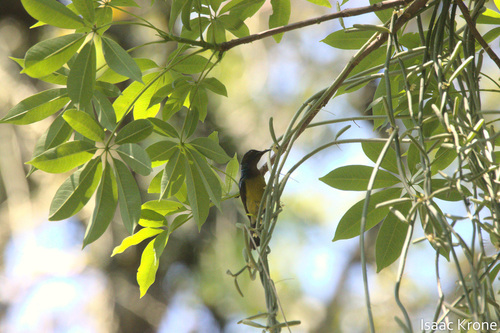
brown-throated sunbird (Anthreptes malacensis) brown-throated sunbird
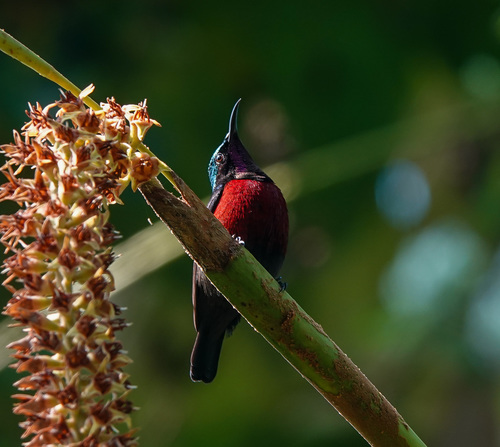
van hasselt's sunbird (Leptocoma brasiliana) van hasselt's sunbird

Mídia

Carregando…

Em resumo

The most reliable field mark to separate Brown-throated Sunbird from Van Hasselt's Sunbird is the presence of chestnut on the wing-coverts and scapulars in male Brown-throated, which is absent in Van Hasselt's. Male Brown-throated also shows a combination of iridescent green and purple upperparts with a primarily yellow underside, while Van Hasselt's males are more uniformly iridescent above without the chestnut. Females of both species are less distinctive, but Brown-throated females are olive-green above and yellowish below, whereas Van Hasselt's females are generally duller and less yellow. Both species overlap in much of Southeast Asia, but Brown-throated is more often found in semi-open habitats, while Van Hasselt's prefers denser forest and mangrove. Structure and size are similar, but Brown-throated averages slightly larger and heavier.

Dicas de identificação

  1. Male wing-coverts and scapulars: Look for a chestnut patch on the wing-coverts and scapulars in Brown-throated males; Van Hasselt's males lack this feature. This is the single most reliable field mark for adult males.
  2. Upperparts gloss: Brown-throated males combine iridescent green and purple on the upperparts, while Van Hasselt's males are more uniformly metallic green or purple without chestnut or rufous tones.
  3. Underparts color (male): Brown-throated males are primarily yellow below; Van Hasselt's males may show less extensive yellow, but this is variable and less reliable than wing-coverts.
  4. Female plumage: Brown-throated females are olive-green above and yellowish below; Van Hasselt's females are generally duller, with less yellow and a more subdued olive or greyish tone. This difference is subtle and best used in combination with other marks.
  5. Bill structure: Both species have thick, robust bills for sunbirds, and this is not a reliable separator in the field.
  6. Size and bulk: Brown-throated is slightly larger and heavier, but this is only apparent with direct comparison and is not a strong field mark.
  7. Habitat context: In semi-open or disturbed habitats (gardens, parks, forest edge), Brown-throated is more likely. In dense forest or mangrove, Van Hasselt's is more probable. Use habitat as a supporting clue, not a primary separator.
  8. Juvenile/immature plumage: No distinctive age-specific wing or flight marks are documented for either species, so immature birds are best identified by structure and context.
  9. Flight and jizz: Both species are active and agile, moving quickly among flowers. Flight style and posture are not reliably different.
  10. Pitfalls with range: Both species overlap widely in Southeast Asia. Do not rely on range alone for identification.
  11. No song or call differences: Vocalizations are not described in the available notes, so do not use voice for separation.
  12. Sexual dimorphism: Males are much more distinctive than females; if you see a bright, iridescent male, focus on the wing-coverts for the chestnut patch.
  13. Mixed flocks: Both species may occur together where ranges overlap; check each individual carefully, especially in flowering trees.
  14. Lighting effects: Iridescence can shift with angle and light; always look for the chestnut patch in good light before concluding the ID.
  15. No reliable field marks in juveniles: When faced with a drab or immature sunbird, use a combination of structure, subtle plumage hints, and especially habitat context, but accept that some individuals may remain unidentified.

Tamanho

Brown-throated Sunbird is a relatively large, heavy sunbird with a thick bill, measuring about 14 cm in length and weighing 7.4–13.5 g. Van Hasselt's Sunbird is similar in overall size and structure, and the difference is subtle in the field. Both species are robust for sunbirds, but Brown-throated may appear slightly bulkier, especially in direct comparison. This difference is not usually diagnostic unless both are seen side by side.

Plumagem

For adult males, Brown-throated Sunbird is best recognized by its iridescent green and purple upperparts, with a distinctive patch of chestnut on the wing-coverts and scapulars. The underparts are bright yellow. In contrast, Van Hasselt's Sunbird males lack the chestnut and are more uniformly iridescent above, typically with a metallic green or purple gloss but no rufous tones on the wings. Females of both species are less striking: Brown-throated females are olive-green above and yellowish below, while Van Hasselt's females are generally duller, with less yellow and a more subdued olive or greyish tone. Juvenile and immature plumages are not described in detail for either species in the available notes, and there are no specific age-related wing or flight marks documented for field separation. Thus, adult male plumage is the most reliable visual cue.

Comportamento

Both species primarily feed on nectar, occasionally taking fruits, berries, or insects. Their foraging behavior is similar, often seen moving actively among flowering shrubs and trees. There are no major behavioral differences noted that would reliably separate them in the field.

Habitat

Brown-throated Sunbird is found in a wide range of semi-open habitats, including gardens, parks, secondary growth, and forest edges across Southeast Asia. Van Hasselt's Sunbird, while overlapping in range, is more tightly associated with subtropical or tropical moist lowland forests and mangrove forests. Thus, encountering a sunbird in a dense forest or mangrove increases the likelihood of Van Hasselt's, while more open or disturbed habitats favor Brown-throated. However, both can occur in overlapping zones, so habitat alone is not diagnostic.

Enviar uma descrição melhor

Use as mesmas seções da comparação. Seu texto é publicado na hora.

The most reliable field mark to separate Brown-throated Sunbird from Van Hasselt's Sunbird is the presence of chestnut on the wing-coverts and scapulars in male Brown-throated, which is absent in Van Hasselt's. Male Brown-throated also shows a combination of iridescent green and purple upperparts with a primarily yellow underside, while Van Hasselt's males are more uniformly iridescent above without the chestnut. Females of both species are less distinctive, but Brown-throated females are olive-green above and yellowish below, whereas Van Hasselt's females are generally duller and less yellow. Both species overlap in much of Southeast Asia, but Brown-throated is more often found in semi-open habitats, while Van Hasselt's prefers denser forest and mangrove. Structure and size are similar, but Brown-throated averages slightly larger and heavier.

  1. Male wing-coverts and scapulars: Look for a chestnut patch on the wing-coverts and scapulars in Brown-throated males; Van Hasselt's males lack this feature. This is the single most reliable field mark for adult males.
  2. Upperparts gloss: Brown-throated males combine iridescent green and purple on the upperparts, while Van Hasselt's males are more uniformly metallic green or purple without chestnut or rufous tones.
  3. Underparts color (male): Brown-throated males are primarily yellow below; Van Hasselt's males may show less extensive yellow, but this is variable and less reliable than wing-coverts.
  4. Female plumage: Brown-throated females are olive-green above and yellowish below; Van Hasselt's females are generally duller, with less yellow and a more subdued olive or greyish tone. This difference is subtle and best used in combination with other marks.
  5. Bill structure: Both species have thick, robust bills for sunbirds, and this is not a reliable separator in the field.
  6. Size and bulk: Brown-throated is slightly larger and heavier, but this is only apparent with direct comparison and is not a strong field mark.
  7. Habitat context: In semi-open or disturbed habitats (gardens, parks, forest edge), Brown-throated is more likely. In dense forest or mangrove, Van Hasselt's is more probable. Use habitat as a supporting clue, not a primary separator.
  8. Juvenile/immature plumage: No distinctive age-specific wing or flight marks are documented for either species, so immature birds are best identified by structure and context.
  9. Flight and jizz: Both species are active and agile, moving quickly among flowers. Flight style and posture are not reliably different.
  10. Pitfalls with range: Both species overlap widely in Southeast Asia. Do not rely on range alone for identification.
  11. No song or call differences: Vocalizations are not described in the available notes, so do not use voice for separation.
  12. Sexual dimorphism: Males are much more distinctive than females; if you see a bright, iridescent male, focus on the wing-coverts for the chestnut patch.
  13. Mixed flocks: Both species may occur together where ranges overlap; check each individual carefully, especially in flowering trees.
  14. Lighting effects: Iridescence can shift with angle and light; always look for the chestnut patch in good light before concluding the ID.
  15. No reliable field marks in juveniles: When faced with a drab or immature sunbird, use a combination of structure, subtle plumage hints, and especially habitat context, but accept that some individuals may remain unidentified.

Brown-throated Sunbird is a relatively large, heavy sunbird with a thick bill, measuring about 14 cm in length and weighing 7.4–13.5 g. Van Hasselt's Sunbird is similar in overall size and structure, and the difference is subtle in the field. Both species are robust for sunbirds, but Brown-throated may appear slightly bulkier, especially in direct comparison. This difference is not usually diagnostic unless both are seen side by side.

For adult males, Brown-throated Sunbird is best recognized by its iridescent green and purple upperparts, with a distinctive patch of chestnut on the wing-coverts and scapulars. The underparts are bright yellow. In contrast, Van Hasselt's Sunbird males lack the chestnut and are more uniformly iridescent above, typically with a metallic green or purple gloss but no rufous tones on the wings. Females of both species are less striking: Brown-throated females are olive-green above and yellowish below, while Van Hasselt's females are generally duller, with less yellow and a more subdued olive or greyish tone. Juvenile and immature plumages are not described in detail for either species in the available notes, and there are no specific age-related wing or flight marks documented for field separation. Thus, adult male plumage is the most reliable visual cue.

Both species primarily feed on nectar, occasionally taking fruits, berries, or insects. Their foraging behavior is similar, often seen moving actively among flowering shrubs and trees. There are no major behavioral differences noted that would reliably separate them in the field.

Brown-throated Sunbird is found in a wide range of semi-open habitats, including gardens, parks, secondary growth, and forest edges across Southeast Asia. Van Hasselt's Sunbird, while overlapping in range, is more tightly associated with subtropical or tropical moist lowland forests and mangrove forests. Thus, encountering a sunbird in a dense forest or mangrove increases the likelihood of Van Hasselt's, while more open or disturbed habitats favor Brown-throated. However, both can occur in overlapping zones, so habitat alone is not diagnostic.

Descartar as alterações?

Você tem edições não salvas. Se sair agora, elas serão perdidas.

brown-throated sunbird · van hasselt's sunbird · Minhas aves difíceis