

brown-streaked flycatcher vs oriental magpie-robin
Muscicapa williamsoni versus Copsychus saularis
Jogue um quiz com brown-streaked flycatcher e oriental magpie-robin
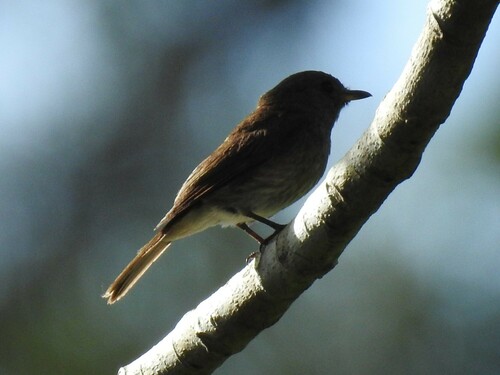 brown-streaked flycatcher
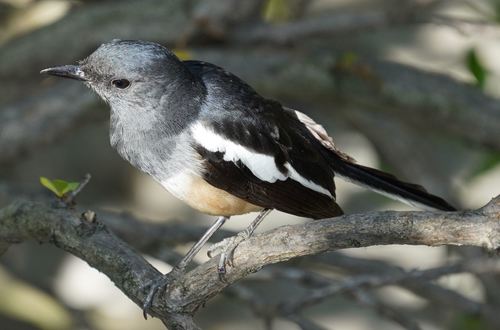 oriental magpie-robin
Em resumo
A marca de campo mais confiável para separar o brown-streaked flycatcher do oriental magpie-robin é a estrutura geral e a cauda: os magpie-robins são visivelmente maiores, com caudas mais longas, e frequentemente mantêm suas caudas eretas, enquanto os flycatchers são menores, mais compactos e nunca mostram esse comportamento de cauda. Na plumagem, os magpie-robins (especialmente os machos) são strikingly black-and-white, enquanto os brown-streaked flycatchers são sempre de um marrom ou rufo sem brilho, sem qualquer contraste ousado. Os magpie-robins juvenis têm partes superiores marrons escamosas, o que pode causar confusão com o flycatcher, mas seu tamanho, cauda e postura permanecem distintos. Se você ver um pequeno pássaro marrom simples com uma cauda curta, é o flycatcher; um pássaro maior, de cauda longa, preto e branco (ou acinzentado) com a cauda ereta é o magpie-robin.
Dicas de identificação
- Tamanho e estrutura: Os magpie-robins são muito maiores e mais pesados que os brown-streaked flycatchers; se o pássaro parecer robusto ou próximo do tamanho de um tordo, não é um flycatcher. Isso é confiável em todas as idades e sexos.
- Comprimento e forma da cauda: Os magpie-robins têm uma cauda longa (quase metade do seu comprimento) que frequentemente é mantida ereta; os flycatchers têm uma cauda curta, nunca ereta. Esta é uma marca de campo chave em todas as estações.
- Comportamento da cauda: Observe o movimento da cauda: os magpie-robins frequentemente balançam e abrem suas caudas, especialmente ao forragear ou exibir; os flycatchers não mostram esse comportamento.
- Contraste da plumagem (machos adultos): Os machos magpie-robins são pretos brilhantes acima com uma mancha branca no ombro e partes inferiores brancas — uma aparência ousada e de alto contraste. Os brown-streaked flycatchers são sempre de um marrom ou rufo simples, nunca black-and-white.
- Contraste da plumagem (fêmeas): As fêmeas magpie-robins são preto-acinzentadas acima e branco-acinzentadas abaixo, ainda mostrando um contraste claro; as fêmeas flycatchers são de um marrom simples com pouco contraste.
- Confusão juvenil: Os magpie-robins juvenis têm partes superiores e cabeça marrons escamosas, que podem parecer superficialmente com um flycatcher sem brilho. Use tamanho, comprimento da cauda e comportamento da cauda para separá-los.
- Padrão das asas e cauda: Os magpie-robins mostram uma mancha branca no ombro e branco na cauda (lados), visível na maioria das posturas. Os flycatchers não têm qualquer branco na asa ou cauda.
- Bico: Os magpie-robins têm um bico relativamente mais pesado, ligeiramente curvado para baixo; os flycatchers têm um bico mais fino e esguio, típico de flycatchers insetívoros. Isso é sutil, mas pode ajudar à queima-roupa.
- Postura de empoleiramento: Os magpie-robins frequentemente se empoleiram eretos com a cauda ereta; os flycatchers se empoleiram de forma mais horizontal e sutil.
- Contexto do habitat: Em jardins urbanos, parques ou perto de edifícios, os magpie-robins são comuns e ousados; os flycatchers são raros nesses ambientes. Em florestas densas, especialmente na área limitada do flycatcher, verifique cuidadosamente o flycatcher mais reservado.
- Canto e chamadas: Não é diagnóstico com notas atuais, mas os magpie-robins são conhecidos por seu canto alto e melodioso de altos empoleiramentos; os flycatchers são mais silenciosos e menos conspícuos.
- Plumagem sazonal: O brown-streaked flycatcher torna-se mais rufo na época de reprodução, mas nunca se aproxima do contraste ousado do magpie-robin.
- Dimorfismo sexual: Os magpie-robins mostram forte dimorfismo sexual (machos black-and-white, fêmeas acinzentadas), mas ambos os sexos são mais contrastantes que o flycatcher.
- Estilo de voo: Os magpie-robins têm um voo mais saltitante, parecido com o de um tordo; os flycatchers saem para pegar insetos e retornam ao mesmo empoleiramento.
- Armadilhas: A única confusão provável é um magpie-robin juvenil versus um flycatcher adulto; sempre verifique tamanho, comprimento da cauda e comportamento da cauda para evitar erros.
Tamanho
O oriental magpie-robin é substancialmente maior e mais pesado (massa corporal ~36g [wikidata]), e mede cerca de 19 cm de comprimento (incluindo sua longa cauda) [wikipedia]. O brown-streaked flycatcher é menor e mais leve, com uma construção mais compacta (massa exata não disponível, mas os flycatchers Muscicapa típicos são muito mais leves que os magpie-robins). Essa diferença de tamanho é geralmente óbvia em campo, especialmente quando ambas as espécies são vistas na mesma área.
Plumagem
- Juvenis/imaturos: Os magpie-robins juvenis têm partes superiores marrons escamosas e cabeça, que podem parecer superficialmente semelhantes ao flycatcher sem brilho, mas o tamanho maior do magpie-robin, cauda mais longa e postura ereta da cauda são distintos. Os juvenis do brown-streaked flycatcher não são descritos em detalhes, mas não são notados por terem forte escalonamento ou padronização.
- Machos adultos: Os machos do oriental magpie-robin são pretos ousados acima com uma mancha branca no ombro, partes inferiores brancas e lados externos da cauda brancos. O brown-streaked flycatcher nunca é black-and-white; em vez disso, é rufo na época de reprodução, tornando-se mais marrom sem brilho em outros momentos, sempre sem forte contraste.
- Fêmeas adultas: As fêmeas magpie-robins são preto-acinzentadas acima e branco-acinzentadas abaixo, ainda mostrando um contraste claro pálido/escuro e cauda longa. As fêmeas do brown-streaked flycatcher são de um marrom simples, sem qualquer divisão nítida entre partes superiores e inferiores.
- Padrão das asas: Nenhum padrão forte de asa é descrito para qualquer uma das espécies, mas os magpie-robins têm uma mancha branca no ombro e branco na cauda, enquanto os flycatchers não têm essas características.
Comportamento
O oriental magpie-robin é frequentemente visto forrageando no chão ou em galhos baixos, frequentemente balançando e erguendo sua longa cauda, especialmente ao saltar. Os machos cantam de altos empoleiramentos durante a época de reprodução. O brown-streaked flycatcher se comporta mais como um flycatcher típico: empoleirando-se silenciosamente, frequentemente saindo para pegar insetos e nunca erguendo sua cauda. Seus movimentos são mais sutis e menos conspícuos do que o comportamento ativo e ereto do magpie-robin.
Habitat
Ambas as espécies podem ocorrer em habitats florestais e de borda semelhantes do Sudeste Asiático, mas o oriental magpie-robin é muito mais provável em jardins urbanos, parques e paisagens alteradas pelo homem, onde é comum e conspícuo [wikipedia, ebird]. O brown-streaked flycatcher é mais restrito a áreas florestais no sul de Mianmar, sul da Tailândia, norte da Malásia peninsular e nordeste de Bornéu [wikipedia]. Se você estiver em uma cidade ou jardim, o magpie-robin é muito mais provável; em florestas densas, especialmente na área limitada do flycatcher, verifique cuidadosamente.
brown-streaked flycatcher · oriental magpie-robin · Minhas aves difíceis