

trinta-réis-escuro vs trinta-réis-preto
Anous stolidus versus Anous minutus
Jogue um quiz com trinta-réis-escuro e trinta-réis-preto
 trinta-réis-escuro
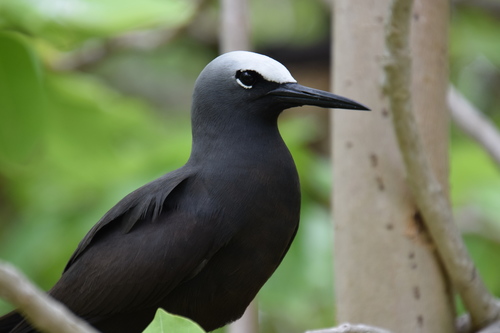 trinta-réis-preto
Em resumo
A marca de campo mais confiável entre o trinta-réis-escuro e o trinta-réis-preto é a cor geral da plumagem: o trinta-réis-escuro é distintamente marrom escuro, enquanto o trinta-réis-preto é verdadeiramente negro. Ambos têm uma coroa pálida, mas a do trinta-réis-escuro é mais acinzentada ou branca e contrasta menos com o resto da cabeça. O tamanho também é uma pista forte, já que o trinta-réis-escuro é visivelmente maior e com asas mais longas. A forma da cauda e detalhes faciais sutis (como o anel ocular e as lore) podem ajudar, mas cuidado com a sobreposição em luz fraca ou à distância. Pássaros imaturos e adultos mostram contrastes semelhantes, já que nenhuma das espécies tem padrões de asa superiores específicos para a idade.
Dicas de identificação
- Cor geral: O trinta-réis-escuro é marrom escuro, não negro; o trinta-réis-preto é verdadeiramente negro. Isso é mais óbvio em boa luz ou quando vistos lado a lado.
- Coroa/cap: Ambos têm uma coroa pálida, mas a do trinta-réis-escuro é cinza pálido ou branca e menos nitidamente definida, enquanto a do trinta-réis-preto é uma coroa branca brilhante que se destaca contra a plumagem negra.
- Anel ocular e marcas faciais: O trinta-réis-escuro apresenta um estreito e incompleto anel ocular branco; o trinta-réis-preto tem um pequeno crescente branco sob cada olho e uma mancha branca acima, mas não possui um anel ocular completo. As lore são pálidas no trinta-réis-escuro e escuras no trinta-réis-preto.
- Forma da cauda: O trinta-réis-escuro tem uma cauda longa e em forma de cunha; a cauda do trinta-réis-preto é mais curta e mais quadrada (truncada). Isso é melhor visto quando empoleirado ou em voo lento.
- Tamanho: O trinta-réis-escuro é visivelmente maior e mais robusto, com uma envergadura maior. Se você ver ambos juntos, a diferença é óbvia; sozinho, use isso com cautela.
- Cor das patas: Ambos geralmente têm patas escuras, mas algumas subespécies de trinta-réis-preto (por exemplo, melanogenys) têm patas laranjas. Isso raramente é visível em campo, mas pode ajudar em vistas próximas.
- Bico: Ambos têm um bico longo e pontudo preto; isso não é um separador confiável.
- Estilo de voo: O trinta-réis-escuro pode parecer mais pesado e mais deliberado em voo, enquanto o trinta-réis-preto é mais ágil e leve, mas isso é sutil e melhor usado como evidência de apoio.
- Pássaros juvenis/imaturos: Nenhum padrão de asa superior ou marcas de voo específicas para a idade são descritos para nenhuma das espécies, então confie na cor geral e na estrutura em todas as idades.
- Postura empoleirada: O trinta-réis-escuro frequentemente parece ter um corpo mais longo e mais ereto; o trinta-réis-preto é mais compacto.
- Armadilhas de iluminação: Em luz fraca, o trinta-réis-escuro pode parecer negro, e a coroa pálida do trinta-réis-preto pode parecer menos distinta. Sempre tente observar em boa luz.
- Sobreposição de habitat: Ambas as espécies podem ocorrer juntas em ilhas tropicais; não confie apenas na localização.
- Estação/sexo: Nenhum dimorfismo sexual ou sazonal marcado é notado para nenhuma das espécies; todas as marcas de campo se aplicam durante todo o ano e a ambos os sexos.
- Vocalizações: Não descritas como diagnósticas nas notas disponíveis; não confie na voz para separação.
- Contexto: Se você ver um grupo, verifique a variação de tamanho e compare indivíduos diretamente quando possível.
Tamanho
O trinta-réis-escuro é o maior noddy: 38–45 cm de comprimento com uma envergadura de 75–86 cm [wikipedia]. O trinta-réis-preto é menor, com 35–37 cm de comprimento e uma envergadura de 66–72 cm. Em campo, o trinta-réis-escuro parece mais robusto e com asas mais longas, enquanto o trinta-réis-preto é mais compacto e leve. Essa diferença de tamanho é geralmente óbvia quando ambas as espécies são vistas juntas, mas pode ser sutil à distância ou sem comparação direta.
Plumagem
- Adultos e imaturos: O trinta-réis-escuro é marrom chocolate escuro no geral, com uma coroa e testa cinza pálido ou branca, e um estreito anel ocular branco incompleto. O trinta-réis-preto é negro no geral, com uma coroa branca, um pequeno crescente branco sob cada olho e uma mancha branca acima do olho. As lore (área entre o bico e o olho) são pálidas no trinta-réis-escuro, mas escuras no trinta-réis-preto. Ambos têm asas longas, mas a cauda do trinta-réis-escuro é longa e em forma de cunha, enquanto a do trinta-réis-preto é mais truncada. Ambos têm pernas e patas escuras, embora algumas subespécies de trinta-réis-preto tenham patas laranjas. Nenhum padrão distinto de asa superior juvenil ou imaturo é descrito para nenhuma das espécies, então esses contrastes se aplicam a todas as idades.
- Em voo: Ambas as espécies mostram perfis de voo semelhantes, mas a coloração marrom do trinta-réis-escuro é visível mesmo à distância, enquanto o trinta-réis-preto parece negro. A coroa pálida é visível em ambos, mas contrasta mais nitidamente no trinta-réis-preto.
Comportamento
Ambas as espécies são aves marinhas coloniais, frequentemente vistas voando baixo sobre a água ou empoleiradas em penhascos, árvores ou arbustos. O trinta-réis-escuro tende a nidificar em locais elevados, como penhascos ou árvores baixas, enquanto o trinta-réis-preto também é colonial, mas pode mostrar mais variação na escolha do poleiro. Em voo, o trinta-réis-escuro pode parecer mais pesado e mais lento, enquanto o trinta-réis-preto é ligeiramente mais ágil e leve devido ao seu tamanho menor.
Habitat
Ambas as espécies são aves marinhas tropicais com faixas sobrepostas nos oceanos Pacífico, Índico e Atlântico. O trinta-réis-escuro tem uma distribuição global mais ampla e é mais provável de ser encontrado em locais de nidificação elevados. O trinta-réis-preto também é amplamente distribuído, mas pode estar mais associado a ilhas de coral e pode mostrar alguma variação de subespécies na preferência de habitat. Ambos são vistos sobre o oceano aberto e ao redor de ilhas.
trinta-réis-escuro · trinta-réis-preto · Minhas aves difíceis