
abelharuco-de-cauda-azul vs chestnut-headed bee-eater
Merops philippinus versus Merops leschenaulti
Jogue um quiz com abelharuco-de-cauda-azul e chestnut-headed bee-eater
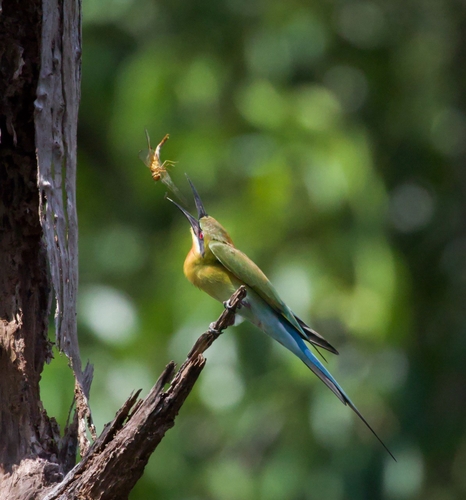 abelharuco-de-cauda-azul
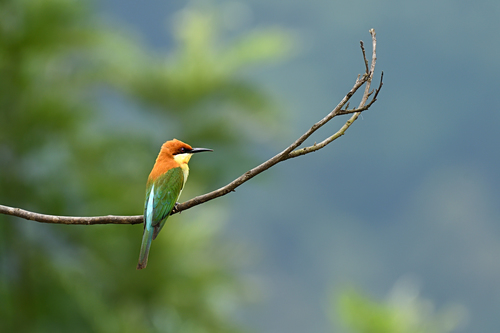 chestnut-headed bee-eater
Em resumo
A marca de campo mais confiável para separar o abelharuco-de-cauda-azul do chestnut-headed bee-eater é a coloração da cabeça e da garganta: o abelharuco-de-cauda-azul tem uma cabeça verde com uma garganta amarelo-marrom, enquanto o chestnut-headed bee-eater apresenta uma rica coroa castanha, nuca e manto com uma garganta e face amarelas. Ambas as espécies são abelharucos esguios e verdes com rumps e caudas azuis, mas o abelharuco-de-cauda-azul tem penas centrais da cauda mais longas (especialmente em adultos) e uma pequena mancha facial azul. Os juvenis de ambas as espécies são mais apagados, mas os juvenis do chestnut-headed bee-eater não têm a cabeça castanha e apresentam uma coroa esverdeada. Em voo ou empoleirados, concentre-se na cor da cabeça e na forma da cauda para a separação mais rápida.
Dicas de identificação
- Cor da cabeça e da garganta (todas as idades): O abelharuco-de-cauda-azul tem uma cabeça verde com uma garganta e peito amarelo-marrom; o chestnut-headed bee-eater apresenta uma rica coroa castanha, nuca e manto, e uma face e garganta amarelas. Esta é a marca mais confiável.
- Forma e comprimento da cauda (adultos): Os adultos do abelharuco-de-cauda-azul têm longas e pontudas penas centrais da cauda (especialmente machos), fazendo a cauda parecer mais longa e mais afilada. O chestnut-headed bee-eater não tem essas penas; sua cauda é mais curta e quadrada.
- Padrão facial: O abelharuco-de-cauda-azul tem uma pequena mancha azul no rosto e uma faixa ocular preta; o chestnut-headed tem uma face amarela com uma faixa ocular preta e nenhuma mancha facial azul.
- Cor do rump e da cauda: Ambos têm rumps e caudas azuis, mas o azul do abelharuco-de-cauda-azul é mais extenso e inclui toda a cauda; o azul do chestnut-headed é principalmente no rump e nas coberturas da cauda superior, com a cauda sendo esverdeada com bordas azuis.
- Diferenças juvenis: Os juvenis do abelharuco-de-cauda-azul são verdes apagados com uma garganta amarelo-marrom e não têm penas da cauda; os juvenis do chestnut-headed têm uma coroa e manto esverdeados e uma garganta inferior amarela, sem a cabeça castanha dos adultos.
- Peito e partes inferiores: O castanho do abelharuco-de-cauda-azul na garganta e no peito é mais escuro e mais extenso do que o do chestnut-headed, que tem uma ampla faixa castanha abaixo da garganta amarela, seguida de um gorget preto e partes inferiores verdes.
- Bico e estrutura: Ambos têm bicos esguios, pretos e curvados típicos dos abelharucos; a forma do bico não é um separador.
- Tamanho: O abelharuco-de-cauda-azul é maior e mais longo, especialmente com as penas da cauda; o tamanho pode ajudar se ambos forem vistos juntos, mas não é confiável sozinho.
- Postura empoleirada: O abelharuco-de-cauda-azul frequentemente parece mais longo e elegante devido às penas da cauda; o chestnut-headed é mais compacto.
- Postura em voo: Em voo, as longas penas da cauda do abelharuco-de-cauda-azul são óbvias em adultos; a cauda do chestnut-headed é curta e quadrada.
- Contexto de habitat: O abelharuco-de-cauda-azul é mais provável perto de água aberta e em áreas de baixada; o chestnut-headed é mais frequentemente em florestas abertas e áreas montanhosas, mas há sobreposição.
- Voz: Os chamados são semelhantes; não é uma marca de campo forte, a menos que você conheça bem ambas as espécies.
- Diferenças sexuais: Ambos são sexualmente monomórficos para o olho humano, embora os machos do abelharuco-de-cauda-azul possam ter penas da cauda ligeiramente mais longas e gargantas mais escuras.
- Armadilhas: Pássaros imaturos podem ser confusos—concentre-se na cor da cabeça (castanha vs. esverdeada) e na presença/ausência de penas da cauda para melhores resultados.
- Subespécies: Algumas subespécies do chestnut-headed (por exemplo, Javan) têm gargantas totalmente amarelas e caudas azuis, mas ainda carecem da coroa castanha e das longas penas da cauda do abelharuco-de-cauda-azul.
Tamanho
O abelharuco-de-cauda-azul é visivelmente maior: cerca de 29 cm de comprimento corporal (excluindo suas penas centrais da cauda alongadas, que adicionam mais 7 cm), e pesa 29–43 g [wikipedia]. O chestnut-headed bee-eater é menor e mais compacto, com 18–20 cm e 26–33 g [wikipedia]. A diferença é mais óbvia quando vistos lado a lado ou quando as penas da cauda do abelharuco-de-cauda-azul estão visíveis. No entanto, o tamanho sozinho nem sempre é confiável à distância ou em isolamento.
Plumagem
- Juvenis: Os juvenis do abelharuco-de-cauda-azul são verdes mais apagados, não têm as penas centrais da cauda alongadas e têm uma pequena mancha azul no rosto com uma garganta amarelo-marrom. Os juvenis do chestnut-headed bee-eater são mais apagados, com uma testa, coroa anterior e manto verdes, e uma garganta inferior amarela (não castanha); seu peito e barriga são mais claros e mais oliva. A ausência de uma cabeça castanha nos juvenis do chestnut-headed é fundamental.
- Adultos: Os adultos do abelharuco-de-cauda-azul são principalmente verdes com um rump e cauda azuis, uma pequena mancha azul no rosto, faixa ocular preta e uma garganta e peito amarelo-marrom (mais escuros e extensos do que os do chestnut-headed). As penas centrais da cauda são alongadas, especialmente nos machos. Os adultos do chestnut-headed bee-eater têm uma rica coroa castanha, nuca e manto, face e garganta amarelas, uma faixa ocular preta e um rump e coberturas da cauda superiores azuis. Sua cauda é mais curta e carece das longas penas.
- Visões em voo: Ambas as espécies mostram rumps e caudas azuis, mas a cauda do abelharuco-de-cauda-azul é mais longa e mais pontuda devido às penas. O azul do chestnut-headed é mais limitado ao rump e às coberturas da cauda superior, e a cauda é mais quadrada.
Comportamento
Ambas as espécies são gregárias, frequentemente vistas se alimentando e repousando em comunidade. Elas caçam insetos saltando de poleiros abertos e podem ser vistas forrageando sobre a água. O abelharuco-de-cauda-azul é mais fortemente migratório e é conhecido por migrações diurnas em massa em algumas áreas. Ambas as espécies fazem ninhos colonialmente em bancos de areia, escavando túneis para seus ninhos. Não há uma diferença comportamental forte para separação em campo.
Habitat
O abelharuco-de-cauda-azul prefere habitats abertos perto da água—vales fluviais, margens de lagos, estuários e, às vezes, até áreas costeiras. É frequentemente visto em áreas de baixada e é mais provável de ser encontrado perto de água aberta. O chestnut-headed bee-eater prefere florestas abertas subtropicais e é mais comum em áreas montanhosas, embora também faça ninhos em bancos de areia. Há sobreposição, mas o abelharuco-de-cauda-azul está mais ligado à água, enquanto o chestnut-headed está mais associado a florestas.
Voz
O chamado do abelharuco-de-cauda-azul é um 'teerp' rolante, chilreante e assobiado, dado principalmente em voo. Os chamados do chestnut-headed bee-eater não são descritos em detalhes nas notas fornecidas, mas ambos têm chamados típicos de abelharucos—suaves, rolantes e assobiados. A voz não é um separador forte, a menos que você esteja muito familiarizado com ambos.
abelharuco-de-cauda-azul · chestnut-headed bee-eater · Minhas aves difíceis