

abelharuco-de-faces-azuis vs abelharuco
Merops persicus versus Merops apiaster
Jogue um quiz com abelharuco-de-faces-azuis e abelharuco
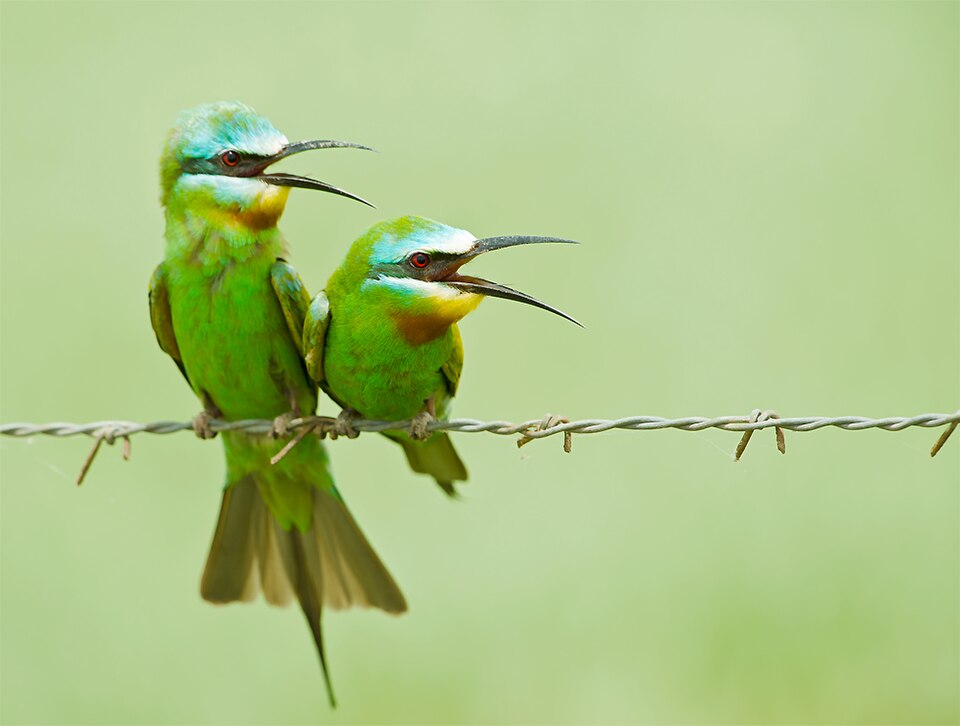 abelharuco-de-faces-azuis
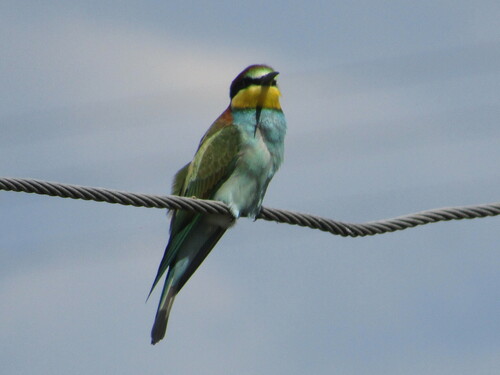 abelharuco
Em resumo
A marca de campo mais confiável entre o abelharuco-de-faces-azuis e o abelharuco é o padrão facial: o abelharuco-de-faces-azuis apresenta lados do rosto brilhantemente azuis e uma ampla faixa ocular preta, enquanto o abelharuco tem uma coroa e nuca castanhas com uma garganta amarela contornada por uma linha preta abaixo, sem a mancha azul na bochecha. Ambos são abelharucos esguios e coloridos, com asas longas e pontudas e penas centrais da cauda alongadas, mas o abelharuco-de-faces-azuis é ligeiramente maior e mais verde no geral, enquanto o abelharuco é mais castanho e amarelo por cima. Pássaros juvenis e não reprodutores podem ser especialmente confusos, mas a coloração do rosto e da garganta permanecem as melhores pistas. Em voo, ambas as espécies parecem semelhantes, então concentre-se na cor da cabeça e da garganta quando possível. A sobreposição de habitat é comum, especialmente durante a migração e em colônias, então o contexto sozinho não é confiável.
Dicas de identificação
- O padrão facial é diagnóstico: o abelharuco-de-faces-azuis apresenta bochechas azuis brilhantes e uma ampla faixa ocular preta; o abelharuco não tem azul no rosto, mostrando em vez disso uma coroa/nuca castanha e uma garganta amarela contornada por uma linha preta abaixo. Isso funciona para todas as idades e estações.
- Cor da garganta: o abelharuco-de-faces-azuis tem uma garganta amarela e marrom; o abelharuco tem uma garganta amarela pura com uma borda preta distinta abaixo. Isso é visível em pássaros empoleirados e frequentemente em voo.
- Cor das partes superiores: o abelharuco-de-faces-azuis é predominantemente verde por cima e por baixo; o abelharuco tem partes superiores marrons e amarelas com asas verdes. Em luz intensa, o abelharuco-de-faces-azuis parece mais verde no geral.
- Coroa e nuca: o abelharuco tem uma rica coroa e nuca castanhas, contrastando com as costas verdes. O abelharuco-de-faces-azuis não tem esse castanho, sendo verde até a coroa.
- Confusão juvenil e não reprodutora: os abelharucos juvenis são mais apagados, com costas azul-esverdeadas e sem streamers na cauda, mas ainda assim não têm bochechas azuis. Os juvenis do abelharuco-de-faces-azuis não são descritos em detalhes, mas espera-se que as bochechas azuis estejam presentes. Na plumagem não reprodutora, o abelharuco é mais apagado, mas o padrão facial permanece.
- Penas da cauda: ambas as espécies têm penas centrais da cauda alongadas em adultos, mais longas nos machos. Os juvenis do abelharuco não têm esses streamers, o que pode enganar, mas o padrão facial ainda separa.
- Cor e forma do bico: ambos têm bicos pretos, ligeiramente curvados; não são úteis para separação.
- Tamanho e estrutura: o abelharuco-de-faces-azuis é ligeiramente maior e com cauda mais longa, mas isso é sutil e não confiável sem comparação direta.
- Postura empoleirada: o abelharuco-de-faces-azuis pode parecer um pouco mais esguio e com cauda mais longa, mas ambos são esguios e eretos.
- Visões em voo: ambos mostram asas pontudas e caudas longas; a cor do rosto e da garganta são as melhores pistas mesmo em voo.
- Voz: os chamados do abelharuco-de-faces-azuis são 'mais planos' e menos 'fluidos' do que os do abelharuco, mas isso é difícil de julgar a menos que se esteja familiarizado com ambos.
- Habitat e contexto: ambas as espécies podem ocorrer juntas, especialmente em colônias e durante a migração, então não confie apenas no habitat ou na localização.
- Diferenças sexuais: a fêmea do abelharuco-de-faces-azuis tem streamers de cauda mais curtos; a fêmea do abelharuco tende a ter penas de ombro mais verdes, mas isso é sutil.
- Composição da colônia: ambas podem nidificar juntas, então colônias mistas são possíveis; sempre verifique cada pássaro individualmente.
- Armadilhas: Cuidado com os abelharucos juvenis apagados que não têm streamers na cauda—concentre-se na ausência de bochechas azuis e na presença de uma coroa castanha para evitar confusão.
Tamanho
O abelharuco-de-faces-azuis é ligeiramente maior, com uma massa corporal em torno de 49,4 g [wikidata] e um comprimento de até 31 cm (incluindo streamers da cauda). O abelharuco tem uma média de 52 g, mas geralmente é mais curto, com 27–29 cm, incluindo streamers. A diferença é sutil em campo, mas o abelharuco-de-faces-azuis frequentemente parece um pouco mais longo e esguio, especialmente quando empoleirado. Ambas as espécies são esbeltas e semelhantes em construção, então o tamanho sozinho raramente é diagnóstico.
Plumagem
Para todas as idades, o padrão do rosto e da garganta é a chave: o abelharuco-de-faces-azuis tem bochechas azuis, uma ampla faixa ocular preta e uma garganta amarela e marrom, enquanto o abelharuco mostra uma coroa e nuca castanhas, garganta amarela contornada por uma linha preta abaixo e sem mancha azul na bochecha. Em adultos, o abelharuco-de-faces-azuis é predominantemente verde por cima e por baixo, enquanto o abelharuco tem partes superiores marrons e amarelas e asas mais verdes. Os abelharucos não reprodutores e juvenis tornam-se mais apagados, com costas azul-esverdeadas e sem as penas da cauda alongadas, mas ainda não mostram bochechas azuis. Os juvenis do abelharuco-de-faces-azuis não são descritos em detalhes, mas espera-se que a bochecha azul e o padrão facial estejam presentes. Ambas as espécies têm bicos pretos e penas centrais da cauda alongadas (mais curtas nas fêmeas e ausentes nos juvenis do abelharuco).
Comportamento
Ambas as espécies caçam insetos em voo a partir de poleiros expostos e frequentemente se reúnem em colônias soltas ou grupos mistos. O abelharuco-de-faces-azuis pode preferir fios telefônicos como poleiros, se disponíveis. Ambas escavam túneis de ninho em bancos de areia ou falésias baixas e podem nidificar juntas em colônias mistas. O voo é rápido e direto para ambas, com asas pontudas e caudas longas. Nenhuma diferença comportamental significativa é observada que ajude na separação em campo.
Habitat
A sobreposição de habitat é extensa. O abelharuco-de-faces-azuis se reproduz no norte da África, no Oriente Médio e na Ásia Central, frequentemente em semi-desertos subtropicais com árvores esparsas, e inverna na África tropical. O abelharuco tem uma faixa de reprodução mais ampla na Europa central e meridional, partes da África e da Ásia ocidental, também invernando na África tropical. Ambas usam campos abertos, bordas de florestas e margens de rios, e ambas podem ser encontradas juntas em paradas de migração ou colônias. O habitat não é um separador confiável onde as faixas se sobrepõem.
Voz
O chamado do abelharuco-de-faces-azuis é descrito como 'mais plano' e menos 'flutuo' do que o do abelharuco, mas ambos emitem chamados trêmulos e rolantes em voo. A diferença é sutil e pode ser difícil de julgar sem comparação direta ou experiência.
abelharuco-de-faces-azuis · abelharuco · Minhas aves difíceis