

Motmot

black-winged ground dove vs golden-spotted ground dove

Metriopelia melanoptera versus Metriopelia aymara

Jogue um quiz com black-winged ground dove e golden-spotted ground dove
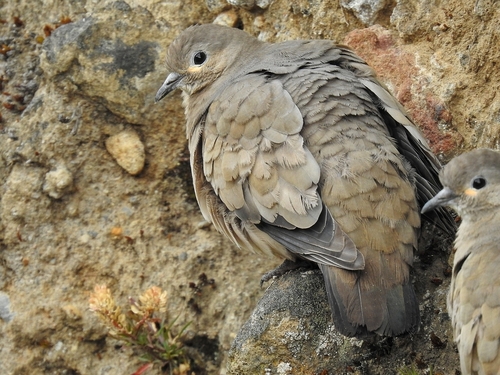
black-winged ground dove (Metriopelia melanoptera) black-winged ground dove
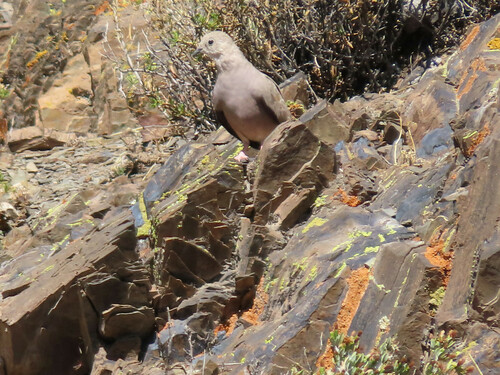
golden-spotted ground dove (Metriopelia aymara) golden-spotted ground dove

Mídia

Carregando…

Em resumo

The most reliable field mark between Black-winged Ground Dove and Golden-spotted Ground Dove is the presence of a row of iridescent golden spots on the closed wing of adult Golden-spotted, which Black-winged never shows. Juvenile Golden-spotted lack these spots, but are paler and less pink than Black-winged juveniles, and never show the strong white wing edge of Black-winged. Black-winged is much heavier and bulkier, with variable bare skin around the eye (absent in Golden-spotted). Both species overlap widely in range and habitat, so plumage and structure are key for separation.

Dicas de identificação

  1. Golden wing spots (adults only): Adult Golden-spotted Ground Dove always shows a row of iridescent golden spots on the closed wing, visible at rest and in flight. Black-winged never shows these; this is the single most diagnostic mark for adults.
  2. Juvenile plumage: Juvenile Golden-spotted is paler overall, with little or no pink and lacking golden wing spots; juvenile Black-winged is darker, with buff-edged feathers and no pink tinge. If you see a pale, unsaturated juvenile with no golden spots, consider Golden-spotted, but beware of overlap.
  3. Wing pattern (all ages): Black-winged Ground Dove shows a white edge and some pale gray on the closed wing, not golden spots or extensive black patches. Golden-spotted has two purplish-black patches and a purplish-black swath at the wing tip in addition to the golden spots (adults).
  4. Eye and bare skin: Black-winged Ground Dove has variable bare skin around the eye (sometimes colored), while Golden-spotted has a brown eye with no bare skin—unique among Metriopelia. This is visible at close range or in good light.
  5. Size and bulk: Black-winged is much heavier and bulkier (105 g vs 62 g). If a ground dove looks especially small and delicate, Golden-spotted is more likely, but beware of lone birds or poor views.
  6. Underpart color: Black-winged males have a faint pink tinge below; females and juveniles are duller. Golden-spotted adults have a reddish-pink tinge to both upperparts and underparts, with a buff belly and white throat. Juveniles of both are less colorful, but Golden-spotted is paler overall.
  7. Tail pattern: Golden-spotted shows inner tail feathers grayish brown with black tips, outer tail feathers purplish black. Black-winged's tail pattern is less distinctive and not described as diagnostic.
  8. Wing rattle: Only Golden-spotted produces a wing rattle at takeoff. If you hear this sound as the bird flushes, it is a strong clue for Golden-spotted.
  9. Habitat overlap: Both species occur together in high Andean grasslands and open country. Do not rely on habitat or elevation alone for identification.
  10. Flock behavior: Both species feed in small flocks on the ground. Flock size and behavior are not reliable for separation.
  11. Voice: If you hear a high-pitched, double-note song or 'piu' call, it is Black-winged; Golden-spotted's vocalizations are unknown.
  12. Sexual dimorphism: Black-winged males are more pinkish below than females; Golden-spotted shows less sexual dimorphism in field marks, but both sexes have golden wing spots as adults.
  13. Seasonal movement: Black-winged may move to lower elevations in winter, but both species are present year-round in much of their range.
  14. Nest placement: Not a field mark, but Golden-spotted may nest in grass, trees, or rocks; Black-winged usually nests in bushes, bromeliads, cacti, or sometimes on the ground.
  15. Pitfalls: Juvenile Golden-spotted lacking golden spots can be confused with dull Black-winged, especially females or immatures. Use overall paleness, lack of pink, and absence of bare eye skin to help separate them.

Tamanho

Black-winged Ground Dove is significantly larger and heavier, averaging about 105 g compared to Golden-spotted's 62 g. In the field, Black-winged appears bulkier and more robust, while Golden-spotted is noticeably smaller and more delicate. Both are similar in overall proportions, but the size difference is often apparent when seen side-by-side or with experience.

Plumagem

Juvenile Golden-spotted Ground Doves are pale with little or no pink and lack the golden wing spots, but still appear paler and less saturated than juvenile Black-winged, which have buff-edged feathers and no pink tinge. Adult Golden-spotted shows a row of iridescent golden spots on the closed wing, two purplish-black patches, and a purplish-black swath at the flight feather tips—these marks are unique and diagnostic. Black-winged adults lack golden spots entirely, instead showing a white edge and some pale gray on the closed wing. Black-winged males are grayish brown above with a faint pink tinge below; females are duller and less pink. Golden-spotted adults have a reddish-pink tinge to the upperparts and underparts, a white throat, and a buff belly, with a distinctive tail pattern: inner tail feathers grayish brown with black tips, outer tail purplish black. Eye color is variable in Black-winged and surrounded by bare skin, while Golden-spotted has a brown eye with no bare skin—unique in the genus.

Comportamento

Both species feed on the ground, often in small flocks. Black-winged Ground Dove is reported to be generally common and locally numerous, often seen feeding in open grassy areas near treeline, sometimes roosting in Polylepis woodland or Puya stands. Golden-spotted Ground Dove also nests and forages on the ground, but may place nests in grass, trees, or among rocks. In flight, Golden-spotted produces a distinctive wing rattle at takeoff, which can be a useful behavioral clue.

Habitat

Habitat overlap is extensive: both species are found in Argentina, Bolivia, Chile, and Peru, typically in high Andean grasslands (puna, páramo) and open country near treeline. Black-winged Ground Dove has a broader elevational range (900–4,900 m in Chile; 2,000–4,400 m elsewhere) and can occur further north into Colombia and Ecuador. Both may roost in Polylepis forest or Puya colonies, but habitat alone is not reliable for separation.

Voz

Black-winged Ground Dove gives a series of high-pitched, double notes ('rrree-up...rrree-up...') and a short 'piu' call. No vocalizations are published for Golden-spotted Ground Dove, but its wings produce a rattling sound during takeoff, which Black-winged does not. In the absence of song, the wing rattle is the only known auditory clue for Golden-spotted.

Enviar uma descrição melhor

Use as mesmas seções da comparação. Seu texto é publicado na hora.

The most reliable field mark between Black-winged Ground Dove and Golden-spotted Ground Dove is the presence of a row of iridescent golden spots on the closed wing of adult Golden-spotted, which Black-winged never shows. Juvenile Golden-spotted lack these spots, but are paler and less pink than Black-winged juveniles, and never show the strong white wing edge of Black-winged. Black-winged is much heavier and bulkier, with variable bare skin around the eye (absent in Golden-spotted). Both species overlap widely in range and habitat, so plumage and structure are key for separation.

  1. Golden wing spots (adults only): Adult Golden-spotted Ground Dove always shows a row of iridescent golden spots on the closed wing, visible at rest and in flight. Black-winged never shows these; this is the single most diagnostic mark for adults.
  2. Juvenile plumage: Juvenile Golden-spotted is paler overall, with little or no pink and lacking golden wing spots; juvenile Black-winged is darker, with buff-edged feathers and no pink tinge. If you see a pale, unsaturated juvenile with no golden spots, consider Golden-spotted, but beware of overlap.
  3. Wing pattern (all ages): Black-winged Ground Dove shows a white edge and some pale gray on the closed wing, not golden spots or extensive black patches. Golden-spotted has two purplish-black patches and a purplish-black swath at the wing tip in addition to the golden spots (adults).
  4. Eye and bare skin: Black-winged Ground Dove has variable bare skin around the eye (sometimes colored), while Golden-spotted has a brown eye with no bare skin—unique among Metriopelia. This is visible at close range or in good light.
  5. Size and bulk: Black-winged is much heavier and bulkier (105 g vs 62 g). If a ground dove looks especially small and delicate, Golden-spotted is more likely, but beware of lone birds or poor views.
  6. Underpart color: Black-winged males have a faint pink tinge below; females and juveniles are duller. Golden-spotted adults have a reddish-pink tinge to both upperparts and underparts, with a buff belly and white throat. Juveniles of both are less colorful, but Golden-spotted is paler overall.
  7. Tail pattern: Golden-spotted shows inner tail feathers grayish brown with black tips, outer tail feathers purplish black. Black-winged's tail pattern is less distinctive and not described as diagnostic.
  8. Wing rattle: Only Golden-spotted produces a wing rattle at takeoff. If you hear this sound as the bird flushes, it is a strong clue for Golden-spotted.
  9. Habitat overlap: Both species occur together in high Andean grasslands and open country. Do not rely on habitat or elevation alone for identification.
  10. Flock behavior: Both species feed in small flocks on the ground. Flock size and behavior are not reliable for separation.
  11. Voice: If you hear a high-pitched, double-note song or 'piu' call, it is Black-winged; Golden-spotted's vocalizations are unknown.
  12. Sexual dimorphism: Black-winged males are more pinkish below than females; Golden-spotted shows less sexual dimorphism in field marks, but both sexes have golden wing spots as adults.
  13. Seasonal movement: Black-winged may move to lower elevations in winter, but both species are present year-round in much of their range.
  14. Nest placement: Not a field mark, but Golden-spotted may nest in grass, trees, or rocks; Black-winged usually nests in bushes, bromeliads, cacti, or sometimes on the ground.
  15. Pitfalls: Juvenile Golden-spotted lacking golden spots can be confused with dull Black-winged, especially females or immatures. Use overall paleness, lack of pink, and absence of bare eye skin to help separate them.

Black-winged Ground Dove is significantly larger and heavier, averaging about 105 g compared to Golden-spotted's 62 g. In the field, Black-winged appears bulkier and more robust, while Golden-spotted is noticeably smaller and more delicate. Both are similar in overall proportions, but the size difference is often apparent when seen side-by-side or with experience.

Juvenile Golden-spotted Ground Doves are pale with little or no pink and lack the golden wing spots, but still appear paler and less saturated than juvenile Black-winged, which have buff-edged feathers and no pink tinge. Adult Golden-spotted shows a row of iridescent golden spots on the closed wing, two purplish-black patches, and a purplish-black swath at the flight feather tips—these marks are unique and diagnostic. Black-winged adults lack golden spots entirely, instead showing a white edge and some pale gray on the closed wing. Black-winged males are grayish brown above with a faint pink tinge below; females are duller and less pink. Golden-spotted adults have a reddish-pink tinge to the upperparts and underparts, a white throat, and a buff belly, with a distinctive tail pattern: inner tail feathers grayish brown with black tips, outer tail purplish black. Eye color is variable in Black-winged and surrounded by bare skin, while Golden-spotted has a brown eye with no bare skin—unique in the genus.

Both species feed on the ground, often in small flocks. Black-winged Ground Dove is reported to be generally common and locally numerous, often seen feeding in open grassy areas near treeline, sometimes roosting in Polylepis woodland or Puya stands. Golden-spotted Ground Dove also nests and forages on the ground, but may place nests in grass, trees, or among rocks. In flight, Golden-spotted produces a distinctive wing rattle at takeoff, which can be a useful behavioral clue.

Habitat overlap is extensive: both species are found in Argentina, Bolivia, Chile, and Peru, typically in high Andean grasslands (puna, páramo) and open country near treeline. Black-winged Ground Dove has a broader elevational range (900–4,900 m in Chile; 2,000–4,400 m elsewhere) and can occur further north into Colombia and Ecuador. Both may roost in Polylepis forest or Puya colonies, but habitat alone is not reliable for separation.

Black-winged Ground Dove gives a series of high-pitched, double notes ('rrree-up...rrree-up...') and a short 'piu' call. No vocalizations are published for Golden-spotted Ground Dove, but its wings produce a rattling sound during takeoff, which Black-winged does not. In the absence of song, the wing rattle is the only known auditory clue for Golden-spotted.

Descartar as alterações?

Você tem edições não salvas. Se sair agora, elas serão perdidas.

black-winged ground dove · golden-spotted ground dove · Minhas aves difíceis