

Motmot

Weißbugtäubchen vs Aymaratäubchen

Metriopelia melanoptera gegen Metriopelia aymara

Ein Quiz mit Weißbugtäubchen und Aymaratäubchen spielen
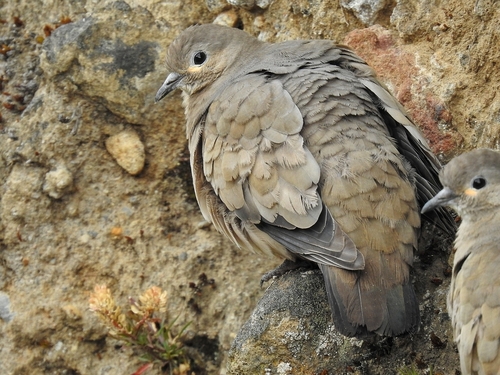
Weißbugtäubchen (Metriopelia melanoptera) Weißbugtäubchen
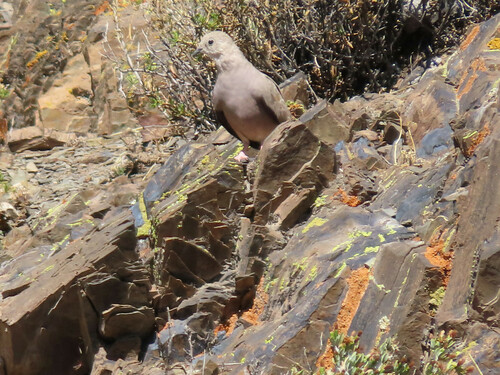
Aymaratäubchen (Metriopelia aymara) Aymaratäubchen

Medien

Laden…

Kurz gesagt

The most reliable field mark between Black-winged Ground Dove and Golden-spotted Ground Dove is the presence of a row of iridescent golden spots on the closed wing of adult Golden-spotted, which Black-winged never shows. Juvenile Golden-spotted lack these spots, but are paler and less pink than Black-winged juveniles, and never show the strong white wing edge of Black-winged. Black-winged is much heavier and bulkier, with variable bare skin around the eye (absent in Golden-spotted). Both species overlap widely in range and habitat, so plumage and structure are key for separation.

Bestimmungstipps

  1. Golden wing spots (adults only): Adult Golden-spotted Ground Dove always shows a row of iridescent golden spots on the closed wing, visible at rest and in flight. Black-winged never shows these; this is the single most diagnostic mark for adults.
  2. Juvenile plumage: Juvenile Golden-spotted is paler overall, with little or no pink and lacking golden wing spots; juvenile Black-winged is darker, with buff-edged feathers and no pink tinge. If you see a pale, unsaturated juvenile with no golden spots, consider Golden-spotted, but beware of overlap.
  3. Wing pattern (all ages): Black-winged Ground Dove shows a white edge and some pale gray on the closed wing, not golden spots or extensive black patches. Golden-spotted has two purplish-black patches and a purplish-black swath at the wing tip in addition to the golden spots (adults).
  4. Eye and bare skin: Black-winged Ground Dove has variable bare skin around the eye (sometimes colored), while Golden-spotted has a brown eye with no bare skin—unique among Metriopelia. This is visible at close range or in good light.
  5. Size and bulk: Black-winged is much heavier and bulkier (105 g vs 62 g). If a ground dove looks especially small and delicate, Golden-spotted is more likely, but beware of lone birds or poor views.
  6. Underpart color: Black-winged males have a faint pink tinge below; females and juveniles are duller. Golden-spotted adults have a reddish-pink tinge to both upperparts and underparts, with a buff belly and white throat. Juveniles of both are less colorful, but Golden-spotted is paler overall.
  7. Tail pattern: Golden-spotted shows inner tail feathers grayish brown with black tips, outer tail feathers purplish black. Black-winged's tail pattern is less distinctive and not described as diagnostic.
  8. Wing rattle: Only Golden-spotted produces a wing rattle at takeoff. If you hear this sound as the bird flushes, it is a strong clue for Golden-spotted.
  9. Habitat overlap: Both species occur together in high Andean grasslands and open country. Do not rely on habitat or elevation alone for identification.
  10. Flock behavior: Both species feed in small flocks on the ground. Flock size and behavior are not reliable for separation.
  11. Voice: If you hear a high-pitched, double-note song or 'piu' call, it is Black-winged; Golden-spotted's vocalizations are unknown.
  12. Sexual dimorphism: Black-winged males are more pinkish below than females; Golden-spotted shows less sexual dimorphism in field marks, but both sexes have golden wing spots as adults.
  13. Seasonal movement: Black-winged may move to lower elevations in winter, but both species are present year-round in much of their range.
  14. Nest placement: Not a field mark, but Golden-spotted may nest in grass, trees, or rocks; Black-winged usually nests in bushes, bromeliads, cacti, or sometimes on the ground.
  15. Pitfalls: Juvenile Golden-spotted lacking golden spots can be confused with dull Black-winged, especially females or immatures. Use overall paleness, lack of pink, and absence of bare eye skin to help separate them.

Größe

Black-winged Ground Dove is significantly larger and heavier, averaging about 105 g compared to Golden-spotted's 62 g. In the field, Black-winged appears bulkier and more robust, while Golden-spotted is noticeably smaller and more delicate. Both are similar in overall proportions, but the size difference is often apparent when seen side-by-side or with experience.

Gefieder

Juvenile Golden-spotted Ground Doves are pale with little or no pink and lack the golden wing spots, but still appear paler and less saturated than juvenile Black-winged, which have buff-edged feathers and no pink tinge. Adult Golden-spotted shows a row of iridescent golden spots on the closed wing, two purplish-black patches, and a purplish-black swath at the flight feather tips—these marks are unique and diagnostic. Black-winged adults lack golden spots entirely, instead showing a white edge and some pale gray on the closed wing. Black-winged males are grayish brown above with a faint pink tinge below; females are duller and less pink. Golden-spotted adults have a reddish-pink tinge to the upperparts and underparts, a white throat, and a buff belly, with a distinctive tail pattern: inner tail feathers grayish brown with black tips, outer tail purplish black. Eye color is variable in Black-winged and surrounded by bare skin, while Golden-spotted has a brown eye with no bare skin—unique in the genus.

Verhalten

Both species feed on the ground, often in small flocks. Black-winged Ground Dove is reported to be generally common and locally numerous, often seen feeding in open grassy areas near treeline, sometimes roosting in Polylepis woodland or Puya stands. Golden-spotted Ground Dove also nests and forages on the ground, but may place nests in grass, trees, or among rocks. In flight, Golden-spotted produces a distinctive wing rattle at takeoff, which can be a useful behavioral clue.

Lebensraum

Habitat overlap is extensive: both species are found in Argentina, Bolivia, Chile, and Peru, typically in high Andean grasslands (puna, páramo) and open country near treeline. Black-winged Ground Dove has a broader elevational range (900–4,900 m in Chile; 2,000–4,400 m elsewhere) and can occur further north into Colombia and Ecuador. Both may roost in Polylepis forest or Puya colonies, but habitat alone is not reliable for separation.

Stimme

Black-winged Ground Dove gives a series of high-pitched, double notes ('rrree-up...rrree-up...') and a short 'piu' call. No vocalizations are published for Golden-spotted Ground Dove, but its wings produce a rattling sound during takeoff, which Black-winged does not. In the absence of song, the wing rattle is the only known auditory clue for Golden-spotted.

Eine bessere Beschreibung senden

Nutze dieselben Abschnitte wie der Vergleich. Dein Text ist sofort veröffentlicht.

The most reliable field mark between Black-winged Ground Dove and Golden-spotted Ground Dove is the presence of a row of iridescent golden spots on the closed wing of adult Golden-spotted, which Black-winged never shows. Juvenile Golden-spotted lack these spots, but are paler and less pink than Black-winged juveniles, and never show the strong white wing edge of Black-winged. Black-winged is much heavier and bulkier, with variable bare skin around the eye (absent in Golden-spotted). Both species overlap widely in range and habitat, so plumage and structure are key for separation.

  1. Golden wing spots (adults only): Adult Golden-spotted Ground Dove always shows a row of iridescent golden spots on the closed wing, visible at rest and in flight. Black-winged never shows these; this is the single most diagnostic mark for adults.
  2. Juvenile plumage: Juvenile Golden-spotted is paler overall, with little or no pink and lacking golden wing spots; juvenile Black-winged is darker, with buff-edged feathers and no pink tinge. If you see a pale, unsaturated juvenile with no golden spots, consider Golden-spotted, but beware of overlap.
  3. Wing pattern (all ages): Black-winged Ground Dove shows a white edge and some pale gray on the closed wing, not golden spots or extensive black patches. Golden-spotted has two purplish-black patches and a purplish-black swath at the wing tip in addition to the golden spots (adults).
  4. Eye and bare skin: Black-winged Ground Dove has variable bare skin around the eye (sometimes colored), while Golden-spotted has a brown eye with no bare skin—unique among Metriopelia. This is visible at close range or in good light.
  5. Size and bulk: Black-winged is much heavier and bulkier (105 g vs 62 g). If a ground dove looks especially small and delicate, Golden-spotted is more likely, but beware of lone birds or poor views.
  6. Underpart color: Black-winged males have a faint pink tinge below; females and juveniles are duller. Golden-spotted adults have a reddish-pink tinge to both upperparts and underparts, with a buff belly and white throat. Juveniles of both are less colorful, but Golden-spotted is paler overall.
  7. Tail pattern: Golden-spotted shows inner tail feathers grayish brown with black tips, outer tail feathers purplish black. Black-winged's tail pattern is less distinctive and not described as diagnostic.
  8. Wing rattle: Only Golden-spotted produces a wing rattle at takeoff. If you hear this sound as the bird flushes, it is a strong clue for Golden-spotted.
  9. Habitat overlap: Both species occur together in high Andean grasslands and open country. Do not rely on habitat or elevation alone for identification.
  10. Flock behavior: Both species feed in small flocks on the ground. Flock size and behavior are not reliable for separation.
  11. Voice: If you hear a high-pitched, double-note song or 'piu' call, it is Black-winged; Golden-spotted's vocalizations are unknown.
  12. Sexual dimorphism: Black-winged males are more pinkish below than females; Golden-spotted shows less sexual dimorphism in field marks, but both sexes have golden wing spots as adults.
  13. Seasonal movement: Black-winged may move to lower elevations in winter, but both species are present year-round in much of their range.
  14. Nest placement: Not a field mark, but Golden-spotted may nest in grass, trees, or rocks; Black-winged usually nests in bushes, bromeliads, cacti, or sometimes on the ground.
  15. Pitfalls: Juvenile Golden-spotted lacking golden spots can be confused with dull Black-winged, especially females or immatures. Use overall paleness, lack of pink, and absence of bare eye skin to help separate them.

Black-winged Ground Dove is significantly larger and heavier, averaging about 105 g compared to Golden-spotted's 62 g. In the field, Black-winged appears bulkier and more robust, while Golden-spotted is noticeably smaller and more delicate. Both are similar in overall proportions, but the size difference is often apparent when seen side-by-side or with experience.

Juvenile Golden-spotted Ground Doves are pale with little or no pink and lack the golden wing spots, but still appear paler and less saturated than juvenile Black-winged, which have buff-edged feathers and no pink tinge. Adult Golden-spotted shows a row of iridescent golden spots on the closed wing, two purplish-black patches, and a purplish-black swath at the flight feather tips—these marks are unique and diagnostic. Black-winged adults lack golden spots entirely, instead showing a white edge and some pale gray on the closed wing. Black-winged males are grayish brown above with a faint pink tinge below; females are duller and less pink. Golden-spotted adults have a reddish-pink tinge to the upperparts and underparts, a white throat, and a buff belly, with a distinctive tail pattern: inner tail feathers grayish brown with black tips, outer tail purplish black. Eye color is variable in Black-winged and surrounded by bare skin, while Golden-spotted has a brown eye with no bare skin—unique in the genus.

Both species feed on the ground, often in small flocks. Black-winged Ground Dove is reported to be generally common and locally numerous, often seen feeding in open grassy areas near treeline, sometimes roosting in Polylepis woodland or Puya stands. Golden-spotted Ground Dove also nests and forages on the ground, but may place nests in grass, trees, or among rocks. In flight, Golden-spotted produces a distinctive wing rattle at takeoff, which can be a useful behavioral clue.

Habitat overlap is extensive: both species are found in Argentina, Bolivia, Chile, and Peru, typically in high Andean grasslands (puna, páramo) and open country near treeline. Black-winged Ground Dove has a broader elevational range (900–4,900 m in Chile; 2,000–4,400 m elsewhere) and can occur further north into Colombia and Ecuador. Both may roost in Polylepis forest or Puya colonies, but habitat alone is not reliable for separation.

Black-winged Ground Dove gives a series of high-pitched, double notes ('rrree-up...rrree-up...') and a short 'piu' call. No vocalizations are published for Golden-spotted Ground Dove, but its wings produce a rattling sound during takeoff, which Black-winged does not. In the absence of song, the wing rattle is the only known auditory clue for Golden-spotted.

Änderungen verwerfen?

Du hast ungespeicherte Änderungen. Wenn du jetzt gehst, gehen sie verloren.

Weißbugtäubchen · Aymaratäubchen · Meine schwierigen Vögel