

gaivina-de-nuca-preta vs tahiti petrel
Sterna sumatrana versus Pseudobulweria rostrata
Jogue um quiz com gaivina-de-nuca-preta e tahiti petrel
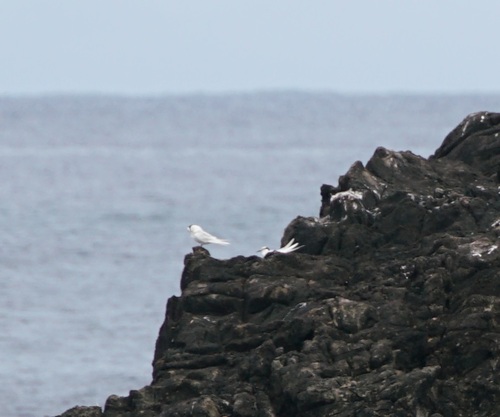 gaivina-de-nuca-preta
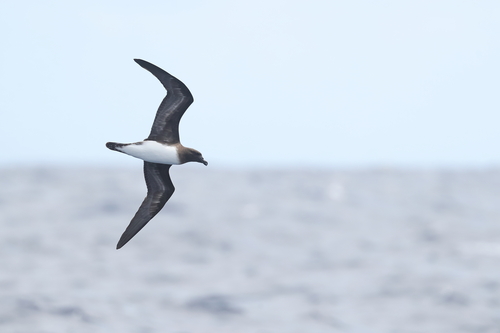 tahiti petrel
Em resumo
A maneira mais confiável de separar a gaivina-de-nuca-preta do tahiti petrel é pela cor e estrutura geral: a gaivina-de-nuca-preta é uma ave esbelta, predominantemente branca, com uma distinta faixa preta na nuca e cauda profundamente bifurcada, enquanto o tahiti petrel é uma ave marinha muito maior e de corpo robusto, com partes superiores marrons escuras, barriga branca e cauda em forma de cunha. Em voo, a gaivina mostra asas cinza-prateadas e longas penas da cauda esvoaçantes, enquanto o petrel aparece escuro por cima, com asas longas e retas e um corpo inferior branco. Mesmo à distância, a plumagem branca da gaivina e sua construção elegante contrastam fortemente com a aparência mais volumosa e escura do petrel. Ambas as espécies podem ser vistas sobre as águas tropicais do Pacífico, mas seu tamanho, forma e coloração são inconfundivelmente diferentes.
Dicas de identificação
- Cor geral: A gaivina-de-nuca-preta é quase totalmente branca com asas cinza claras, enquanto o tahiti petrel é marron escuro por cima com uma barriga branca. Esta é a diferença mais óbvia a qualquer distância.
- Marca na nuca: Procure pela fina linha preta que vai do olho ao redor da nuca na gaivina; o tahiti petrel não possui marcas faciais ou na nuca.
- Forma da cauda: A gaivina-de-nuca-preta tem uma cauda profundamente bifurcada e completamente branca que se estende bem além das pontas das asas quando empoleirada. A cauda do tahiti petrel é em forma de cunha e não projeta além das asas.
- Forma da asa e voo: As asas da gaivina são longas, esbeltas e pontudas, proporcionando um voo leve e esvoaçante. As asas do petrel são longas e estreitas, mas mantidas retas, com um voo mais pesado e deslizante, reminiscentes de um albatroz.
- Forma do bico: A gaivina-de-nuca-preta tem um bico preto, reto e esbelto; o bico do tahiti petrel é grosso, preto e bulboso na base.
- Cor das pernas: Ambas têm pernas pretas, mas as da gaivina são mais visíveis quando empoleiradas; os petrels raramente são vistos empoleirados em aberto.
- Padrão da parte inferior da asa: O tahiti petrel tem uma linha branca sutil ao longo da parte inferior da asa, mas isso é sutil e nem sempre visível; as partes inferiores da asa da gaivina são predominantemente brancas com cinza claro, sem linhas escuras ou marcantes.
- Postura empoleirada: Se visto empoleirado, a cauda da gaivina se estenderá bem além das asas, e a ave parecerá esbelta e ereta. Os petrels raramente são vistos empoleirados, exceto em locais de reprodução.
- Tamanho: O petrel é muito maior e mais volumoso; se vistos juntos, a diferença é marcante.
- Contexto do habitat: As gaivinas são geralmente vistas perto de ilhas, recifes ou águas costeiras; os petrels são mais propensos a serem vistos longe da costa.
- Cabeça e pescoço: O tahiti petrel tem uma cabeça pequena e pescoço longo em relação ao seu corpo, com uma aparência escura e encapuzada; a gaivina tem uma cabeça proporcionalmente menor e mais elegante, com um rosto branco limpo.
- Jizz: A gaivina é ágil, leve e frequentemente paira; o petrel é estável, deslizante e raramente paira.
- Armadilhas de plumagem: À grande distância, uma gaivina na sombra pode parecer mais escura, mas a estrutura e a forma da cauda ainda as separarão. Por outro lado, um petrel em luz forte pode mostrar uma barriga mais clara, mas as partes superiores escuras e a cauda em forma de cunha são distintivas.
- Confusão juvenil: O juvenil do tahiti petrel é semelhante ao adulto e não mostra a nuca branca ou a cauda da gaivina; o juvenil da gaivina-de-nuca-preta provavelmente não será confundido devido à sua aparência mais clara e manchada ao nascer, e rapidamente adquire plumagem semelhante à do adulto.
- Tamanho do bico à distância: Mesmo à distância, o bico do petrel parece grosso e pesado, enquanto o da gaivina é semelhante a uma agulha.
Tamanho
A gaivina-de-nuca-preta é muito menor e mais leve (massa corporal ~106 g, comprimento 30–35 cm, envergadura 66 cm) em comparação com o tahiti petrel (massa corporal 315–506 g, comprimento 38–42 cm, envergadura ~104,5 cm). O petrel é quase três a cinco vezes mais pesado, com uma envergadura muito mais ampla e um corpo mais robusto. A gaivina é esbelta, delicada e de cauda longa, enquanto o petrel é solidamente construído, com uma cabeça e corpo proporcionalmente maiores.
Plumagem
- Aves juvenis/imaturas: Nenhum padrão distinto da parte superior da asa é descrito para os juvenis de ambas as espécies que ajudaria na separação; ambos são semelhantes aos adultos em padrão geral, embora os filhotes da gaivina-de-nuca-preta sejam marrons manchados e não sejam propensos a confusões em campo.
- Adultos: A gaivina-de-nuca-preta é quase totalmente branca, com asas cinza-prateadas pálidas e uma fina linha preta que começa no olho e contorna a nuca. A única parte escura nas asas é uma borda preta estreita na primária mais externa. A cauda é completamente branca e profundamente bifurcada, estendendo-se bem além das pontas das asas quando empoleirada. Os adultos do tahiti petrel são predominantemente marrons escuros por cima, com uma capuz mais escuro, dorso mais claro e abdômen branco. As partes inferiores das asas são escuras, com uma linha branca sutil ao longo do meio e penas de voo ligeiramente mais claras. A cauda é em forma de cunha e não tão profundamente bifurcada quanto a da gaivina. O bico do petrel é preto, robusto e bulboso, ao contrário do bico preto esbelto da gaivina.
Comportamento
A gaivina-de-nuca-preta é ágil e leve em voo, frequentemente vista pairando ou mergulhando perto da água, com asas longas e esbeltas e uma cauda profundamente bifurcada que lhe confere um jizz gracioso e semelhante ao de uma gaivina. Ela frequentemente se empoleira em rochas ou boias, com sua cauda se estendendo bem além das pontas das asas. O tahiti petrel, em contraste, tem um voo mais pesado e intencional, com asas longas e estreitas mantidas retas a partir do corpo (quase como um albatroz) e uma cauda em forma de cunha. O petrel raramente se empoleira à vista no mar e é mais provável que seja visto deslizando ou cortando baixo sobre a água.
Habitat
Ambas as espécies são oceânicas e encontradas sobre as águas tropicais do Pacífico, mas a gaivina-de-nuca-preta é estritamente costeira, raramente vista longe de ilhas ou recifes, e quase nunca no interior. Ela se reproduz e descansa em pequenas ilhotas rochosas. O tahiti petrel é uma verdadeira espécie pelágica, frequentemente vista longe da terra, e se reproduz em ilhas montanhosas remotas. Se uma ave é vista perto da costa, especialmente empoleirada, é mais provável que seja uma gaivina; os petrels quase nunca são vistos descansando em rochas ou praias.
gaivina-de-nuca-preta · tahiti petrel · Minhas aves difíceis