

Motmot

エリグロアジサシ 対 セグロシロハラミズナギドリ

Sterna sumatrana 対 Pseudobulweria rostrata

エリグロアジサシとセグロシロハラミズナギドリのクイズ
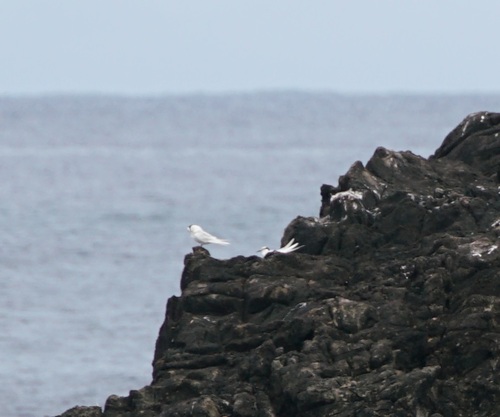
エリグロアジサシ (Sterna sumatrana) エリグロアジサシ
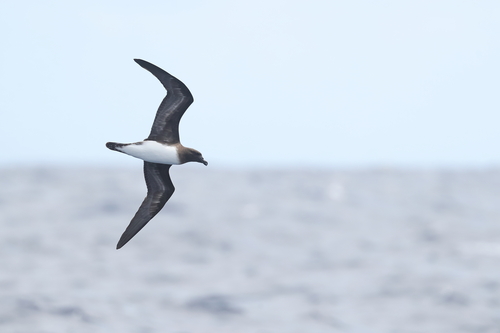
セグロシロハラミズナギドリ (Pseudobulweria rostrata) セグロシロハラミズナギドリ

メディア

読み込み中…

要点

エリグロアジサシとセグロシロハラミズナギドリを区別する最も信頼できる方法は、全体の色と構造です:エリグロアジサシは、特徴的な黒い後頭部の帯と深く分かれた尾を持つ、細長いほぼ白い鳥ですが、セグロシロハラミズナギドリは、暗い茶色の上面、白い腹部、くさび形の尾を持つ、はるかに大きく重い体の海鳥です。飛行中、アジサシは銀灰色の翼と長く流れる尾羽を示し、一方でミズナギドリは上面が暗く、長くまっすぐな翼と白い下半身を持っています。遠くからでも、アジサシの白い羽毛と優雅な体型は、ミズナギドリのより大きく暗い外観と鮮明に対比します。両種は熱帯太平洋の水域で見られることがありますが、サイズ、形、色合いは明確に異なります。

識別のコツ

  1. Overall color: エリグロアジサシはほぼ完全に白く、淡い灰色の翼を持ち、セグロシロハラミズナギドリは上面が暗い茶色で白い腹部を持っています。これは、どんな距離でも最も明らかな違いです。
  2. Nape mark: アジサシの目から後頭部にかけて走る細い黒い線を探してください;セグロシロハラミズナギドリにはそのような顔や後頭部のマーキングはありません。
  3. Tail shape: エリグロアジサシは、止まっているときに翼端を超えてよく伸びる、深く分かれた純白の尾を持っています。セグロシロハラミズナギドリの尾はくさび形で、翼を超えて突出しません。
  4. Wing shape and flight: アジサシの翼は長く、細く、尖っており、浮遊感のあるひらひらした飛行をします。ミズナギドリの翼は長く狭いですが、体からまっすぐに伸ばされ、アルバトロスを思わせる重く滑空する飛行をします。
  5. Bill shape: エリグロアジサシは細長くまっすぐな黒いくちばしを持ち、セグロシロハラミズナギドリのくちばしは太く、黒く、基部が膨らんでいます。
  6. Leg color: 両者とも黒い脚を持っていますが、アジサシの脚は止まっているときにより目立ちます;ミズナギドリは開けた場所で止まっているのはほとんど見られません。
  7. Underwing pattern: セグロシロハラミズナギドリは、下翼に沿って淡い白い線がありますが、これは微妙で常に見えるわけではありません;エリグロアジサシの下翼は主に白く、淡い灰色で、暗いまたは太い線はありません。
  8. Perched posture: 止まっているのが見られた場合、アジサシの尾は翼を超えて流れ、鳥は細く直立して見えます。ミズナギドリは繁殖地以外ではほとんど止まっているのが見られません。
  9. Size: ミズナギドリははるかに大きく、重いです;一緒に見られた場合、その違いは際立っています。
  10. Habitat context: アジサシは通常、島、礁、または沿岸の水域の近くで見られます;ミズナギドリは沖合で見られる可能性が高いです。
  11. Head and neck: セグロシロハラミズナギドリは体に対して小さな頭と長い首を持ち、暗いフードのような外観をしています;アジサシは相対的に小さく、すっきりした頭を持ち、きれいな白い顔をしています。
  12. Jizz: アジサシは敏捷で浮遊感があり、しばしばホバリングします;ミズナギドリは安定して滑空し、ほとんどホバリングしません。
  13. Plumage pitfalls: 遠くから見ると、影の中のアジサシは暗く見えることがありますが、構造と尾の形は依然としてそれらを区別します。逆に、強い光の中のミズナギドリは腹部が淡く見えることがありますが、暗い上面とくさび形の尾は特徴的です。
  14. Juvenile confusion: 幼鳥のセグロシロハラミズナギドリは成鳥に似ており、アジサシの白い後頭部や尾を示しません;幼鳥のエリグロアジサシは、孵化時の淡いまだら模様の外観のため混同されることはほとんどありませんし、すぐに成鳥のような羽毛を獲得します。
  15. Bill size at range: 遠くからでも、ミズナギドリのくちばしは太く重く見え、アジサシのくちばしは針のようです。

大きさ

エリグロアジサシは、セグロシロハラミズナギドリと比較して、はるかに小さく軽い(体重約106g、長さ30〜35cm、翼幅66cm)です。ミズナギドリはほぼ3〜5倍重く、はるかに広い翼幅と、より大きく頑丈な体を持っています。アジサシは細く、繊細で、長い尾を持ち、ミズナギドリはしっかりとした体格で、相対的に大きな頭と体を持っています。

羽色

行動

エリグロアジサシは飛行中敏捷で浮遊感があり、しばしば水面近くでホバリングしたり、急降下したりするのが見られ、長く細い翼と深く分かれた尾が優雅でアジサシらしい印象を与えます。しばしば岩やブイに止まり、尾は翼端を超えて流れます。対照的に、セグロシロハラミズナギドリは、より重く目的意識のある飛行を持ち、長く狭い翼を体からまっすぐに伸ばし(ほぼアルバトロスのように)、くさび形の尾を持っています。ミズナギドリは海で視界に止まることはほとんどなく、水面を低く滑空したり、切り裂いたりしているのが見られることが多いです。

生息環境

両種は海洋性で熱帯太平洋の水域に見られますが、エリグロアジサシは厳密に沿岸性で、島や礁から遠く離れて見られることはほとんどなく、ほとんど内陸には現れません。小さな岩礁で繁殖し、休息します。セグロシロハラミズナギドリは真の外洋性種で、しばしば陸から遠く離れた場所で見られ、遠隔の山岳島で繁殖します。もし鳥が岸に近く、特に止まっているのが見られた場合、それはアジサシである可能性が高いです;ミズナギドリは岩やビーチで休んでいるのがほとんど見られません。

より良い説明を送る

比較と同じ項目を使ってください。文章はすぐに公開されます。

The most reliable way to separate Black-naped Tern from Tahiti Petrel is by overall color and structure: Black-naped Tern is a slender, mostly white bird with a distinctive black nape band and deeply forked tail, while Tahiti Petrel is a much larger, heavy-bodied seabird with dark brown upperparts, a white belly, and a wedge-shaped tail. In flight, the tern shows silvery-grey wings and long, streaming tail feathers, whereas the petrel appears dark above with long, straight wings and a white underbody. Even at a distance, the tern’s white plumage and elegant build contrast sharply with the petrel’s bulkier, darker appearance. Both species may be seen over tropical Pacific waters, but their size, shape, and coloration are unmistakably different.

  1. Overall color: Black-naped Tern is almost entirely white with pale grey wings, while Tahiti Petrel is dark brown above with a white belly. This is the single most obvious difference at any distance.
  2. Nape mark: Look for the thin black line running from the eye around the nape on the tern; Tahiti Petrel lacks any such facial or nape markings.
  3. Tail shape: Black-naped Tern has a deeply forked, pure white tail that extends well past the wingtips when perched. Tahiti Petrel’s tail is wedge-shaped and does not project beyond the wings.
  4. Wing shape and flight: The tern’s wings are long, slender, and pointed, giving a buoyant, fluttery flight. The petrel’s wings are long and narrow but held straight out, with a heavier, more gliding flight reminiscent of an albatross.
  5. Bill shape: Black-naped Tern has a slender, straight black bill; Tahiti Petrel’s bill is thick, black, and bulbous at the base.
  6. Leg color: Both have black legs, but the tern’s are more visible when perched; petrels are rarely seen perched in the open.
  7. Underwing pattern: Tahiti Petrel has a faint white line along the underwing, but this is subtle and not always visible; Black-naped Tern’s underwings are mostly white with pale grey, lacking any dark or bold lines.
  8. Perched posture: If seen perched, the tern’s tail will stream well past the wings, and the bird will appear slim and upright. Petrels are rarely seen perched except at breeding sites.
  9. Size: The petrel is much larger and bulkier; if seen together, the difference is striking.
  10. Habitat context: Terns are usually seen near islands, reefs, or coastal waters; petrels are more likely to be seen far offshore.
  11. Head and neck: Tahiti Petrel has a small head and long neck relative to its body, with a dark hooded appearance; the tern has a proportionally smaller, sleeker head with a clean white face.
  12. Jizz: Tern is agile, buoyant, and often hovers; petrel is steady, gliding, and rarely hovers.
  13. Plumage pitfalls: At great distance, a tern in shadow may look darker, but the structure and tail shape will still separate them. Conversely, a petrel in strong light may show a paler belly, but the dark upperparts and wedge tail are distinctive.
  14. Juvenile confusion: Juvenile Tahiti Petrel is similar to adult and does not show the white nape or tail of the tern; juvenile Black-naped Tern is not likely to be confused due to its paler, mottled appearance at hatching, and quickly acquires adult-like plumage.
  15. Bill size at range: Even at a distance, the petrel’s bill appears thick and heavy, while the tern’s is needle-like.

Black-naped Tern is much smaller and lighter (body mass ~106 g, length 30–35 cm, wingspan 66 cm) compared to Tahiti Petrel (body mass 315–506 g, length 38–42 cm, wingspan ~104.5 cm). The petrel is nearly three to five times heavier, with a much broader wingspan and a bulkier, more robust body. The tern is slim, delicate, and long-tailed, while the petrel is solidly built with a proportionally larger head and body.

  • Juvenile/immature birds: No distinctive upperwing pattern is described for either species' juveniles that would aid in separation; both are similar to adults in overall pattern, though Black-naped Tern hatchlings are mottled brown and not likely to be confused in the field.
  • Adults: Black-naped Tern is almost entirely white, with pale silvery-grey wings and a narrow black line starting at the eye and running around the nape. The only dark on the wings is a narrow black edge on the outermost primary. The tail is pure white and deeply forked, extending well past the wingtips when perched. Tahiti Petrel adults are mostly dark brown above with a darker hood, paler rump, and white abdomen. The underwings are dark with a faint white line along the middle and slightly paler flight feathers. The tail is wedge-shaped and not as deeply forked as the tern’s. The bill of the petrel is black, stout, and bulbous, unlike the slender black bill of the tern.

Black-naped Tern is agile and buoyant in flight, often seen hovering or dipping close to the water, with long, slender wings and a deeply forked tail giving it a graceful, tern-like jizz. It often perches on rocks or buoys, with its tail streaming well past the wingtips. Tahiti Petrel, in contrast, has a heavier, more purposeful flight, with long, narrow wings held straight out from the body (almost albatross-like) and a wedge-shaped tail. The petrel rarely perches in view at sea and is more likely to be seen gliding or shearing low over the water.

Both species are oceanic and found over tropical Pacific waters, but Black-naped Tern is strictly coastal, rarely seen far from islands or reefs, and almost never inland. It breeds and roosts on small rocky islets. Tahiti Petrel is a true pelagic species, often seen far from land, and breeds in remote mountainous islands. If a bird is seen close to shore, especially perched, it is more likely to be a tern; petrels are almost never seen resting on rocks or beaches.

変更を破棄しますか?

保存していない編集があります。今離れると失われます。

エリグロアジサシ · セグロシロハラミズナギドリ · 苦手な鳥