

arrowhead piculet vs picapauzinho-pintado
Picumnus minutissimus versus Picumnus pygmaeus
Jogue um quiz com arrowhead piculet e picapauzinho-pintado
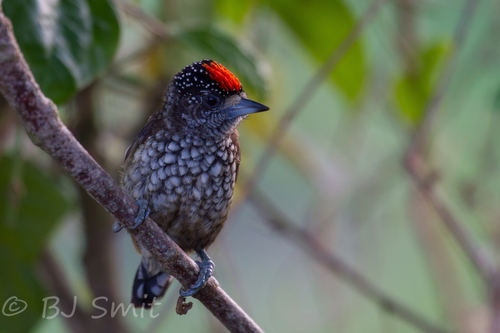 arrowhead piculet
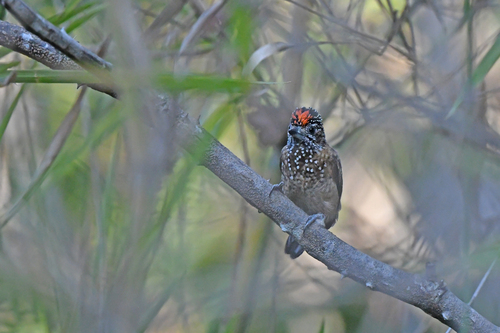 picapauzinho-pintado
Em resumo
O juvenil arrowhead piculet apresenta uma coroa marrom simples e partes superiores mais barradas e marrons, enquanto o juvenil picapauzinho-pintado é mais apagado no geral, mas ainda apresenta algumas manchas. Para os adultos, a marca de campo mais confiável é o padrão das partes inferiores: o arrowhead piculet tem partes inferiores brancas com uma aparência escamosa, enquanto o picapauzinho-pintado apresenta partes inferiores marrons a ruivas com manchas pretas e brancas ousadas. Ambas as espécies têm uma touca preta com uma mancha vermelha na testa do macho, mas seus padrões de partes superiores e inferiores, assim como a distribuição, ajudam a separá-las. A distribuição também é uma pista forte: o arrowhead piculet é encontrado no Suriname e nas Guianas adjacentes, enquanto o picapauzinho-pintado é endêmico do Brasil.
Dicas de identificação
- Coroa juvenil: O juvenil arrowhead piculet tem uma coroa marrom simples, enquanto o juvenil picapauzinho-pintado é mais apagado, mas retém algumas manchas; use isso para aves que não possuem o padrão de touca adulto.
- Partes superiores juvenis: Os juvenis do arrowhead piculet mostram partes superiores mais barradas e marrons; os juvenis do picapauzinho-pintado são apagados, mas não tão distintamente barrados.
- Partes inferiores adultas: O arrowhead piculet tem partes inferiores brancas com um tom marrom claro e uma aparência escamosa devido às franjas das penas escuras; o picapauzinho-pintado tem partes inferiores marrons claras a escuras, muitas vezes com um tom ruivo, e manchas pretas e brancas ousadas. Esta é a marca de campo mais confiável para adultos.
- Partes superiores (adultos): As partes superiores do arrowhead piculet são marrons-oliva com centros em forma de cunha escura e barras pretas finas, além de uma mancha branca perto da ponta da pena; as do picapauzinho-pintado são marrons mais escuras com pontas pretas e brancas e um rabo mais claro.
- Penas de voo: As penas de voo do arrowhead piculet são marrons com bordas claras, especialmente nas secundárias e terciárias; as do picapauzinho-pintado são marrons escuras com bordas e pontas em tom claro ou canela.
- Padrão da cauda: Ambas têm caudas escuras com branco nas teias internas do par mais interno e branco nas penas externas, mas os dois pares externos do picapauzinho-pintado têm uma mancha branca perto da extremidade, enquanto os do arrowhead têm uma faixa branca nas teias externas.
- Touca e testa: Ambos os machos têm uma touca preta com uma mancha vermelha na testa e manchas brancas em outros lugares; as fêmeas não têm o vermelho. Isso não é diagnóstico entre as espécies, mas ajuda na determinação do sexo.
- Padrão facial: Ambas as espécies têm um rosto predominantemente marrom escuro com pontas de penas brancas e uma linha branca atrás do olho (arrowhead). Não é um separador forte.
- Queixo/garganta/pescoço: O arrowhead piculet apresenta uma coloração esbranquiçada com barras escuras; o picapauzinho-pintado tem um padrão variável em preto e branco.
- Rabo: O rabo do arrowhead é mais simples; o do picapauzinho-pintado é mais claro do que o restante das partes superiores.
- Distribuição geográfica: Se visto no Suriname ou nas Guianas, espere encontrar o arrowhead piculet; no Brasil, espere encontrar o picapauzinho-pintado. Este é frequentemente o fator decisivo.
- Diferenças sexuais: Em ambas as espécies, apenas os machos têm a mancha vermelha na testa; isso não ajuda na separação das espécies, mas é útil para determinar o sexo.
- Tamanho: Ambas as espécies têm o mesmo tamanho (9–10 cm); não use o tamanho para identificação.
- Comportamento: Nenhuma diferença comportamental é observada; não confie no comportamento para separação.
- Voz: Nenhuma diferença vocal é descrita nas fontes; não use a voz para separação.
Tamanho
Ambas as espécies são quase idênticas em tamanho, cada uma com cerca de 9–10 cm (3,5–3,9 pol) de comprimento. O arrowhead piculet pesa 11–16 g, enquanto o peso do picapauzinho-pintado não é especificado, mas provavelmente é semelhante. O tamanho não é um separador confiável no campo.
Plumagem
-
Juvenis: Os juvenis do arrowhead piculet têm uma coroa marrom simples e partes superiores mais barradas e marrons, com um padrão de partes inferiores mais apagado e menos distinto. Os juvenis do picapauzinho-pintado são geralmente mais apagados do que os adultos, com manchas menos distintas, mas ainda mostram algumas manchas nas partes inferiores.
-
Adultos: Ambas as espécies têm uma touca preta com uma mancha vermelha na testa nos machos (ausente nas fêmeas) e um rosto marrom escuro com pontas de penas brancas. As partes superiores do arrowhead piculet são marrons-oliva com centros em forma de cunha escura e barras pretas finas, com uma mancha branca perto das pontas das penas; as partes superiores do picapauzinho-pintado são marrons mais escuras com pontas pretas e brancas e um rabo mais claro. As partes inferiores do arrowhead são brancas com um tom marrom claro e uma aparência escamosa devido às franjas das penas marrons-escuras, enquanto o picapauzinho-pintado tem partes inferiores marrons claras a escuras, muitas vezes com um tom ruivo, com grandes manchas pretas e brancas ousadas. As penas de voo do arrowhead são marrons com bordas claras, enquanto as do picapauzinho-pintado são marrons escuras com bordas e pontas em tom claro ou canela. Os padrões da cauda são semelhantes, mas as penas externas da cauda do picapauzinho-pintado têm uma mancha branca perto da extremidade, enquanto as do arrowhead têm uma faixa branca nas teias externas.
Comportamento
Nenhuma diferença comportamental é observada nas fontes que separariam de forma confiável essas duas espécies no campo.
Habitat
O arrowhead piculet é encontrado no Suriname e possivelmente na Guiana Francesa e na Guiana, enquanto o picapauzinho-pintado é endêmico do Brasil. A sobreposição de habitat é improvável, então o contexto geográfico é uma pista forte: se você estiver no Brasil, o picapauzinho-pintado é o padrão; no Suriname ou nas Guianas, o arrowhead piculet é o esperado.
arrowhead piculet · picapauzinho-pintado · Minhas aves difíceis