

Arrowhead Piculet vs Spotted Piculet
Picumnus minutissimus contro Picumnus pygmaeus
Fai un quiz con Arrowhead Piculet e Spotted Piculet
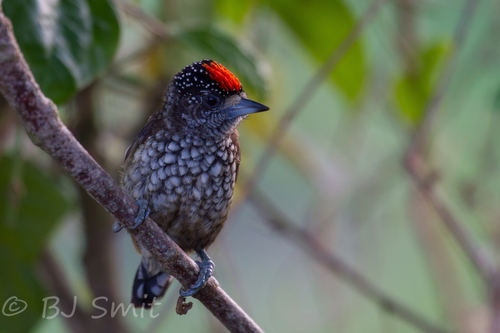 Arrowhead Piculet
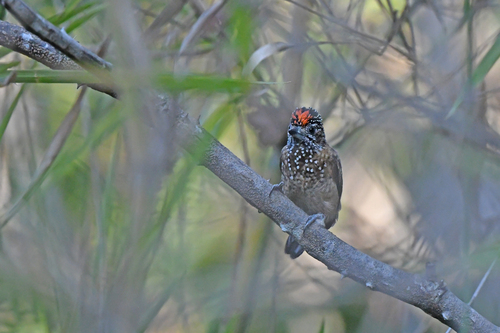 Spotted Piculet
In breve
Il Piculet Arrowhead giovane mostra una corona marrone uniforme e parti superiori più marroni e barrate, mentre il Piculet Spotted giovane è complessivamente più opaco ma mostra ancora alcune macchie. Per gli adulti, il segno distintivo più affidabile è il motivo delle parti inferiori: il Piculet Arrowhead ha parti inferiori bianche con un aspetto squamoso, mentre il Piculet Spotted mostra parti inferiori marroni a ruggine con macchie nere e bianche audaci. Entrambe le specie hanno una calotta nera con una macchia rossa sulla fronte del maschio, ma i loro motivi delle parti superiori e inferiori, così come l'areale, aiutano a separarli. L'areale è anche un forte indizio: il Piculet Arrowhead si trova in Suriname e nelle Guiane adiacenti, mentre il Piculet Spotted è endemico del Brasile.
Consigli di identificazione
- Juvenile crown: Il Piculet Arrowhead giovane ha una corona marrone uniforme, mentre il Piculet Spotted giovane è più opaco ma mantiene alcune macchie; usa questo per gli uccelli privi del motivo della calotta adulta.
- Juvenile upperparts: I giovani Piculet Arrowhead mostrano parti superiori più marroni e più pesantemente barrate; i giovani Piculet Spotted sono opachi ma non così distintamente barrati.
- Adult underparts: Il Piculet Arrowhead ha parti inferiori bianche con una sfumatura marrone chiaro e un aspetto squamoso dovuto ai margini delle piume scure; il Piculet Spotted ha parti inferiori marroni chiare a scure, spesso con una sfumatura ruggine, e macchie nere e bianche audaci. Questo è il segno distintivo più affidabile per gli adulti.
- Upperparts (adults): Le parti superiori del Piculet Arrowhead sono marrone oliva con centri a forma di cuneo neri e sottili barre nere, più una macchia bianca vicino alla punta delle piume; quelle del Piculet Spotted sono marrone scuro con punte nere e bianche e un sottocoda più chiaro.
- Flight feathers: Le piume di volo del Piculet Arrowhead sono marroni con bordi chiari, specialmente sulle secondarie e terziarie; quelle del Piculet Spotted sono marroni scure con bordi e punte color crema o cannella.
- Tail pattern: Entrambi hanno code nerastre con bianco sulle membrane interne della coppia più interna e bianco sulle piume esterne, ma le due coppie esterne del Piculet Spotted hanno una macchia bianca vicino alla fine, mentre quelle del Piculet Arrowhead hanno una striscia bianca sulle membrane esterne.
- Cap and forehead: Entrambi i maschi hanno una calotta nera con una macchia rossa sulla fronte e macchie bianche altrove; le femmine non hanno il rosso. Questo non è diagnostico tra le specie ma aiuta con il sessaggio.
- Facial pattern: Entrambe le specie hanno un volto per lo più marrone scuro con punte di piume bianche e una linea bianca dietro l'occhio (Arrowhead). Non è un forte separatore.
- Chin/throat/neck: Il Piculet Arrowhead mostra un colore bianco con barre nere; il Piculet Spotted ha un motivo variabile nero e bianco.
- Rump: Il sottocoda del Piculet Arrowhead è più semplice; quello del Piculet Spotted è più chiaro rispetto al resto delle parti superiori.
- Geographic range: Se visto in Suriname o nelle Guiane, aspettati il Piculet Arrowhead; in Brasile, aspettati il Piculet Spotted. Questo è spesso il fattore decisivo.
- Sex differences: In entrambe le specie, solo i maschi hanno la macchia rossa sulla fronte; questo non aiuta con la separazione delle specie ma è utile per il sessaggio.
- Size: Entrambe le specie sono della stessa dimensione (9–10 cm); non usare la dimensione per l'identificazione.
- Behavior: Non sono state notate differenze comportamentali; non fare affidamento sul comportamento per la separazione.
- Voice: Non sono state descritte differenze vocali nelle fonti; non usare la voce per la separazione.
Taglia
Entrambe le specie sono quasi identiche in dimensione, ciascuna di circa 9–10 cm (3.5–3.9 in) di lunghezza. Il Piculet Arrowhead pesa 11–16 g, mentre il peso del Piculet Spotted non è specificato ma è probabilmente simile. La dimensione non è un separatore affidabile sul campo.
Piumaggio
-
Juveniles: I giovani Piculet Arrowhead hanno una corona marrone uniforme e parti superiori più marroni e barrate, con un motivo delle parti inferiori più opaco e meno distintivo. I giovani Piculet Spotted sono generalmente più opachi degli adulti, con macchie meno distinte, ma mostrano ancora alcune macchie sulle parti inferiori.
-
Adults: Entrambe le specie hanno una calotta nera con una macchia rossa sulla fronte nei maschi (assente nelle femmine) e un volto marrone scuro con punte di piume bianche. Le parti superiori del Piculet Arrowhead sono marrone oliva con centri a forma di cuneo neri e sottili barre nere, con una macchia bianca vicino alle punte delle piume; le parti superiori del Piculet Spotted sono marrone scuro con punte nere e bianche e un sottocoda più chiaro. Le parti inferiori del Piculet Arrowhead sono bianche con una sfumatura marrone chiaro e un aspetto squamoso dovuto ai margini delle piume marrone scuro, mentre il Piculet Spotted ha parti inferiori marroni chiare a scure, spesso con una sfumatura ruggine, con grandi e audaci macchie nere e bianche. Le piume di volo del Piculet Arrowhead sono marroni con bordi chiari, mentre quelle del Piculet Spotted sono marroni scure con bordi e punte color crema o cannella. I motivi della coda sono simili, ma le piume esterne della coda del Piculet Spotted hanno una macchia bianca vicino alla fine, mentre quelle del Piculet Arrowhead hanno una striscia bianca sulle membrane esterne.
Comportamento
Non sono state notate differenze comportamentali nelle fonti che possano separare in modo affidabile queste due specie sul campo.
Habitat
Il Piculet Arrowhead si trova in Suriname e possibilmente in Guiana Francese e Guyana, mentre il Piculet Spotted è endemico del Brasile. È improbabile che ci sia sovrapposizione degli habitat, quindi il contesto geografico è un forte indizio: se sei in Brasile, il Piculet Spotted è il default; in Suriname o nelle Guiane, ci si aspetta il Piculet Arrowhead.
Arrowhead Piculet · Spotted Piculet · I miei uccelli difficili