

frango-d’água-africano vs frango-d'água-negro
Porphyrio alleni versus Zapornia flavirostra
Jogue um quiz com frango-d’água-africano e frango-d'água-negro
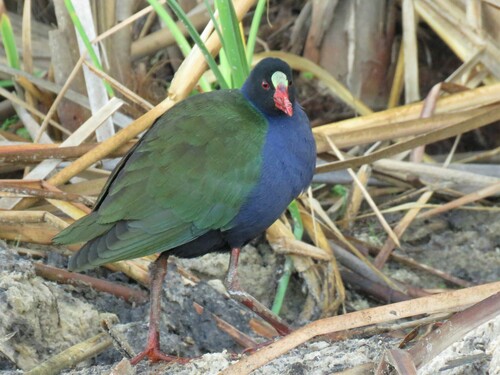 frango-d’água-africano
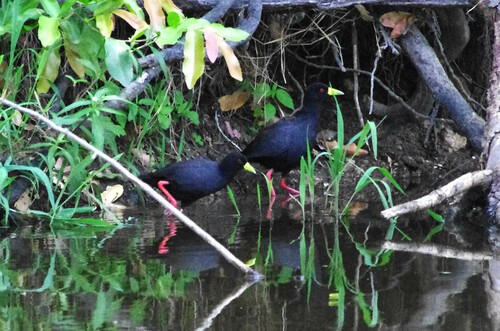 frango-d'água-negro
Em resumo
A marca de campo mais confiável é a cor geral do corpo: o frango-d'água-negro adulto é completamente preto com um bico amarelo brilhante e pernas vermelhas, enquanto o frango-d’água-africano apresenta um dorso esverdeado, partes superiores roxas e um bico vermelho. As aves imaturas de ambas as espécies são acastanhadas, mas as imaturas do frango-d’água-africano são de um marrom arenoso com um subcauda amarelo, enquanto as imaturas do frango-d'água-negro são marrons por cima e cinza escuro por baixo. Em voo ou ao nadar, o frango-d’água-africano exibe uma cauda branca curta com uma barra central escura embaixo, uma característica não presente no frango-d'água-negro. A cor do bico também é fundamental: o frango-d’água-africano tem um bico vermelho curto (escudo azul ou verde por sexo em adultos em reprodução), enquanto o bico do frango-d'água-negro é sempre amarelo ou verde-amarelado em imaturos. Ambos têm pernas vermelhas longas, mas as do frango-d'água-negro são mais apagadas fora da época de reprodução. Fique atento ao movimento da cabeça do frango-d’água-africano ao nadar e ouça seus chamados distintos se você não conseguir uma visão clara.
Dicas de identificação
- A cor do bico é frequentemente a verificação mais rápida: O frango-d’água-africano sempre tem um bico vermelho curto (com um escudo azul ou verde em adultos em reprodução), enquanto o bico do frango-d'água-negro é amarelo brilhante em adultos e verde-amarelado em imaturos. Se você ver amarelo, não é o frango-d’água-africano.
- Cor geral do corpo: O frango-d'água-negro adulto é completamente preto, às vezes com um leve tom oliva-marrom nas partes superiores, mas isso raramente é visível. O frango-d’água-africano nunca é todo preto; procure um dorso esverdeado e partes superiores roxas.
- Padrão da cauda: O frango-d’água-africano tem uma cauda branca curta com uma barra escura embaixo, que muitas vezes é balançada e visível em voo ou ao nadar. A cauda do frango-d'água-negro é curta e não apresenta branco ou listras embaixo.
- Cor das pernas: Ambos têm pernas vermelhas, mas as do frango-d'água-negro são mais apagadas fora da época de reprodução. Esta não é uma separação confiável, mas pode apoiar outras marcas.
- Separação de imaturos/juvenis: O imaturo do frango-d’água-africano é de um marrom arenoso com um subcauda amarelo, sem forte contraste entre a cabeça e o corpo. O imaturo do frango-d'água-negro é marrom por cima, mas tem uma cabeça e partes inferiores cinza muito mais escuras, e um bico verde-amarelado. Se as partes inferiores forem escuras e o bico não for vermelho, suspeite do frango-d'água-negro.
- Escudo frontal: Em reprodução, o frango-d’água-africano macho tem um escudo azul e as fêmeas um verde acima do bico. O frango-d'água-negro não possui tal escudo.
- Comportamento: O frango-d’água-africano frequentemente balança a cabeça enquanto nada, um comportamento não observado no frango-d'água-negro. Se você ver isso, é um forte indicativo de frango-d’água-africano.
- Contexto de habitat: Se a ave estiver se escondendo em vegetação flutuante densa e raramente vista, é mais provável que seja um frango-d’água-africano. O frango-d'água-negro é mais provável de ser visto forrageando abertamente na margem da água.
- Voz: Um chamado agudo e nasal 'pruk' é do frango-d’água-africano; um dueto tagarelando ou cooing semelhante a uma pomba é do frango-d'água-negro.
- Diferenças sexuais: Apenas o frango-d’água-africano apresenta dimorfismo sexual no escudo frontal (azul nos machos, verde nas fêmeas) durante a reprodução. Os sexos do frango-d'água-negro são semelhantes, embora os machos sejam ligeiramente maiores e possam ter um bico superior curvado.
- Cabeça e partes inferiores em imaturos: Os imaturos do frango-d’água-africano são uniformemente marrons; os imaturos do frango-d'água-negro têm uma cabeça e partes inferiores cinza escuras, contrastando com as partes superiores marrons.
- Filhotes peludos: Os filhotes de ambas as espécies são pretos e indistinguíveis nesta fase; não confie na plumagem dos filhotes.
- Visões de voo: Nenhuma marca distintiva de asa superior ou de voo é descrita para qualquer uma das espécies, mas o subcauda branco do frango-d’água-africano com uma barra escura pode ser visível em voo.
- Contexto sazonal: O frango-d’água-africano é mais secreto durante a reprodução e mais fácil de ver durante a migração ou no inverno. O frango-d'água-negro está presente durante todo o ano em áreas úmidas adequadas.
- Jizz: Ambos têm dedos longos e caudas curtas, mas o frango-d’água-africano pode parecer mais compacto e é mais provável de ser visto nadando com movimento de cabeça, enquanto o frango-d'água-negro é frequentemente visto andando na margem da água.
Tamanho
Ambas as espécies são semelhantes em tamanho, com o frango-d'água-negro ligeiramente maior (19–23 cm) e o frango-d’água-africano apenas menor que um frango-d'água. Ambos têm dedos longos e caudas curtas, portanto, o tamanho sozinho raramente é diagnóstico em campo. As diferenças estruturais são sutis e são melhor utilizadas em combinação com plumagem e cor do bico.
Plumagem
- Plumagem imatura/juvenil: O imaturo do frango-d’água-africano é de um marrom arenoso geral com um subcauda amarelo, sem forte contraste na cabeça ou partes inferiores. O imaturo do frango-d'água-negro é marrom por cima, mas tem uma cabeça e partes inferiores cinza muito mais escuras, e seu bico é verde-amarelado, não vermelho. Os filhotes peludos de ambas as espécies são pretos e indistinguíveis nesta fase.
- Plumagem adulta: O adulto do frango-d’água-africano tem um dorso esverdeado, partes superiores roxas e uma cauda branca curta com uma barra central escura embaixo. O bico é vermelho, e os machos em reprodução têm um escudo frontal azul (verde nas fêmeas). O adulto do frango-d'água-negro é completamente preto com apenas um leve tom marrom-oliva nas asas e partes superiores (raramente visível), um bico amarelo brilhante e pernas vermelhas.
- Padrão da cauda: O frango-d’água-africano apresenta um subcauda branco com uma barra central escura, especialmente óbvio ao balançar a cauda ou em voo. O frango-d'água-negro não possui esse padrão; sua cauda é curta e não apresenta branco embaixo.
- Padrão da asa: Nenhuma marca distintiva de asa superior ou de voo é descrita para qualquer uma das espécies, portanto, confie na coloração do corpo e da cauda.
Comportamento
O frango-d’água-africano é mais secreto, especialmente durante a reprodução, e frequentemente está escondido em pântanos densos. Ele balança a cabeça enquanto nada, um comportamento não observado no frango-d'água-negro. O frango-d'água-negro é mais provável de ser visto forrageando abertamente na margem da água. Ambos sondam lama e água rasa em busca de alimento, mas o frango-d’água-africano é mais provável de ser ouvido do que visto na época de reprodução.
Habitat
Ambas as espécies habitam áreas úmidas, pântanos e brejos, mas o frango-d’água-africano está especialmente ligado a vegetação flutuante densa e é frequentemente muito secreto, especialmente na época de reprodução. O frango-d'água-negro é amplamente distribuído na África subsaariana (exceto em áreas muito áridas) e é mais provável de ser visto em áreas úmidas abertas, às vezes longe de coberturas densas. Ambas podem realizar movimentos sazonais, mas o frango-d’água-africano é mais provável de ser visto durante a migração ou no inverno, quando é menos secreto.
Voz
O frango-d’água-africano emite um chamado agudo e nasal 'pruk', especialmente durante a reprodução. O chamado principal do frango-d'água-negro é um dueto: um tagarelar rouco 'krrrok-kraaaa' seguido por um coo semelhante a uma pomba 'coo-crr-COO.' Se você ouvir um chamado nasal de nota única, suspeite do frango-d’água-africano; um dueto tagarelando aponta para o frango-d'água-negro.
frango-d’água-africano · frango-d'água-negro · Minhas aves difíceis