

african firefinch vs jameson's firefinch
Lagonosticta rubricata versus Lagonosticta rhodopareia
Jogue um quiz com african firefinch e jameson's firefinch
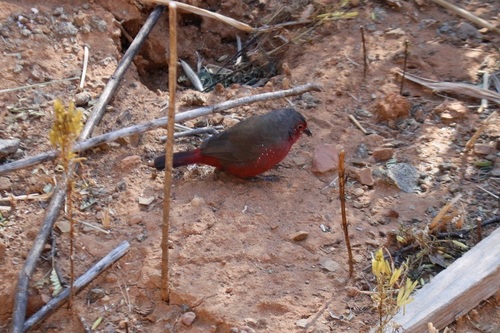 african firefinch
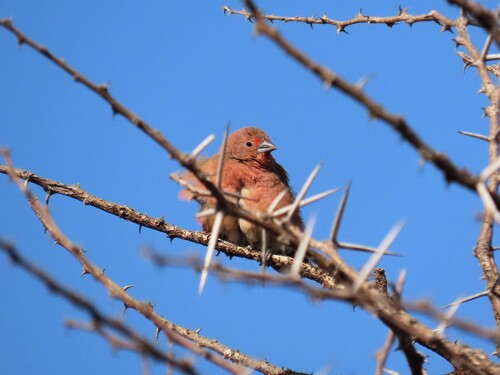 jameson's firefinch
Em resumo
A marca de campo mais confiável entre african firefinch e jameson's firefinch é a combinação de coloração da cabeça e das partes inferiores, especialmente em machos adultos: african firefinch apresenta uma coroa e nuca cinza-chumbo com partes inferiores escarlate profundas marcadas por manchas brancas no peito superior e flancos, enquanto jameson's firefinch não possui a cabeça cinza e tipicamente tem uma parte inferior mais uniformemente vermelha ou rosada sem o mesmo padrão de manchas. Os juvenis de african firefinch não têm vermelho embaixo, o que pode causar confusão com jovens de jameson's, mas a barriga acinzentada e o ventrículo mais escuro de african firefinch continuam sendo úteis. Ambas as espécies são pequenas, forrageadoras no chão, com estrutura semelhante, mas diferenças sutis na plumagem e no contexto são fundamentais. A voz e o habitat podem ajudar, mas a plumagem—especialmente o padrão da cabeça e das partes inferiores—é o melhor separador.
Dicas de identificação
- Cor da Cabeça (Machos Adultos): African firefinch tem uma coroa, nuca e pescoço cinza-chumbo, enquanto jameson's firefinch não possui cinza na cabeça, apresentando uma cabeça mais uniformemente avermelhada ou rosada. Esta é a verificação de campo mais rápida em boa luz.
- Padrão das Partes Inferiores (Machos Adultos): African firefinch apresenta partes inferiores escarlate profundas com pequenas manchas brancas no peito superior e flancos; jameson's firefinch é mais uniformemente vermelho ou rosado embaixo e não possui as manchas brancas.
- Barriga e Vent (Todas as Idades): African firefinch tem um centro acinzentado na barriga, tornando-se escuro no ventrículo e nas coberturas da cauda, que podem ser visíveis quando o pássaro está arrepiado ou se limpando. Jameson's firefinch é mais uniformemente colorido embaixo.
- Plumagem Juvenil: O juvenil de african firefinch não tem vermelho nas partes inferiores e apresenta uma barriga acinzentada e ventrículo escuro; o juvenil de jameson's também é menos vermelho, mas não tem a cabeça cinza e possui partes inferiores mais uniformes. Procure o contraste da barriga acinzentada e do ventrículo nos juvenis de african firefinch.
- Cor do Bico: African firefinch tem um bico cinza-escuro com uma base rosa na mandíbula inferior. A cor do bico em jameson's não é detalhada aqui, mas qualquer base rosa óbvia pode indicar african firefinch.
- Cauda e Rabo: African firefinch tem um rabo e coberturas da cauda de um vermelho carmesim profundo com preto na cauda. Embora jameson's também possa mostrar vermelho, a combinação com o padrão da cabeça e das partes inferiores é mais importante.
- Diferenças de Sexo: A fêmea de african firefinch é mais apagada que o macho, mas ainda mostra a cabeça cinza e algum vermelho embaixo, embora menos intenso. A fêmea de jameson's também é menos brilhante, mas não possui a cabeça cinza.
- Padrão de Voo e Asa Superior: Nenhuma diferença distinta de padrão de asa superior ou de voo é descrita, então não confie nisso em campo.
- Comportamento: Ambas as espécies forrageiam no chão e permanecem perto da cobertura; o comportamento não é um separador confiável.
- Habitat: African firefinch é mais provável de ser encontrado em áreas densas, úmidas, gramadas ou ricas em samambaias, mas a sobreposição de habitat é possível. Use o habitat apenas como contexto de apoio.
- Voz: Se você ouvir um chamado de alarme áspero ou um alto 'tui-tui-tui-tui', suspeite de african firefinch. A ausência de chamadas distintivas não é diagnóstica.
- Tamanho e Estrutura: Ambas são pequenas, finches compactas com bicos curtos e pontudos; o tamanho não é uma marca de campo útil.
- Mistura com Outros Firefinches: Ambas podem se juntar a bandos mistos, então verifique cuidadosamente o padrão da cabeça e das partes inferiores quando múltiplos firefinches estiverem presentes.
- Estação e Idade: Tenha cuidado especial com juvenis e aves não reprodutoras, pois ambas podem parecer mais apagadas e menos vermelhas. Foque na cor da cabeça e no padrão da barriga/ventrículo nesses casos.
- Armadilhas: O juvenil de african firefinch pode ser confundido com jameson's devido à falta de vermelho embaixo, mas a barriga acinzentada e o ventrículo escuro são pistas. Sempre verifique a cabeça cinza-chumbo em african firefinch, mesmo em aves apagadas.
Tamanho
Ambas as espécies são muito semelhantes em tamanho e estrutura, tornando o tamanho um separador não confiável em campo. African firefinch mede 10–11 cm de comprimento e pesa 8,6–11,7 g [wikipedia], enquanto jameson's firefinch tem uma média de cerca de 9,3 g [wikidata]. Ambas são pequenas, finches compactas com bicos curtos e pontudos. Qualquer leve diferença de massa provavelmente não será perceptível em campo.
Plumagem
O macho adulto de african firefinch é distinto com uma coroa, nuca e pescoço cinza-chumbo, partes superiores marrom-oliva e partes inferiores escarlate profundas marcadas por pequenas manchas brancas no peito superior e flancos. O rabo e as coberturas da cauda são de um vermelho carmesim profundo, e a cauda é parcialmente preta. O bico é cinza-escuro com uma base rosa na mandíbula inferior. As fêmeas são semelhantes, mas mais apagadas, e os juvenis não têm vermelho embaixo, apresentando partes inferiores mais marrons ou acinzentadas. Em contraste, jameson's firefinch não possui a cabeça cinza e tipicamente apresenta uma coloração mais uniforme vermelha ou rosada nas partes inferiores, sem as manchas brancas no peito e flancos. Os juvenis de jameson's também são menos vermelhos embaixo, mas a ausência de cinza na cabeça e as partes inferiores mais uniformes ajudam a distingui-los dos juvenis de african firefinch, que têm uma barriga acinzentada e ventrículo escuro. Diferenças de padrão de asa superior e de voo não são descritas em detalhes para nenhuma das espécies, então foque nas vistas empoleiradas e no padrão das partes inferiores/cabeça para todas as idades.
Comportamento
Ambas as espécies são finches forrageadoras no chão, frequentemente vistas em pares ou pequenos grupos familiares. African firefinch tende a ficar perto de coberturas densas e se retira rapidamente quando alarmada. Ambas as espécies podem se misturar com outros firefinches. Não há uma distinção comportamental forte entre as duas em campo, embora african firefinch possa ser ligeiramente mais secreta e menos propensa a ser vista em áreas abertas em comparação com alguns outros firefinches.
Habitat
African firefinch prefere habitats úmidos e densamente vegetados, como bordas de florestas, samambaias, gramíneas altas e sub-bosques densos, frequentemente perto de cursos d'água ou em jardins rurais, mas geralmente perto de cobertura. Jameson's firefinch também é encontrado na África subsaariana, mas é mais esparsamente distribuído e pode ocorrer em habitats semelhantes, embora preferências específicas de microhabitat não sejam detalhadas aqui. Ambas podem sobrepor-se em alcance e habitat, então o contexto ajuda, mas não é definitivo.
Voz
African firefinch emite uma canção variada de notas sonoras, apitos estridentes, trilos e gorgolejos, com um chamado de alarme áspero que lembra um chapim euroasiático. Chamadas comuns incluem um twitter trinado ascendente e um alto e claro 'tui-tui-tui-tui' frequentemente seguido por 'wink-wink-wink.' As vocalizações de jameson's firefinch não são descritas aqui, então a voz só é útil se as chamadas distintivas de african firefinch forem reconhecidas.
african firefinch · jameson's firefinch · Minhas aves difíceis