

Hartlaubbuulbuul vs Oostelijke Grijskeelbuulbuul
Chlorocichla simplex versus Arizelocichla nigriceps
Speel een quiz met Hartlaubbuulbuul en Oostelijke Grijskeelbuulbuul
 Hartlaubbuulbuul
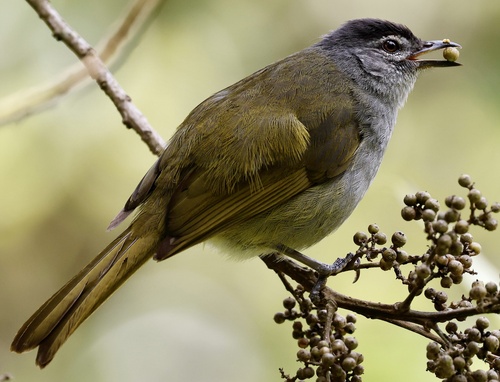 Oostelijke Grijskeelbuulbuul
Kort gezegd
De meest betrouwbare manier om Hartlaubbuulbuul van Oostelijke Grijskeelbuulbuul te scheiden, is op basis van het habitat: Hartlaubbuulbuul komt voor in laagland tropische bossen en struikgebieden, terwijl Oostelijke Grijskeelbuulbuul beperkt is tot de oostelijke Afromontane gebieden. In het veld zijn de verschillen in verenkleed subtiel en niet goed gedocumenteerd voor leeftijd of vleugelpatroon, dus context en locatie zijn cruciaal. Beide soorten zijn middelgrote bulbulen met een vergelijkbare algehele structuur, maar alleen Oostelijke Grijskeelbuulbuul heeft een bevestigde gemiddelde lichaamsmassa (31g). Vocalisaties en gedrag zijn niet beschreven in de beschikbare notities, dus concentreer je op waar je aan het vogels kijken bent en de typische habitats van elke soort.
Herkenningstips
- Habitat is cruciaal: Als je in een laagland tropisch bos of struikgebied bent, verwacht dan Hartlaubbuulbuul; als je in de oostelijke Afromontane hooglanden bent, verwacht dan Oostelijke Grijskeelbuulbuul. Dit is de meest betrouwbare scheiding in het veld.
- Geen diagnostische verschillen in verenkleed zijn gedocumenteerd: Beide soorten zijn bulbulen met een vergelijkbare algehele kleur; vertrouw niet op subtiele verenkleedkenmerken voor scheiding, tenzij je aanvullende referenties hebt.
- Geen leeftijdspecifieke of vleugelpatroonkenmerken: Er zijn geen notities over juvenile of onvolwassen bovenvleugel- of vluchtpatronen voor beide soorten, dus deze kenmerken kunnen niet worden gebruikt voor scheiding.
- Structuur is vergelijkbaar: Beide zijn middelgrote, typische bulbul-vormige zangvogels. Snavel, staart en vleugelstructuur worden niet als onderscheidend beschreven in de notities.
- Grootte-overlap: Alleen Oostelijke Grijskeelbuulbuul heeft een gedocumenteerde massa (31g), maar dit is waarschijnlijk niet nuttig in het veld zonder directe vergelijking.
- Vocalisaties niet beschreven: Vertrouw niet op zang of roepen voor scheiding op basis van de huidige notities.
- Gedrag niet beschreven: Voedingsstijl, vlucht en ander gedrag zijn niet als onderscheidend genoteerd.
- Context is belangrijk: Overweeg je locatie en hoogte voordat je een identificatie maakt. Als je je in een gebied bevindt waar slechts één soort wordt verwacht, kan dit doorslaggevend zijn.
- Dieet niet diagnostisch: Hoewel Oostelijke Grijskeelbuulbuul wordt genoteerd als etend fruit en nectar, is dit geen veldkenmerk en scheidt het niet van Hartlaubbuulbuul in de praktijk.
- Raadpleeg lokale checklisten: Bij twijfel, controleer eBird of lokale vogelbronnen voor welke soort in jouw gebied en habitat wordt verwacht.
Samenvattend: Gebruik habitat en locatie als je primaire hulpmiddelen voor het scheiden van deze twee soorten. Vertrouw niet op verenkleed, structuur of stem, tenzij je meer gedetailleerde veldgidsen of lokale kennis hebt.
Grootte
Oostelijke Grijskeelbuulbuul heeft een gedocumenteerde gemiddelde lichaamsmassa van 31g [wikidata], terwijl er geen meting beschikbaar is voor Hartlaubbuulbuul, maar beide zijn middelgrote bulbulen en waarschijnlijk overlappen in grootte. In het veld is grootte alleen waarschijnlijk geen betrouwbare scheiding tussen deze twee, tenzij je directe vergelijking of gedetailleerde metingen hebt.
Verenkleed
Er zijn geen gedetailleerde beschrijvingen van leeftijdspecifieke of vleugelpatroonverschillen tussen Hartlaubbuulbuul en Oostelijke Grijskeelbuulbuul in de verstrekte notities. Beide soorten zijn typische bulbulen met groenachtige of olijfachtige tinten. Eventuele subtiele verschillen in hoofd- of lichaamskleur zijn hier niet gespecificeerd, dus verenkleed is geen betrouwbaar veldkenmerk voor scheiding op basis van de huidige informatie.
Habitat
Habitat is het meest diagnostische verschil: Hartlaubbuulbuul is wijdverspreid in Afrikaanse tropische laaglandbossen, droge bossen, vochtige laaglandbossen en struikgebieden [wikipedia]. In tegenstelling tot Oostelijke Grijskeelbuulbuul is inheems in de oostelijke Afromontane, een hooglandgebied [wikipedia]. Als je aan het vogels kijken bent in een laagland regenwoud of struikgebied, wordt Hartlaubbuulbuul verwacht; als je in montane of hooggelegen bossen in oostelijk Afrika bent, is Oostelijke Grijskeelbuulbuul de waarschijnlijke soort.
Hartlaubbuulbuul · Oostelijke Grijskeelbuulbuul · Mijn lastige vogels