

Siberische strandloper vs Gestreepte strandloper
Calidris acuminata versus Calidris melanotos
Speel een quiz met Siberische strandloper en Gestreepte strandloper
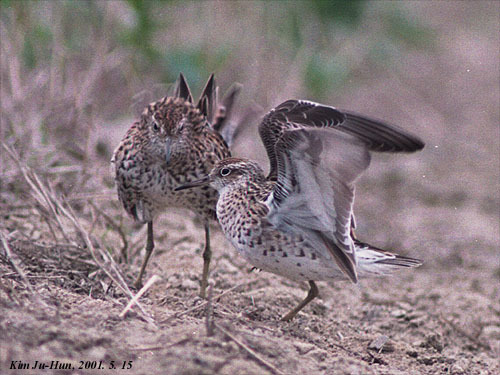 Siberische strandloper
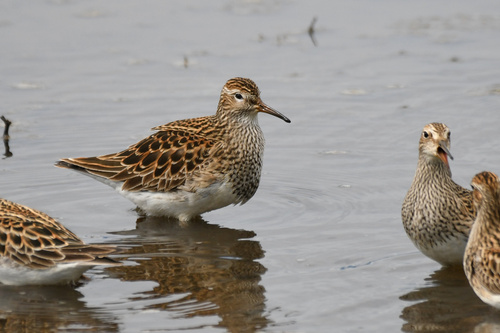 Gestreepte strandloper
Kort gezegd
Het meest betrouwbare veldkenmerk om de Siberische strandloper van de Gestreepte strandloper te scheiden, is het borstpatroon: de Gestreepte strandloper toont altijd een scherp gedefinieerde, donkere borstband met een duidelijke afsnijding naar de witte buik, terwijl de Siberische strandloper een meer diffuus borstpatroon heeft met '>'-vormige flankmarkeringen en geen sterke rand. Juveniele Siberische strandlopers zijn over het algemeen helderder, met een rijk kastanjebruine kroon en een sterkere supercilium, terwijl juveniele Gestreepte strandlopers bruiner boven zijn met minder roestkleur. Structureel lijkt de Siberische strandloper meer een buikje te hebben en compacter te zijn, met een plattere rug en een iets langere achterzijde. Beide soorten zijn vergelijkbaar in grootte en algemene vorm, maar aandacht voor het hoofdpatroon en de borstafbakening is essentieel, vooral in de herfst wanneer juvenielen de overhand hebben. In de vlucht vertonen geen van beide soorten een uniek bovenvleugelpatroon, dus concentreer je op zittende of foeragerende vogels voor de beste scheiding.
Herkenningstips
- Borstafbakening is essentieel: De Gestreepte strandloper toont altijd een scherp gedefinieerde, donkere borstband met een duidelijke onderrand tegen een witte buik. De Siberische strandloper heeft een meer diffuus, gemarmerd borstpatroon met '>'-vormige markeringen op de flanken en geen sterke rand. Dit geldt voor alle leeftijden en is het meest betrouwbare kenmerk.
- Juveniele helderheid: Juveniele Siberische strandlopers zijn helderder en roestkleuriger, met een rijke kastanjebruine kroon, gedurfde witte mantelstrepen en een sterke, bleke supercilium. Juveniele Gestreepte strandlopers zijn bruiner boven, met minder roestkleur en een zwakkere supercilium.
- Kroonkleur: De Siberische strandloper (alle leeftijden, vooral juvenielen) heeft een kastanjebruine kap die opvalt, terwijl de kroon van de Gestreepte strandloper bruiner en minder contrasterend is.
- Sterkte van de supercilium: De Siberische strandloper heeft een sterkere, meer opvallende supercilium (wenkbrauw), vooral bij juvenielen en herfstvogels. De supercilium van de Gestreepte strandloper is zwakker en minder contrasterend.
- Hoofd- en gezichtspatroon: De Siberische strandloper toont een bruine oogstreep en een meer contrasterend gezicht; het gezicht van de Gestreepte strandloper is eenvoudiger.
- Structuur/jizz: De Siberische strandloper lijkt meer een buikje te hebben, met een platte rug en een iets uitgerekte achterzijde, wat een compacte, mollige uitstraling geeft. De Gestreepte strandloper is meer gelijkmatig proportioneel.
- Snavelkleur: Beide soorten hebben donkergetipte snavels, maar de snavel van de Gestreepte strandloper is olijfkleurig met een donkerder punt, terwijl die van de Siberische strandloper donkergrijs tot zwart en recht is. Dit is subtiel en niet altijd betrouwbaar.
- Pootkleur: Beide kunnen geelachtige poten vertonen, maar de poten van de Siberische strandloper kunnen olijf tot geel zijn, terwijl die van de Gestreepte strandloper geelachtig zijn. De overlap is aanzienlijk; gebruik met voorzichtigheid.
- Volwassen broedkleed: Volwassen Siberische strandlopers zijn levendiger van kleur, maar de kastanjebruine kroon en sterke supercilium blijven essentieel. Mannelijke Gestreepte strandlopers hebben een zwartere, gevlekte borst in broedkleed.
- Niet-broedkleed: Beide soorten worden doffer, maar het borstpatroon (scherp vs. diffuus) en het hoofdpatroon (kastanjebruine kroon, supercilium) scheiden ze nog steeds.
- Vluchtzicht: Er zijn geen onderscheidende bovenvleugel- of vluchtpatroonverschillen beschreven in de bronnen; concentreer je op zittende of foeragerende vogels voor de beste scheiding.
- Grootte: De Gestreepte strandloper is iets zwaarder, maar de grootte-overlap is uitgebreid en niet betrouwbaar in gemengde groepen.
- Habitat: Beide gebruiken vergelijkbare habitats tijdens migratie en in de winter. Vertrouw niet op habitat voor scheiding.
- Overlap in geslacht en leeftijd: Beide soorten vertonen overlap in grootte tussen geslachten en leeftijden; concentreer je op verenkleed en structuur.
- Valstrikken: Juveniele Gestreepte strandlopers kunnen er behoorlijk helder uitzien, en doffe Siberische strandlopers kunnen eenvoudig lijken—controleer altijd meerdere kenmerken, vooral borstafbakening en contrast tussen kroon/supercilium.
Grootte
De Gestreepte strandloper is gemiddeld iets zwaarder (81,4 g vs. 66,9 g voor de Siberische strandloper [wikidata]), maar dit verschil is subtiel in het veld. Beide zijn kleine tot middelgrote calidriden, waarbij de Gestreepte strandloper wordt beschreven als 'groot' en de Siberische als 'klein-middelgroot.' De grootte-overlap is significant, dus gebruik structuur en verenkleed in plaats van alleen bulk.
Verenkleed
Juveniele en eerste-herfstvogels worden het vaakst verward. Juveniele Siberische strandloper is over het algemeen helderder, met een levendige kastanjebruine kroon, sterke witte mantelstrepen en een gedurfde supercilium; de borst is buffy met fijne, pijlvormige ('>') markeringen op de flanken, en de overgang naar de witte buik is geleidelijk. Juveniele Gestreepte strandloper is bruiner boven, met roestkleurige tonen maar minder verzadigd, en de borst is grijsachtig met een zeer scherpe onderrand—dit sterke afbakening is het klassieke veldkenmerk. Volwassenen in broedkleed zijn levendiger in beide soorten, maar de Siberische strandloper behoudt de kastanjebruine kap en sterke supercilium, terwijl mannelijke Gestreepte strandlopers een donkerder, gevlekte borst hebben. In niet-broed (winter) kleed worden beide soorten doffer, maar de borstafbakening in de Gestreepte strandloper blijft diagnostisch. Bovenvleugelpatronen worden in de bronnen niet als onderscheidend beschreven voor beide soorten, dus concentreer je op lichaam en hoofdpatroon.
Gedrag
Beide soorten foerageren op vergelijkbare manieren, door in modder of ondiep water naar ongewervelden te pikken. De Siberische strandloper kan compacter en 'buikig' lijken, met een platte rug en een uitgerekte achterzijde, terwijl de Gestreepte strandloper meer gelijkmatig proportioneel is. Er zijn geen belangrijke gedragsverschillen opgemerkt in de bronnen die nuttig zijn voor veldscheiding.
Habitat
Beide soorten overlappen in migratie- en overwinteringshabitats, frequenterend zoetwaterwetlands, modderbanken en graslanden. De Siberische strandloper broedt in oostelijk Siberië en overwintert voornamelijk in Australazië, terwijl de Gestreepte strandloper broedt in het arctische Noord-Amerika en Azië, en overwintert in Zuid-Amerika en Oceanië. Tijdens de migratie kunnen beide samen voorkomen in geschikte shorebird-habitats, dus habitat alleen is niet diagnostisch.
Siberische strandloper · Gestreepte strandloper · Mijn lastige vogels