

Wijnborstkroonduif vs Waaierduif
Goura sclaterii versus Goura victoria
Speel een quiz met Wijnborstkroonduif en Waaierduif
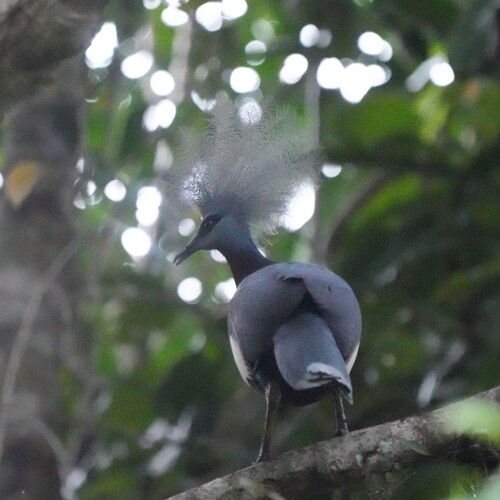 Wijnborstkroonduif
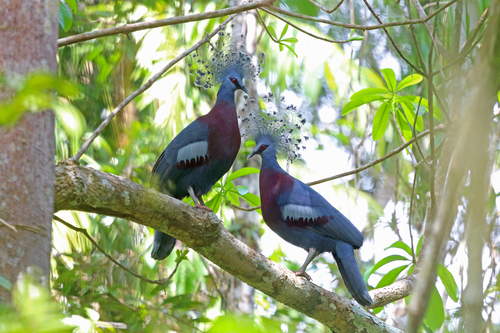 Waaierduif
Kort gezegd
De meest betrouwbare manier om Wijnborstkroonduif van Waaierduif te onderscheiden is aan de kuif: Waaierduif heeft altijd opvallende witte punten op zijn kantige blauwe kuif, terwijl Wijnborstkroonduif een vergelijkbare kuif heeft maar geen wit vertoont. Beide zijn enorme, op de grond levende duiven met kastanjebruine borsten en rode ogen, maar Waaierduif is iets groter en heeft een kenmerkende lichtblauwe vleugelstreep met kastanjebruine punten, evenals een kleine zwarte masker op het gezicht. In het veld moet je goed letten op de kuif en het vleugelpatroon, vooral als de vogels zitten of lopen, aangezien beide soorten terrestrisch zijn en zelden vliegen tenzij verstoord.
Herkenningstips
- Kuifpunten (alle leeftijden): Kijk naar de witte punten op de kantige blauwe kuif—alleen aanwezig bij Waaierduif. Wijnborstkroonduif heeft een vergelijkbare kuif maar mist altijd wit.
- Vleugelstreep (volwassenen): Bij zittende of lopende vogels, controleer op een lichtblauwe vleugelstreep met kastanjebruine veren op de dekkingen—duidelijk bij Waaierduif, afwezig bij Wijnborstkroonduif.
- Gezichtsmasker: Waaierduif heeft een klein zwart masker rond het oog, wat Wijnborstkroonduif mist. Dit is subtiel maar zichtbaar van dichtbij.
- Algemene kleur: Beide zijn blauwgrijs met kastanjebruine borsten, maar Waaierduif kan iets dieper blauw lijken en met een paars-kastanjebruine borst, terwijl Wijnborstkroonduif meer uniform blauwgrijs is met een zeer diepe kastanjebruine borst. Dit is variabel en niet altijd betrouwbaar.
- Grootte: Waaierduif is marginaal groter en robuuster, maar de grootte-overlap is significant en de houding kan misleiden—gebruik dit alleen als ondersteunend bewijs.
- Iris kleur: Beide hebben rode irissen; dit helpt niet bij de scheiding.
- Vlieggedrag: Beide soorten stijgen omhoog met een luid vleugelklap en kunnen lange tijd blijven zitten na verstoring. Vliegstijl is niet diagnostisch.
- Groepsgedrag: Waaierduif wordt vaak gezien in kleine groepen of paren, maar Wijnborstkroonduif kan ook sociaal zijn—verlaat je niet op het samenkomen voor identificatie.
- Habitat: Als je je locatie kent, komt Wijnborstkroonduif alleen voor in de zuidelijke laaglanden van Nieuw-Guinea, Waaierduif in het noorden en nabijgelegen eilanden. Ze overlappen niet.
- Vocalisaties: Beide hebben diepe, resonante roepen; de 'whooping' roep van Waaierduif is kenmerkend maar niet altijd hoorbaar. Verlaat je niet alleen op de stem voor scheiding.
- Geslacht en leeftijd: Beide geslachten zijn vergelijkbaar in beide soorten. Er zijn geen betrouwbare geslacht- of leeftijdsgebonden verschillen beschreven voor veldscheiding.
- Jong/immatuur vogels: Er zijn geen unieke jong of immatuur verenkleedmerken beschreven; gebruik kuif en vleugelstreep zoals bij volwassenen.
- Valkuilen: In slecht licht of op afstand kunnen de witte kuifpunten van Waaierduif gemist worden, en de vleugelstreep kan door houding worden verborgen. Probeer altijd een duidelijk zicht op de kuif en vleugeldekkingen te krijgen.
- Gevangengenomen vogels: Beide soorten worden in gevangenschap gehouden; het bereik is niet altijd nuttig in zoos of collecties—verlaat je op verenkleedkenmerken.
- Samenvatting voor snelle controle: Als je witte kuifveren en een lichtblauwe vleugelstreep met kastanjebruine punten ziet, is het Waaierduif. Als de kuif blauw en kantig is maar geen wit heeft, en de vleugel uniform blauwgrijs is, is het Wijnborstkroonduif.
Grootte
Waaierduif is de grootste levende duif, gemiddeld 73–75 cm in lengte en 2,39 kg in massa, met sommige individuen die meer dan 80 cm en 3,5 kg wegen. Wijnborstkroonduif is iets kleiner, met 66–73 cm en 2,00–2,24 kg. Beide soorten zijn massief in vergelijking met andere duiven, maar in directe vergelijking is Waaierduif robuuster en langer. Echter, alleen de grootte is niet altijd betrouwbaar in het veld vanwege overlap en houding.
Verenkleed
- Kuif (alle leeftijden): Waaierduif toont altijd witte puntige kantige blauwe kuifveren, een unieke en onmiddellijk herkenbare eigenschap. Wijnborstkroonduif heeft een vergelijkbare blauwe kantige kuif maar nooit met witte punten.
- Vleugeldekkingen (volwassenen): Waaierduif heeft een rij van lichter blauw-grijze veren met kastanjebruine punten op de vleugeldekkingen, wat een duidelijke lichtblauwe vleugelstreep vormt. Wijnborstkroonduif mist dit patroon en is meer uniform blauwgrijs boven.
- Borst (volwassenen): Beide hebben diepe kastanjebruine borsten, maar de borst van Waaierduif wordt beschreven als diep paars-kastanjebruin, terwijl die van Wijnborstkroonduif zeer diep kastanjebruin is; dit is subtiel en niet altijd betrouwbaar.
- Ge gezicht (volwassenen): Waaierduif toont een klein zwart masker rond het oog, wat Wijnborstkroonduif mist.
- Iris (volwassenen): Beide soorten hebben rode irissen.
- Jong/immatuur verenkleed: Er zijn geen specifieke verschillen in het vleugelpatroon van jonge of immature vogels beschreven in de bronnen; kuif en vleugelstreep blijven de beste kenmerken op alle leeftijden.
Gedrag
Beide soorten zijn terrestrisch en lopen met een ongedwongen gang over de bosvloer, op zoek naar gevallen fruit. Waaierduif staat bekend om zijn sociale gedrag, meestal in paren of kleine groepen, en is enigszins schuw in het wild maar kan stil worden benaderd. Beide soorten stijgen omhoog in bomen wanneer ze verstoord worden en kunnen enige tijd blijven zitten. Waaierduif staat bekend om agressieve vertoningen onder mannelijke vogels, waarbij ze de borst opblazen en de vleugels heffen, maar dit is niet uniek voor kroonduiven. In de vlucht produceren beide een luid vleugelklap.
Habitat
Beide soorten zijn beperkt tot laaglandbossen van Nieuw-Guinea, maar Wijnborstkroonduif is beperkt tot de zuidelijke laaglanden, terwijl Waaierduif in het noorden en op nabijgelegen eilanden voorkomt. Hun habitats overlappen niet in het wild. Beide geven de voorkeur aan dichte bossen en worden zelden ver van dekking gezien.
Geluid
Waaierduif staat bekend om zijn diepe 'whooping' roepen (hoota-hoota-hoota), een doordringende 'whup-up' territoriale roep, en een diepe, gedempte contactroep (ummm of hmmm). Wijnborstkroonduif wordt niet in detail beschreven, maar alle kroonduiven hebben vergelijkbare diepe, resonante roepen. Vocalisaties worden niet als betrouwbaar diagnostisch beschouwd tussen deze twee in het veld.