

Motmot

ムネアカカンムリバト 対 オウギバト

Goura sclaterii 対 Goura victoria

ムネアカカンムリバトとオウギバトのクイズ
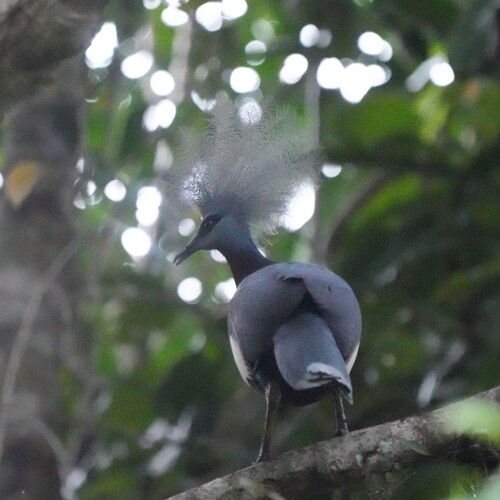
ムネアカカンムリバト (Goura sclaterii) ムネアカカンムリバト
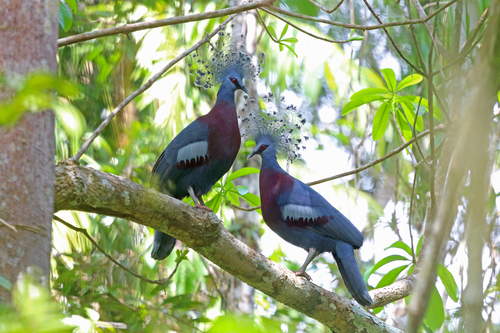
オウギバト (Goura victoria) オウギバト

メディア

読み込み中…

要点

スケーターカンムリバトとオウギバトを区別する最も信頼できる方法は、冠羽です:オウギバトは常にレース状の青い冠羽の目立つ白い先端を示しますが、スケーターは似たような冠羽を持っていますが、白はありません。両者は巨大で地上に生息する鳩で、マルーン色の胸と赤い目を持っていますが、オウギバトはやや大きく、マルーン色の先端を持つ独特の淡い青い翼帯と顔に小さな黒いマスクがあります。フィールドでは、特に鳥が止まっているか歩いている場合は、冠羽と翼のパターンに注意を払ってください。両種は地上性で、 disturbance がない限り飛ぶことはめったにありません。

識別のコツ

  1. Crest tips (all ages): レース状の青い冠羽の白い先端を探してください—これはオウギバトにのみ存在します。スケーターは似たような冠羽を持っていますが、常に白はありません。
  2. Wing bar (adults): 停まっているか歩いている鳥を見たら、カバー羽にマルーン色の先端を持つ淡い青い翼帯があるか確認してください—オウギバトでは明確ですが、スケーターにはありません。
  3. Facial mask: オウギバトは目の周りに小さな黒いマスクを示しますが、スケーターにはありません。これは微妙ですが、近距離で見ると見えます。
  4. Overall coloration: 両者は青灰色でマルーン色の胸を持っていますが、オウギバトはやや深い青に見え、紫マルーンの胸を持つかもしれませんが、スケーターはより均一に青灰色で非常に深いマルーン色の胸を持っています。これは変動があり、常に信頼できるわけではありません。
  5. Size: オウギバトはわずかに大きくてがっしりしていますが、サイズの重複は重要で、姿勢が誤解を招く可能性があります—補助的な証拠としてのみ使用してください。
  6. Iris color: 両者は赤い虹彩を持っています;これは区別には役立ちません。
  7. Flight behavior: 両種は大きな翼の音を立てて上に飛び上がり、 disturbance の後に長い間止まっていることがあります。飛行スタイルは診断的ではありません。
  8. Group behavior: オウギバトは小さな群れやペアで見られることが多いですが、スケーターも群れを作ることがあります—識別のために群れに頼らないでください。
  9. Habitat: あなたの場所を知っているなら、スケーターは南ニューギニアの低地にのみ生息し、オウギバトは北部と近くの島に生息しています。彼らは重複しません。
  10. Vocalizations: 両者は深く共鳴する鳴き声を持っています;オウギバトの「ウーピング」コールは特徴的ですが、常に聞こえるわけではありません。声だけに頼って区別しないでください。
  11. Sex and age: 両種の両性は似ています。フィールドでの区別のために信頼できる性別や年齢に基づく違いは記述されていません。
  12. Juvenile/immature birds: 特有の幼鳥や未熟な羽毛のマークは記述されていません;冠羽と翼帯を大人と同様に使用してください。
  13. Pitfalls: 照明が悪い場合や距離がある場合、オウギバトの白い冠羽の先端を見逃すことがあり、姿勢によって翼帯が隠されることがあります。常に冠羽と翼のカバー羽の明確な視界を試みてください。
  14. Captive birds: 両種は飼育されています;動物園やコレクションでは範囲が常に役立つわけではありません—羽毛の特徴に頼ってください。
  15. Summary for quick check: 白い先端の冠羽の羽毛とマルーン色の先端を持つ淡い青い翼帯が見えたら、それはオウギバトです。冠羽が青くレース状ですが白がなく、翼が均一に青灰色であれば、それはスケーターです。

大きさ

オウギバトは現在生きている最大の鳩で、平均73–75 cmの長さと2.39 kgの質量を持ち、一部の個体は80 cm以上および3.5 kgを超えます。スケーターカンムリバトはやや小さく、66–73 cmおよび2.00–2.24 kgです。両種は他の鳩と比較して巨大ですが、直接比較ではオウギバトがよりがっしりしていて長いです。しかし、サイズだけではフィールドでの信頼性が常にあるわけではありません。

羽色

行動

両種は地上性で、森林の床をゆっくりと歩きながら落ちた果物を探します。オウギバトは群れを作ることで知られ、通常はペアや小さなグループで見られ、野生ではやや臆病ですが、静かに近づくことができます。両種は disturbance の際に木に上がり、しばらく止まっていることがあります。オウギバトはオスの間で攻撃的なディスプレイを示すことで知られ、胸を膨らませて翼を上げますが、これはカンムリバトの中では独特ではありません。飛行中、両者は大きな翼の音を立てます。

生息環境

両種はニューギニアの低地の森林に制限されていますが、スケーターは南の低地に限定され、オウギバトは北部と近くの島に生息しています。彼らの生息地は野生では重複しません。両者は密な森林を好み、カバーから遠く離れていることはめったにありません。

声

オウギバトは深い「ウーピング」コール(フーターフーターフー)、響き渡る「ウップアップ」という領土コール、深く muffled な接触コール(うーむまたはふーむ)で知られています。スケーターは詳細には記述されていませんが、すべてのカンムリバトは似たような深く共鳴する鳴き声を持っています。鳴き声はフィールドでのこれら二つの間で信頼できる診断とは見なされていません。

より良い説明を送る

比較と同じ項目を使ってください。文章はすぐに公開されます。

The most reliable way to separate Sclater's Crowned-Pigeon from Victoria Crowned-Pigeon is by the crest: Victoria always shows prominent white tips on its lacy blue crest, while Sclater's has a similar crest but lacks any white. Both are huge, ground-dwelling pigeons with maroon breasts and red eyes, but Victoria is slightly larger and has a distinctive pale blue wing bar with maroon tips, as well as a small black mask on the face. In the field, pay close attention to the crest and wing pattern, especially if the birds are perched or walking, as both species are terrestrial and rarely fly unless disturbed.

  1. Crest tips (all ages): Look for white tips on the lacy blue crest—present only in Victoria Crowned-Pigeon. Sclater's has a similar crest but always lacks white.
  2. Wing bar (adults): On perched or walking birds, check for a pale blue wing bar with maroon-tipped feathers on the coverts—distinct in Victoria, absent in Sclater's.
  3. Facial mask: Victoria shows a small black mask around the eye, which Sclater's lacks. This is subtle but visible at close range.
  4. Overall coloration: Both are bluish-grey with maroon breasts, but Victoria may appear slightly deeper blue and with a purple-maroon chest, while Sclater's is more uniformly bluish-grey with a very deep maroon breast. This is variable and not always reliable.
  5. Size: Victoria is marginally larger and bulkier, but size overlap is significant and posture can mislead—use only as supporting evidence.
  6. Iris color: Both have red irises; this does not help in separation.
  7. Flight behavior: Both species flush upward with a loud wing clap and may perch for a long time after disturbance. Flight style is not diagnostic.
  8. Group behavior: Victoria is often seen in small groups or pairs, but Sclater's may also be gregarious—do not rely on flocking for ID.
  9. Habitat: If you know your location, Sclater's is only in southern New Guinea lowlands, Victoria in the north and nearby islands. They do not overlap.
  10. Vocalizations: Both have deep, resonant calls; Victoria's 'whooping' call is distinctive but not always heard. Do not rely on voice alone for separation.
  11. Sex and age: Both sexes are similar in both species. No reliable sex or age-based differences are described for field separation.
  12. Juvenile/immature birds: No unique juvenile or immature plumage marks are described; use crest and wing bar as for adults.
  13. Pitfalls: In poor light or at distance, the white crest tips of Victoria may be missed, and the wing bar may be obscured by posture. Always try for a clear view of the crest and wing coverts.
  14. Captive birds: Both species are kept in captivity; range is not always helpful in zoos or collections—rely on plumage features.
  15. Summary for quick check: If you see white-tipped crest feathers and a pale blue wing bar with maroon tips, it's Victoria. If the crest is blue and lacy but lacks white, and the wing is uniformly bluish-grey, it's Sclater's.

Victoria Crowned-Pigeon is the largest living pigeon, averaging 73–75 cm in length and 2.39 kg in mass, with some individuals exceeding 80 cm and 3.5 kg. Sclater's Crowned-Pigeon is slightly smaller, at 66–73 cm and 2.00–2.24 kg. Both species are massive compared to other pigeons, but in direct comparison, Victoria is bulkier and longer. However, size alone is not always reliable in the field due to overlap and posture.

  • Crest (all ages): Victoria Crowned-Pigeon always shows white-tipped lacy blue crest feathers, a unique and instantly recognizable feature. Sclater's Crowned-Pigeon has a similar blue lacy crest but never with white tips.
  • Wing coverts (adults): Victoria has a row of paler blue-gray feathers with maroon tips on the wing coverts, forming a distinct pale blue wing bar. Sclater's lacks this pattern and is more uniformly bluish-gray above.
  • Breast (adults): Both have deep maroon breasts, but Victoria's is described as deep purple-maroon, while Sclater's is very deep maroon; this is subtle and not always reliable.
  • Face (adults): Victoria shows a small black mask around the eye, which Sclater's lacks.
  • Iris (adults): Both species have red irises.
  • Juvenile/immature plumage: No specific juvenile or immature wing pattern differences are described in the sources; crest and wing bar remain the best marks at all ages.

Both species are terrestrial and walk with an unhurried gait along the forest floor, foraging for fallen fruit. Victoria Crowned-Pigeon is noted for being gregarious, usually in pairs or small groups, and is somewhat shy in the wild but can be quietly approached. Both species flush upward into trees when disturbed and may remain perched for some time. Victoria is known for aggressive displays among males, puffing up the chest and raising wings, but this is not unique among crowned pigeons. In flight, both produce a loud wing clap.

Both species are restricted to lowland forests of New Guinea, but Sclater's is confined to the southern lowlands, while Victoria is found in the north and on nearby islands. Their habitats do not overlap in the wild. Both prefer dense forest and are rarely seen far from cover.

Victoria Crowned-Pigeon is noted for its deep 'whooping' calls (hoota-hoota-hoota), a resounding 'whup-up' territorial call, and a deep, muffled contact call (ummm or hmmm). Sclater's is not described in detail, but all crowned pigeons have similar deep, resonant calls. Vocalizations are not considered reliably diagnostic between these two in the field.

変更を破棄しますか?

保存していない編集があります。今離れると失われます。

ムネアカカンムリバト · オウギバト · 苦手な鳥