

Roodhalsduif vs Bandstaartduif
Patagioenas squamosa versus Patagioenas fasciata
Speel een quiz met Roodhalsduif en Bandstaartduif
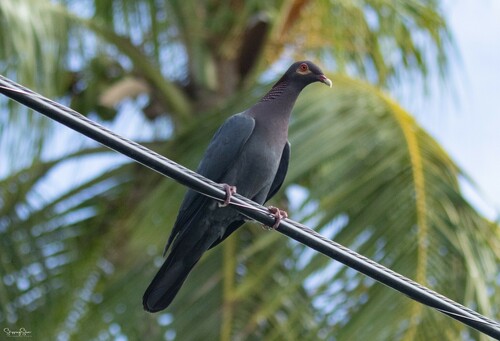 Roodhalsduif
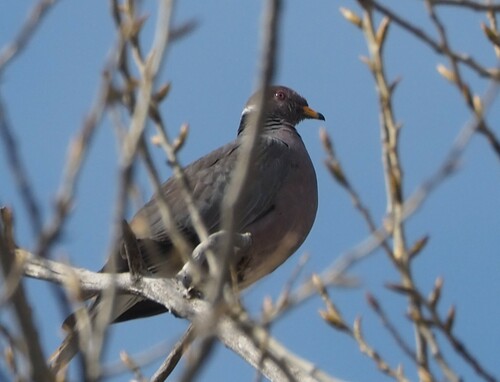 Bandstaartduif
Kort gezegd
Het meest betrouwbare veldkenmerk om de Roodhalsduif van de Bandstaartduif te scheiden, is de aanwezigheid van een dunne witte kraag op de nek bij volwassen Bandstaartduiven, die de Roodhalsduif nooit vertoont. In de vlucht of zittend toont de Bandstaartduif ook een kenmerkende lichte staartpunt met een donkere subterminal band, terwijl de staart van de Roodhalsduif uniform donker is. Juveniele Bandstaartduiven kunnen er schubachtig uitzien boven, maar missen de witte kraag en nek iridescentie, wat verwarring met de Roodhalsduif kan veroorzaken, hoewel het staartpatroon en de kleur van de snavel/benen nog steeds helpen. Beide zijn grote, grijze duiven, maar details van de kleur van de blote huid, snavel en subtiele verenkleedtonen zijn cruciaal bij close-ups. Habitat en verspreiding zijn ook sterke aanwijzingen: de Roodhalsduif is Caribisch, de Bandstaartduif is continentaal Amerikaans.
Herkenningstips
- Witte nek kraag (alleen volwassen Bandstaartduif): Zoek naar een dunne, scherpe witte band op de nek—diagnostisch voor volwassen Bandstaartduif en nooit aanwezig bij de Roodhalsduif. In slecht licht of bij juvenielen kan dit kenmerk afwezig of moeilijk te zien zijn.
- Staartpatroon in vlucht of zittend: De Bandstaartduif toont een lichtgrijze staartpunt met een contrasterende donkere subterminal band; de staart van de Roodhalsduif is uniform donker. Dit kenmerk is zichtbaar in alle leeftijden en is vooral nuttig in de vlucht.
- Halskleur: De Roodhalsduif heeft een kastanjebruine of rode hals met een schubachtige uitstraling op de nek; de Bandstaartduif heeft een paars-grijze borst en groene iridescentie op de nek (volwassenen), maar niet de kastanjebruine tint of schubachtige textuur.
- Blote huid rond het oog: De Roodhalsduif toont een blinde plek rond het oog, roodachtig bij mannetjes en meer geel bij vrouwtjes; de Bandstaartduif mist deze eigenschap en heeft in plaats daarvan een schone, gevederde gezicht.
- Snavel- en beenkleur: De Bandstaartduif heeft een gele snavel en gele voeten (de noordelijke groep kan een zwarte punt op de snavel hebben); de Roodhalsduif heeft een rode basis van de snavel met een lichte punt en rode benen.
- Juveniele verwarring: Juveniele Bandstaartduiven kunnen er schubachtig uitzien boven, maar missen altijd de witte kraag en hebben de lichte staartpunt met donkere band; juveniele Roodhalsduiven lijken op volwassenen en tonen nooit het staartpatroon of de witte kraag.
- Algemene verenkleedtoon: De Roodhalsduif is leisteengrijs met een kastanjebruine hals, terwijl de Bandstaartduif grijs is met een vage roze of paarse tint op de borst (vooral bij mannetjes), en een bijna witte buik.
- Grootte en structuur: Beide zijn grote, robuuste duiven. De Bandstaartduif kan iets langer gevleugeld en langer staartachtig lijken, maar dit is subtiel en niet op zichzelf betrouwbaar.
- Habitat en verspreiding: De Roodhalsduif is Caribisch; de Bandstaartduif is continentaal Amerikaans. Als je buiten het verwachte bereik wordt gezien, heroverweeg dan de identificatie.
- Groepsgedrag: De Bandstaartduif kan grotere groepen vormen, vooral bij voedselbronnen of mineralenlikken; de Roodhalsduif is vaker solitair of in kleine groepen.
- Snavelvorm en dikte: Beide hebben robuuste snavels, maar de snavel van de Bandstaartduif is dikker en duidelijker geel.
- Onderdeel kleur: De Bandstaartduif toont een bijna witte buik die contrasteert met de roze borst; de Roodhalsduif is onderaan meer uniform donker.
- Geslachtsverschillen: Vrouwelijke Roodhalsduiven kunnen meer geelachtige blote huid rond het oog hebben, maar dit is subtiel en niet altijd zichtbaar.
- Vluchtstijl: Beide zijn sterke vliegers, maar de Bandstaartduif kan langer gevleugeld en meer drijvend lijken; dit is een klein punt vergeleken met verenkleedkenmerken.
- Mixen met andere soorten: De Roodhalsduif kan zich mengen met Rotsduif, Geoorde treurduif of Antilliaanse treurduif in het Caribisch gebied, maar de Bandstaartduif is over het algemeen met zijn eigen soort of andere continentale duiven.
Grootte
Beide soorten behoren tot de grootste duiven in hun respectieve gebieden en zijn vergelijkbaar in algehele bulk. De Roodhalsduif weegt gemiddeld ongeveer 312 g [wikidata], terwijl de Bandstaartduif varieert van 226–460 g, met enige overlap maar de Bandstaartduif mogelijk zwaarder aan de bovenkant [wikipedia]. Beide zijn 33–40 cm (13–16 in) lang, dus alleen de grootte is geen betrouwbare scheiding in het veld. Beide zien er groot en robuust uit, hoewel de Bandstaartduif in de vlucht iets langer gevleugeld en langer staartachtig kan lijken.
Verenkleed
-
Juvenielen: Juveniele Bandstaartduiven hebben lichte veer-randen boven, wat een schubachtige uitstraling geeft die kan doen denken aan de Roodhalsduif. Echter, juvenielen missen de witte nek kraag en groene nek iridescentie van volwassenen, en tonen nog steeds de lichte staartpunt met een donkere band. Juveniele Roodhalsduiven lijken op volwassenen maar missen altijd de witte kraag en hebben een meer uniforme donkere staart.
-
Volwassenen: Volwassen Bandstaartduiven zijn voornamelijk grijs met een vage roze tint op de borst (vooral bij mannetjes), een dunne witte nek kraag, groene iridescentie op de nek, en een lichte staartpunt met een donkere subterminal band. Roodhalsduiven zijn leisteengrijs met een kastanjebruine hals, schubachtige nek, en uniform donkere staart. De blote huid rond het oog is roodachtig bij mannetjes en meer geel bij vrouwtjes voor de Roodhalsduif, terwijl de Bandstaartduif een gele snavel en voeten heeft. De Roodhalsduif toont rode benen en basis van de snavel, met een lichte snavelpunt.
Gedrag
Beide soorten zijn voorzichtig en vliegen vaak op wanneer ze worden benaderd. Roodhalsduiven worden meestal alleen of in kleine groepen gezien, soms mengend met andere duiven. Bandstaartduiven kunnen kleine groepen vormen, vooral bij voedselbronnen, en kunnen in losse kolonies nestelen. Beide voeden zich in bomen en op de grond, maar de Bandstaartduif is waarschijnlijker te zien in grotere groepen tijdens migratie of bij mineralenlikken.
Habitat
De Roodhalsduif wordt overal in het Caribisch gebied aangetroffen, vooral in de Grote en Kleine Antillen, en geeft de voorkeur aan regenwouden maar komt ook voor in drogere bossen en nabij nederzettingen. De Bandstaartduif heeft een breed verspreidingsgebied in de Amerika's, van het westen van Noord-Amerika via Midden-Amerika en in de Andes, met een voorkeur voor bossen met overvloedig fruit of eikels. De Bandstaartduif is afwezig in het Caribisch gebied. Als je in het Caribisch gebied bent, is de kans op de Bandstaartduif uiterst onwaarschijnlijk; als je in continentaal Noord- of Zuid-Amerika bent, wordt de Roodhalsduif niet verwacht.