

Relictmeeuw vs Stormmeeuw
Ichthyaetus relictus versus Larus canus
Speel een quiz met Relictmeeuw en Stormmeeuw
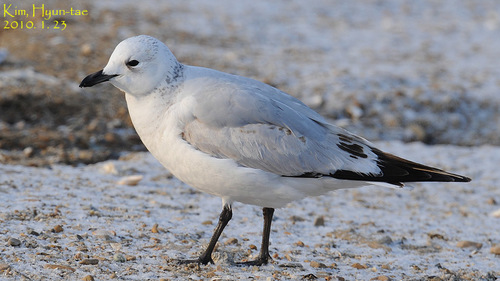 Relictmeeuw
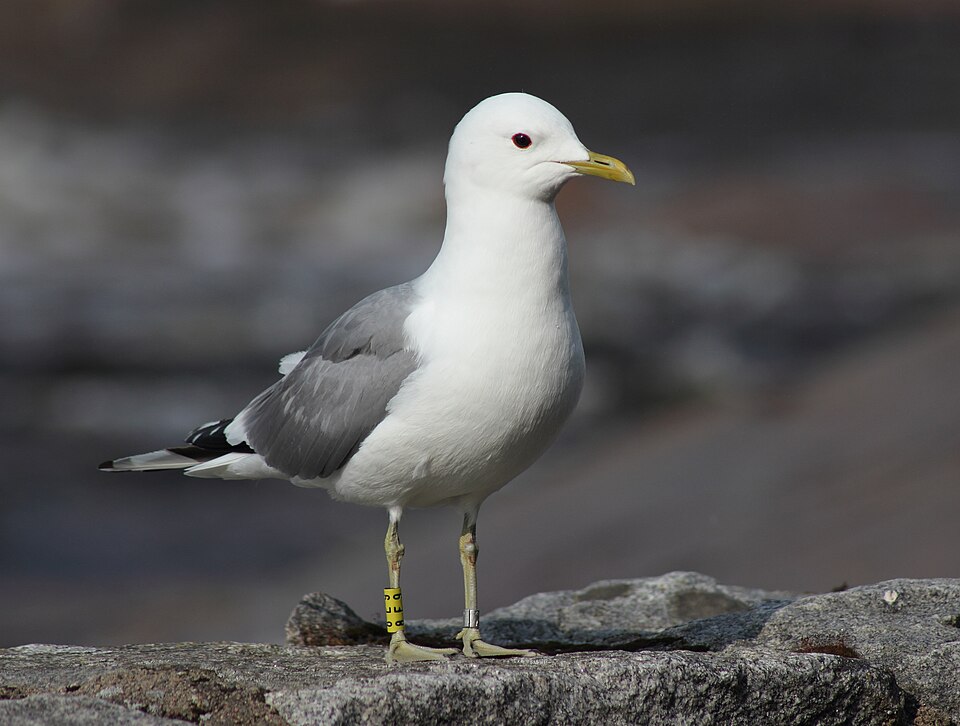 Stormmeeuw
Kort gezegd
The most reliable separation between Relict Gull and Common Gull is in the adult wing pattern and head markings, especially in non-breeding and immature birds. Relict Gull adults show dark-smudged ear-coverts and hind crown in winter, with a lack of white leading edge on the outer wing and distinctive black subterminal markings on the primaries; Common Gull adults have a streaked grey head in winter and prominent white 'mirrors' on the wingtips. Juvenile and immature Common Gulls show a neat, scaly wing pattern and pinkish legs, while Relict Gull immatures are less well documented but lack the same neatness. Structural differences are subtle, but Relict Gull is stockier with a thicker body. Bill and leg color, especially in breeding season, can also help: Relict Gull has orange legs and a scarlet bill, while Common Gull has yellowish legs and a greenish-yellow bill.
Herkenningstips
- Wing Pattern in Flight (Adults): Relict Gull lacks a white leading edge on the outer wing and shows prominent, isolated black subterminal markings on the outer primaries. Common Gull has black wingtips with large white 'mirrors' on p9 and p10; these are visible in flight and at rest with wings folded.
- Head Pattern (Non-breeding Adults): Relict Gull has dark-smudged ear-coverts and hind crown, creating a dusky look. Common Gull's winter head is streaked grey, not smudged, and the streaking is finer.
- Bill Color (Breeding): Relict Gull has a scarlet bill, while Common Gull's bill is greenish-yellow and unmarked in breeding plumage.
- Leg Color (Breeding): Relict Gull's legs are orange; Common Gull's are yellow in breeding season, duller in winter.
- Hooded Appearance (Breeding): Relict Gull has a full black hood including the nape, with a grey-brown forehead and bold white crescents around the eyes. Common Gull never shows a hooded appearance; its head is clean white in breeding plumage.
- Juvenile/Immature Upperparts: Common Gull juveniles have neat, scaly black-brown upperparts and pink legs, becoming greyish in the second year. Relict Gull immatures are less crisply marked and lack the same scaly pattern.
- Bill Pattern (Non-breeding): Common Gull often shows a poorly defined blackish band near the tip of the bill in winter; Relict Gull does not.
- Body Structure: Relict Gull is stockier and thicker-bodied, especially noticeable when perched. Common Gull is more slender and less bulky.
- Size: Both are similar in length, but Relict Gull appears heavier-set. Size is not a strong field mark unless seen side-by-side.
- Bare Part Color (Immatures): Common Gull immatures have pink legs, turning greyish before becoming yellow. Relict Gull's leg color in immatures is not specified, but likely not as distinctly pink.
- Habitat/Range: If seen outside Central Asia, especially in Europe or East Asia, a medium-sized gull matching these features is almost certainly a Common Gull.
- White 'Mirrors' on Primaries: Common Gull's large white 'mirrors' on p9 and p10 are visible in flight and at rest; Relict Gull lacks these and instead has isolated black markings.
- Eye Markings (Breeding Relict Gull): Look for the broad white half-moon shapes around the eyes in Relict Gull during breeding season; Common Gull lacks these.
- Voice: Only Common Gull's call is described (high-pitched 'laughing'); not a primary separator but may help in context.
- Potential Pitfalls: Immature Common Gulls can be confused with other medium gulls due to their variable bill and leg color; always check wing pattern and head markings for confirmation.
Grootte
Both species are medium-sized gulls, but Relict Gull is described as stocky and thick-bodied, while Common Gull is slightly smaller and less bulky. The Common Gull's body mass averages around 386.5 g [wikidata], and its length is 40–46 cm, overlapping with Relict Gull's 44–45 cm. In the field, size alone is not a strong separator, but Relict Gull may appear heavier-set, especially when perched.
Verenkleed
-
Juvenile/Immature: Common Gull juveniles and first-winters have scaly black-brown upperparts, a neat wing pattern, and pink legs that become greyish in the second year. By first winter, their head and belly are white with fine streaks, and greyish feathers develop on the saddle. Relict Gull's immature plumage is less well detailed in the sources, but does not mention the same neat, scaly pattern or pink legs, suggesting a less crisply marked appearance.
-
Adult Non-breeding: Relict Gull adults show uniformly dark-smudged ear-coverts and hind crown, with no white leading edge to the outer wing and isolated black subterminal markings on the outer primaries. Common Gull adults in winter have a streaked grey head and a bill often with a poorly defined blackish band near the tip. Their wingtips have large white 'mirrors' on the outer primaries (p9 and p10), which are distinctive in flight.
-
Adult Breeding: Relict Gull has a black hood (including nape), grey-brown forehead, and broad white half-moon marks around the eyes. Its legs are orange and the bill is scarlet. Common Gull in breeding plumage has a clean white head, yellow legs, and a greenish-yellow, unmarked bill. The upperparts are grey and the underparts white in both species, but the head and bare part colors are key.
Gedrag
Both species are typical gulls in foraging and flight style, but Relict Gull may appear more robust and thick-bodied in posture. Common Gull often forages in flocks and is highly adaptable, seen in a variety of open habitats, while Relict Gull's behavior is less well documented in the field but is likely more localized and less gregarious. No major behavioral differences are noted that would be diagnostic at a distance.
Habitat
Common Gull is widespread across the Palearctic, breeding in cool temperate regions and wintering further south, often in coastal, inland, and even urban settings. Relict Gull is much more localized to Central Asia, with a preference for specific inland water bodies. If seen in Europe or East Asia outside Central Asia, a gull matching Relict Gull's description is far more likely to be a Common Gull.
Geluid
Common Gull gives a high-pitched 'laughing' cry, typical of medium-sized gulls. No distinctive vocalization is described for Relict Gull in the sources, so voice is not a reliable separator.