

Paarse strandloper vs Beringstrandloper
Calidris maritima versus Calidris ptilocnemis
Speel een quiz met Paarse strandloper en Beringstrandloper
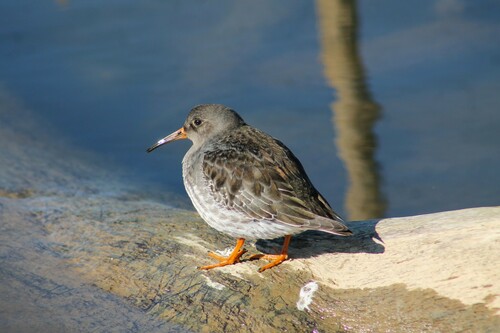 Paarse strandloper
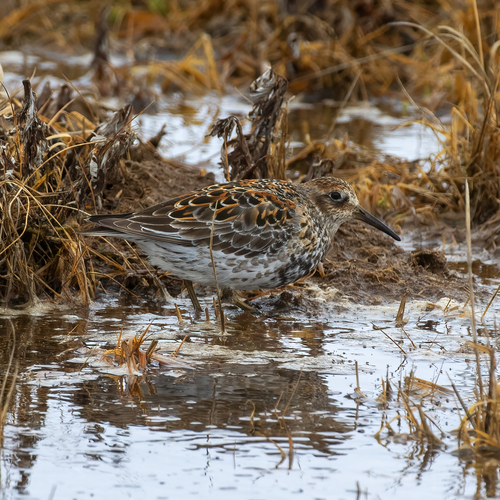 Beringstrandloper
Kort gezegd
Het meest betrouwbare veldkenmerk om Paarse strandloper van Beringstrandloper te scheiden, is de aanwezigheid van een gedurfde zwarte buikvlek bij de broedkleednominate Beringstrandlopers (uit de Pribilof-eilanden); andere ondersoorten en niet-broedende vogels van beide soorten zijn extreem vergelijkbaar. Beide hebben korte gele poten, donkere snavels met gele bases en donkere bovenzijden met een paarse glans. Habitat en verspreiding zijn vaak de beste aanwijzingen: Paarse strandloper overwintert aan rotsachtige Atlantische kusten, terwijl Beringstrandloper overwintert aan rotsachtige Pacifische kusten. Subtiele verschillen in grootte en lokale overvloed kunnen helpen, maar veldscheiding buiten het broedseizoen op de Pribilof-eilanden is uitdagend en vaak niet mogelijk zonder context van de verspreiding.
Herkenningstips
- Broedkleednominate Beringstrandloper (Pribilof-eilanden) toont een gedurfde zwarte buikvlek—als je dit ziet, is het diagnostisch voor die ondersoort en seizoen. Andere ondersoorten en alle Paarse strandlopers missen dit kenmerk.
- Niet-broedende en onvolwassen vogels van beide soorten zijn extreem vergelijkbaar in alle waarneembare veldkenmerken, inclusief bovenvleugel- en staartpatroon, snavel en pootkleur.
- Korte gele poten en een middel-dunne donkere snavel met gele basis worden door beide gedeeld; gebruik deze niet alleen voor identificatie.
- Bovenzijde kleur en paarse glans zijn niet betrouwbaar voor scheiding, aangezien beide soorten deze kenmerken vertonen.
- Snavellengte en -vorm zijn vergelijkbaar en geen nuttig veldkenmerk in directe vergelijking.
- Grootte is geen praktisch veldkenmerk: Beringstrandloper is gemiddeld iets zwaarder, maar het verschil is te subtiel voor veldgebruik.
- Vluchtbeelden onthullen geen diagnostische verschillen: beide soorten hebben vergelijkbare vleugel- en staartpatronen in alle leeftijden en seizoenen.
- Habitat en verspreiding zijn vaak de beste aanwijzingen: Paarse strandloper wordt in de winter aangetroffen aan rotsachtige Atlantische kusten; Beringstrandloper aan rotsachtige Pacifische kusten. Gebruik locatie als primaire filter.
- Gedragsverschillen zijn minimaal: beide soorten foerageren op rotsen en kunnen worden gezien terwijl ze in ondiep water voeden; Beringstrandloper kan vaker zwemmen, maar dit is niet exclusief.
- Vlucht samenstelling: Als je een groep met Steenlopers aan de Atlantische kust ziet, is Paarse strandloper waarschijnlijk; aan de Pacifische kust, verwacht Beringstrandloper.
- Broedcontext: Als waargenomen in het arctische Alaska, Kamtsjatka of de Aleoeten in de zomer, is het Beringstrandloper; in arctisch Canada, Groenland of Noord-Europa, is het Paarse strandloper.
- Vocalisaties worden niet als diagnostisch beschreven in beschikbare bronnen; vertrouw niet op roepen voor scheiding.
- Bij twijfel en buiten de Pribilof-eilanden in het broedseizoen, gebruik de verspreiding en habitatcontext—plumage alleen is zelden voldoende.
- Pas op voor zwerfvogels: Beide soorten zijn zeldzame zwerfvogels buiten hun normale verspreidingsgebieden, dus overweeg altijd locatie en seizoen bij het maken van een identificatie.
- Wanneer je geconfronteerd wordt met een stille, niet-broedende vogel op een rotsachtige kust, is verspreiding je beste hulpmiddel—plumage en structuur zullen deze twee niet betrouwbaar scheiden, behalve in het specifieke geval van de Pribilof Beringstrandloper in broedkleed.
Grootte
Beringstrandloper is gemiddeld iets zwaarder (79,0 g) dan Paarse strandloper (ongeveer 72 g), maar beide zijn zeer vergelijkbaar in lengte (20–22 cm) en vleugelspanwijdte (42–46 cm) [wikidata]. In het veld is dit grootteverschil verwaarloosbaar en geen betrouwbaar scheidingspunt, vooral in gemengde groepen of op afstand.
Verenkleed
- Jong/onvolwassen en niet-broedende vogels: Beide soorten zijn bijna niet te onderscheiden in deze plumages, met donkere bovenzijden met een subtiele paarse glans, witte onderzijden, grijs-achtige borst, zwarte staart en korte gele poten. Geen leeftijdspecifieke bovenvleugel- of vluchtpatroonverschillen worden opgemerkt in de bronnen voor deze leeftijden.
- Volwassen broedplumage: Het belangrijkste onderscheid is in de nominate Beringstrandloper (Pribilof-eilanden), die een gedurfde zwarte buikvlek toont. Andere Beringstrandloper ondersoorten en Paarse strandloper missen dit kenmerk en lijken extreem op elkaar. Snavelkleur en -patroon, bovenzijde glans en pootkleur zijn niet betrouwbaar verschillend tussen de twee.
- Vluchtbeelden: Geen diagnostische verschillen in bovenvleugel- of staartpatroon worden beschreven voor enige leeftijd of seizoen.
Gedrag
Beide soorten zijn robuuste, sociale strandvogels die foerageren op rotsachtige kusten, vaak in kleine groepen. Beringstrandloper kan grotere overwinteringsgroepen vormen en staat bekend om soms tot aan zijn borst in water te voeden of zelfs te zwemmen, maar dit gedrag is niet exclusief en kan overlappen met Paarse strandloper. Beide zijn benaderbaar en vaak te zien in de nabijheid van de waterlijn.
Habitat
Habitat en verspreiding zijn de meest praktische veld aanwijzingen. Paarse strandloper broedt in arctisch/subarctisch Eurazië en het noordoosten van Noord-Amerika, overwinterend aan rotsachtige Atlantische kusten (bijv. oostelijk Noord-Amerika, Noord-Europa). Beringstrandloper broedt in arctisch/subarctisch Alaska en Noordoost-Azië (Tsjoekotka, Kamtsjatka), overwinterend aan rotsachtige Pacifische kusten (Alaska, Pacifisch Rusland). Als je in de winter aan de Atlantische kust bent, wordt Paarse strandloper verwacht; aan de Pacifische kust is Beringstrandloper de standaard. Overlap is vrijwel niet bestaand buiten zeldzame zwerfvogels.
Paarse strandloper · Beringstrandloper · Mijn lastige vogels